In a past life I worked as a Producer for a video production company. For the uninitiated, a Producer’s job is basically to take the Director’s vision and deliver it on budget and on time. So everything from who we were interviewing, to where the catering truck could park, to how much the Gaffer was going to cost was my remit. I remember working with a Director who, when I would try to talk him through the logistics of the day, would just say ‘Don’t worry, I trust you’…then wander off. I could never understand this. As a person who likes a certain amount of structure in their life, the thought of just wandering onto set and assuming that everything would be fine, was anathema to me.
But since then, and as I’ve had more projects where I’ve been the one doing the Directing, I’ve realised how much of your mental real-estate has to be focussed on the creative side of what you’re doing. It’s very hard to execute your ‘vision’ when you’re also worried about where to set up the urn for coffee. This is the reason so many great Directors, have an incredible Producer, doing all of the work with schedules and budgets, so that the Director can focus on the creative side of things.
It’s also why passion projects like this, where one person has to do all of the things, can be so hard.
The Budget
My ‘Director’s vision’ was to have a video camera rolling for each portrait session so that at the end I would have a little video I could show and then reveal the portrait. But as the Producer of the project, I knew that would mean either hiring a dedicated video camera, or shooting the video on my Fuji X-T4 and seeing if I could record the audio separately (I didn’t want to have a lapel mic on the person for the photo, so would have to hire a microphone and boom to get a nice clear recording of their voice). I would use a flash for the photos, so the room could be dark for that…but if I’m shooting video, then I would need to hire some video lights so that the video looked good…but then I would need the flash to be strong enough to overpower the video lights so that I could get the look I wanted for the photos. Plus, if I’m recording video, as well as photos, I would need to buy a new external hard-drive to store all of the files on. So I would basically need to hire a video camera, tripod, microphone, boom pole, external audio recorder, studio lights and purchase a new hard-drive…on a budget of zero dollars.
Needless to say, the Producer convinced the Director that the video idea was not going to work.
The camera
I’ve been incredibly lucky over the last few years to be able to borrow a GFX camera from Fuji. The GFX is a Medium format camera, which basically means it has an enormous sensor that takes a very large photo. It is also eye-wateringly expensive. If I borrow the GFX body and two lenses, that can often be over $17K worth of gear. Does it make me a better photographer? No. Does it give me the confidence of a better photographer? Oh you best believe it! And when a large part of your job as a portrait photographer is convincing the person in front of the camera that you know what you’re doing, and you’re going to make them look good…sometimes, a little bit of unearned confidence is all you need.
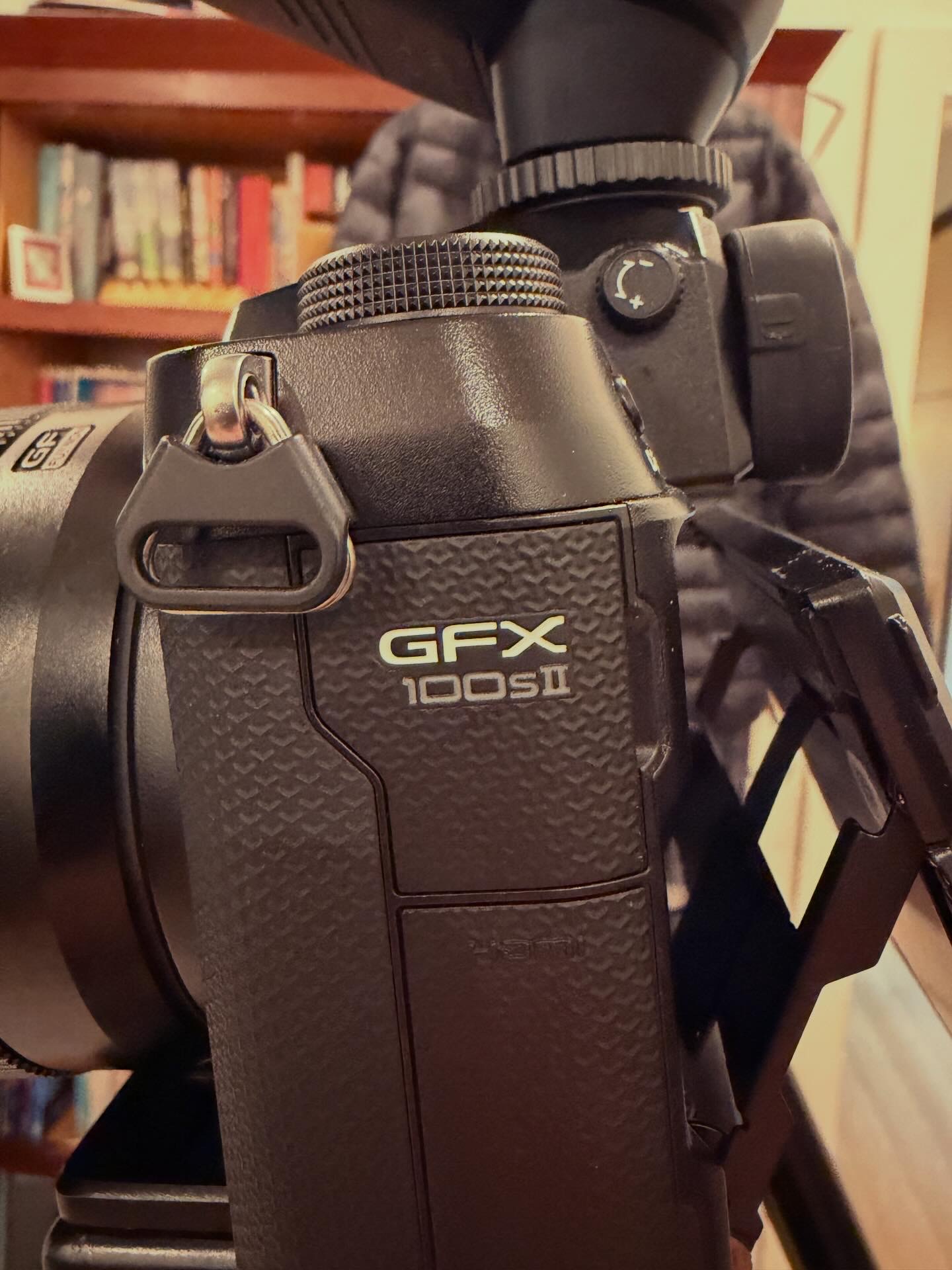
So I was once again full of gratitude when Fuji were able to meet my budget of $0 for the camera hire.
In keeping with our traditional agreement, I have posted many photos on Insta where I have tagged Fuji and added them as a ‘collabarator’…they have not shared any of the photos.
The set-up
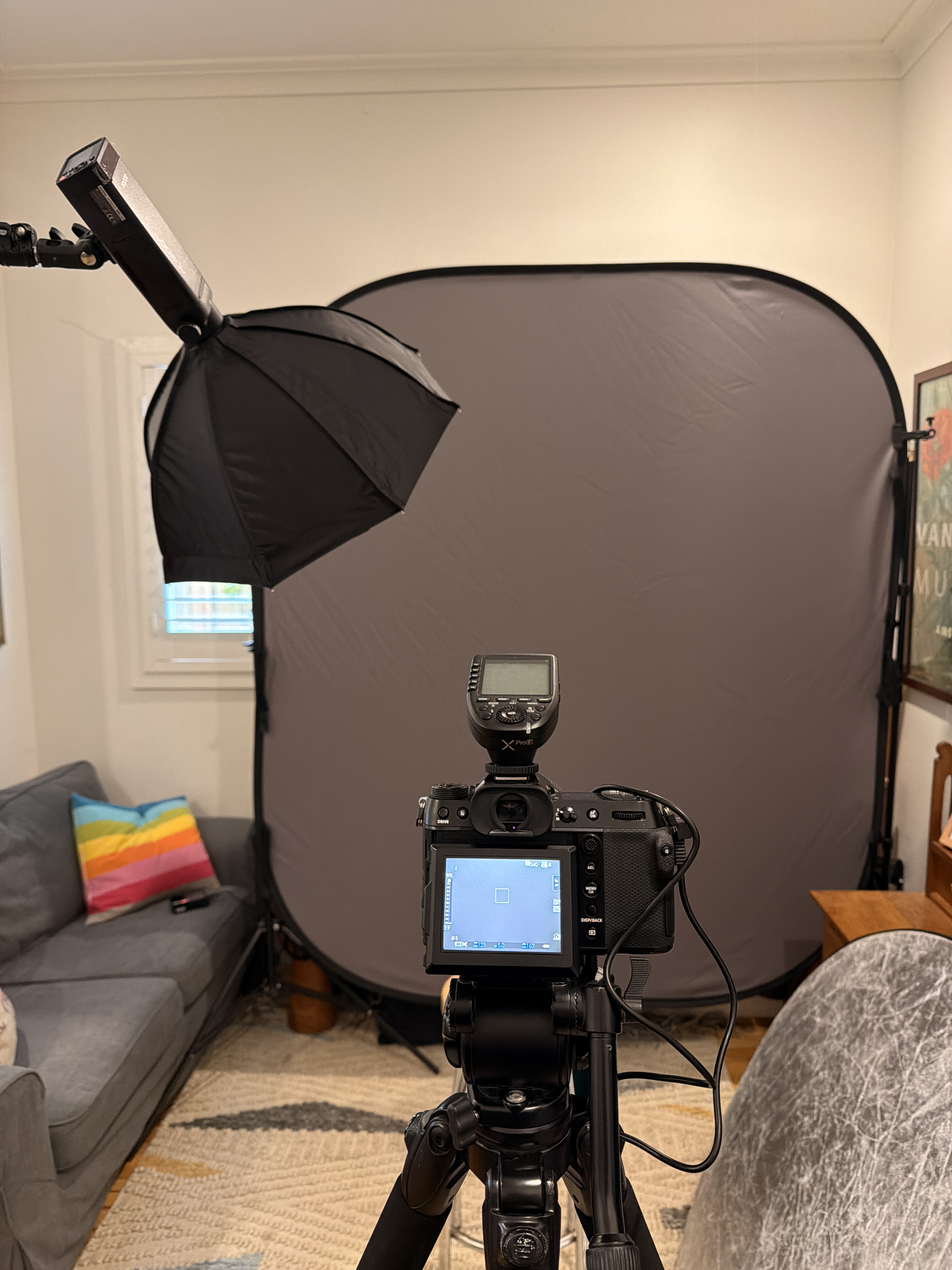
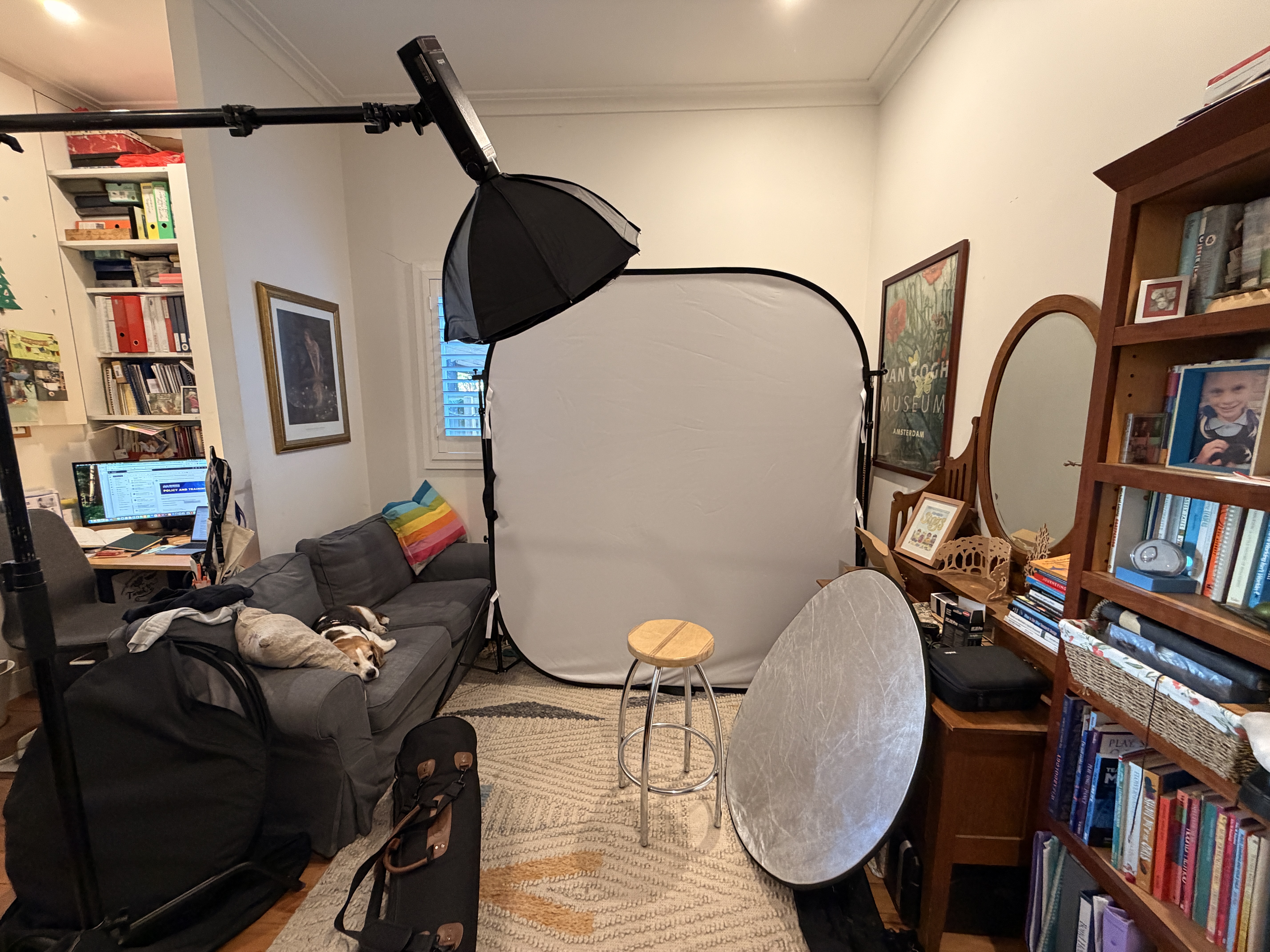
I wanted the background for each shot to be the same, so that when you looked at a gallery of the images, the point of difference was the person. But then that leads to the question, ‘so what’s the background?’ I have a wall in our kitchen that I’ve often used for photos, but it’s a pretty main thoroughfare for the house, and so I wasn’t keen on using that as it would mean the rest of the family was having to work around my photos for two days…and it would mean that the person I was taking photos of would have to be out in the open and potentially self-conscious as I tried to get them chatting and laughing. So I decided on using a collapsable background that I could set up in our front room…but then, what colour?! White would only really work if I had a 2 flash set up. Basically, my main flash was going to be on an angle to the person I was taking the photo of, which means the light from the flash wouldn’t be hitting the background evenly (as it’s not hitting from front on and spreading the light evenly), so I would then need to have a second flash on the white background to make sure it was an even white when the photo was taken. Given my $0 budget and lack of conviction that it would look good…I decided not to go with that option.
Black was another option…but if someone has black hair or a black top on, they can disappear into the background. The way around this is to have a second flash that sits behind them and creates some separation between them and the background…but again, I didn’t want to have to hire a second flash and trigger and stand…so I ruled this out.
The last option was the ‘cowards choice’, grey. The classic choice for the person who doesn’t want to choose between black and white. So I bought a grey background and used that for the first day of photos.
However, I soon realised that once I had set up my flash and got the lighting right for the people I was taking the photo of…the grey background had basically gone to black!
So for the other two shoot days, I purchased a white background, which ironically went back to the grey I had hoped for in the first place!
The People
One thing I have learnt from endurance events like marathons, Ironmans and Peaks Challenge, is that it’s no use only visualising for the finish of the event, or even for a hard time in the event, you need to visualise for all of the hard times in the event. So you have to mentally prepare for what you will do when you’re struggling at 28kms (‘You’ve done this before and you know you finish well, so just keep going’), and also at 33kms (‘Less than 10kms to go, that’s less than a before work run’, and also at 38kms (‘Less than a Parkrun to go!’)
Sadly I did not do this for the 50 Shots of happiness project. While I had prepared myself for ‘How will I get people to relax and start chatting candidly?’…I did NOT prepare myself for ‘How will I create a form on my website to contact people about being part of this?’ or ‘What will I do when my form ends up in their spam?’ or ‘Wait, do I have to create an Excel spreadsheet with everyone’s session time, and contact details?! This is meant to be about creativity…NOT SPREADSHEETS!!’
Plus, as someone who had cancelled his Facebook account, and hadn’t really bounced back from the COVID lockdowns with a ‘I really must get out and reconnect with people’ vibe…finding 50 people who are willing to give up their time, and then be told what part of their time would suit my spreadsheet, and then actually arrive at that time to have a photo taken. Was a lot trickier than I had thought.
But thankfully, my social media angels in the form of Katie and Carol Nichols meant that I had a full day booked for Saturday…and a family Christmas event on the Sunday meant that I could also rope in some family members to be part of the project.
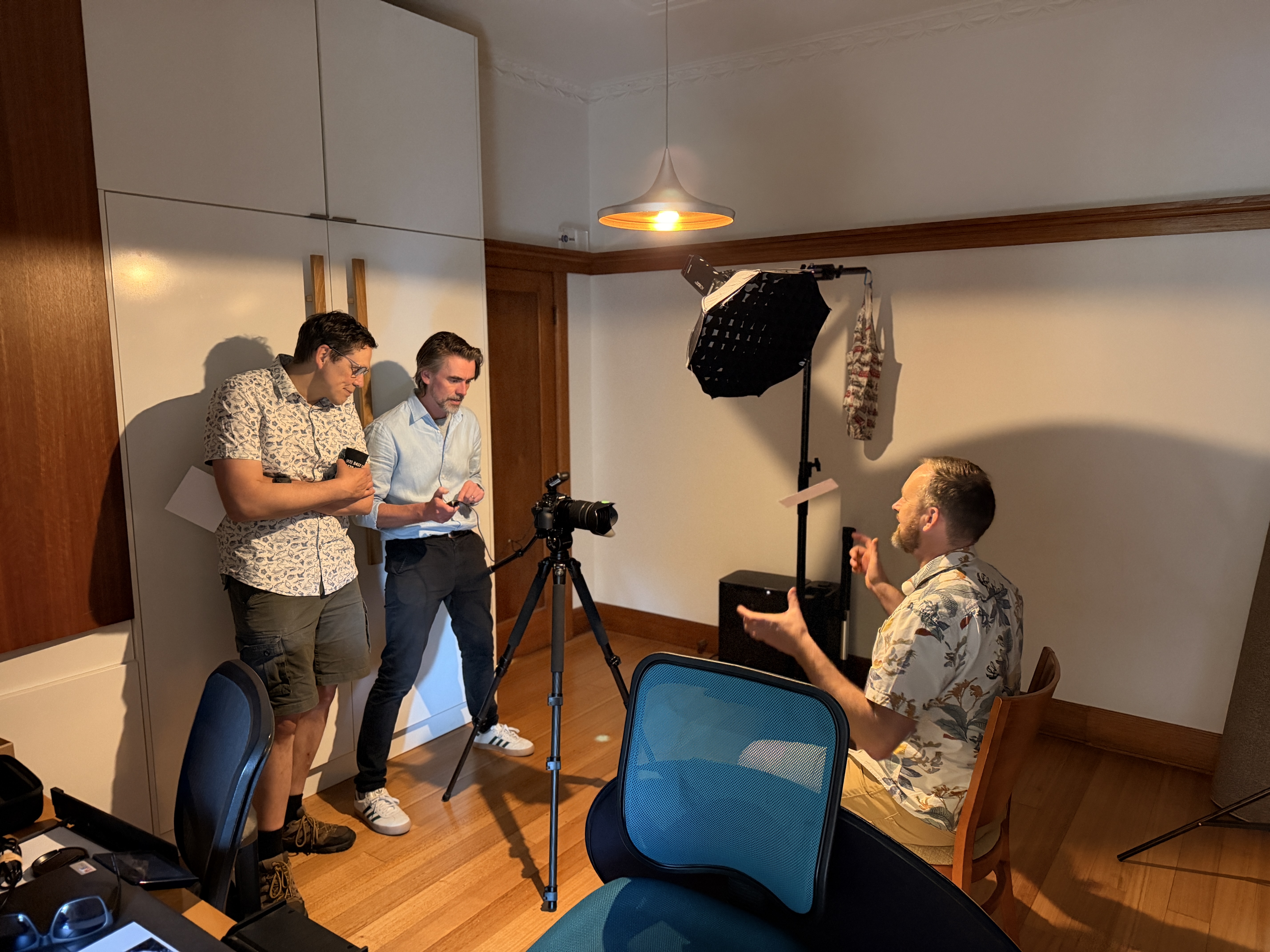
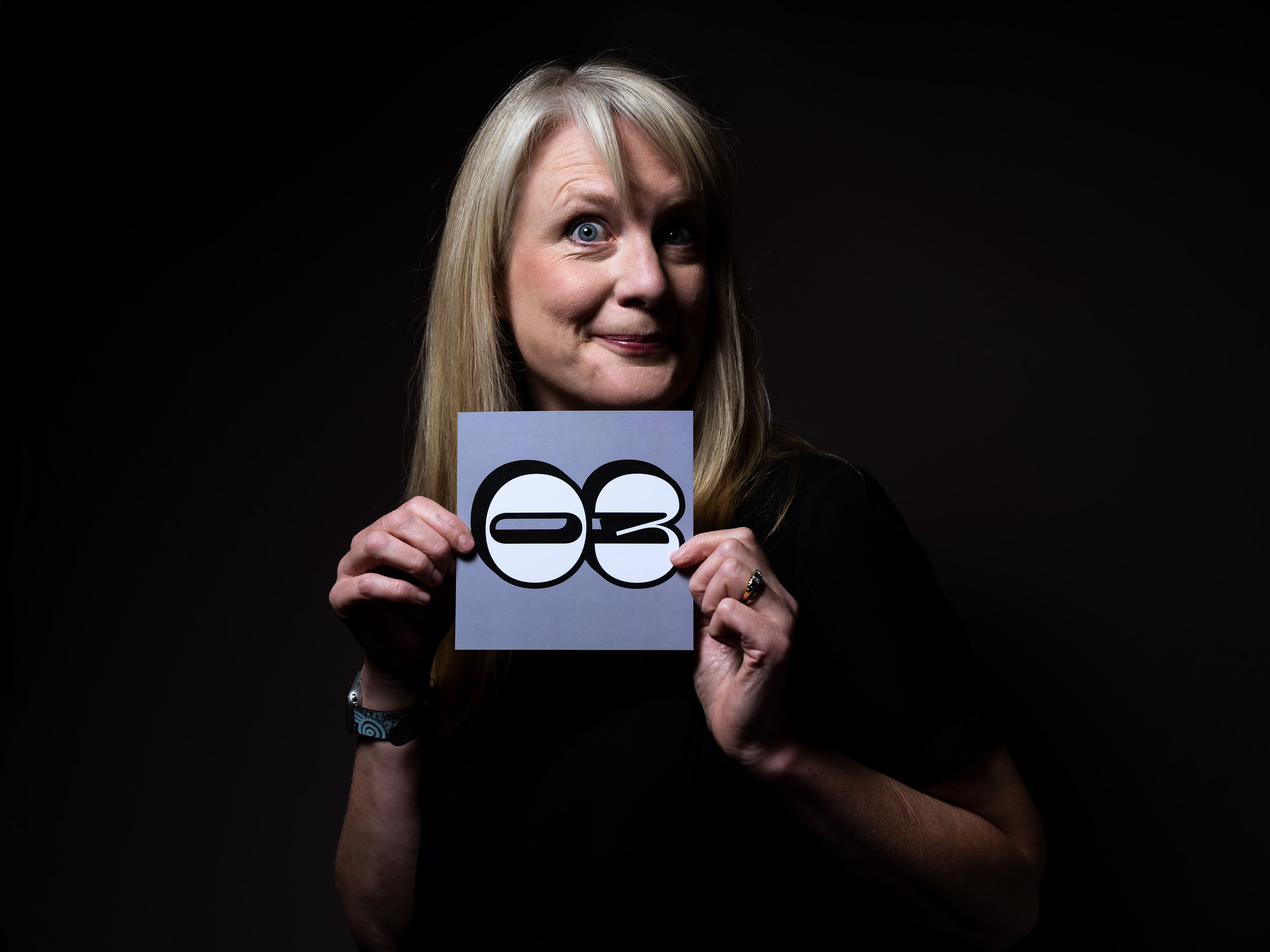
In the end I took 40 photos, with the plan to take the last 10 before I turned 51.
The numbers
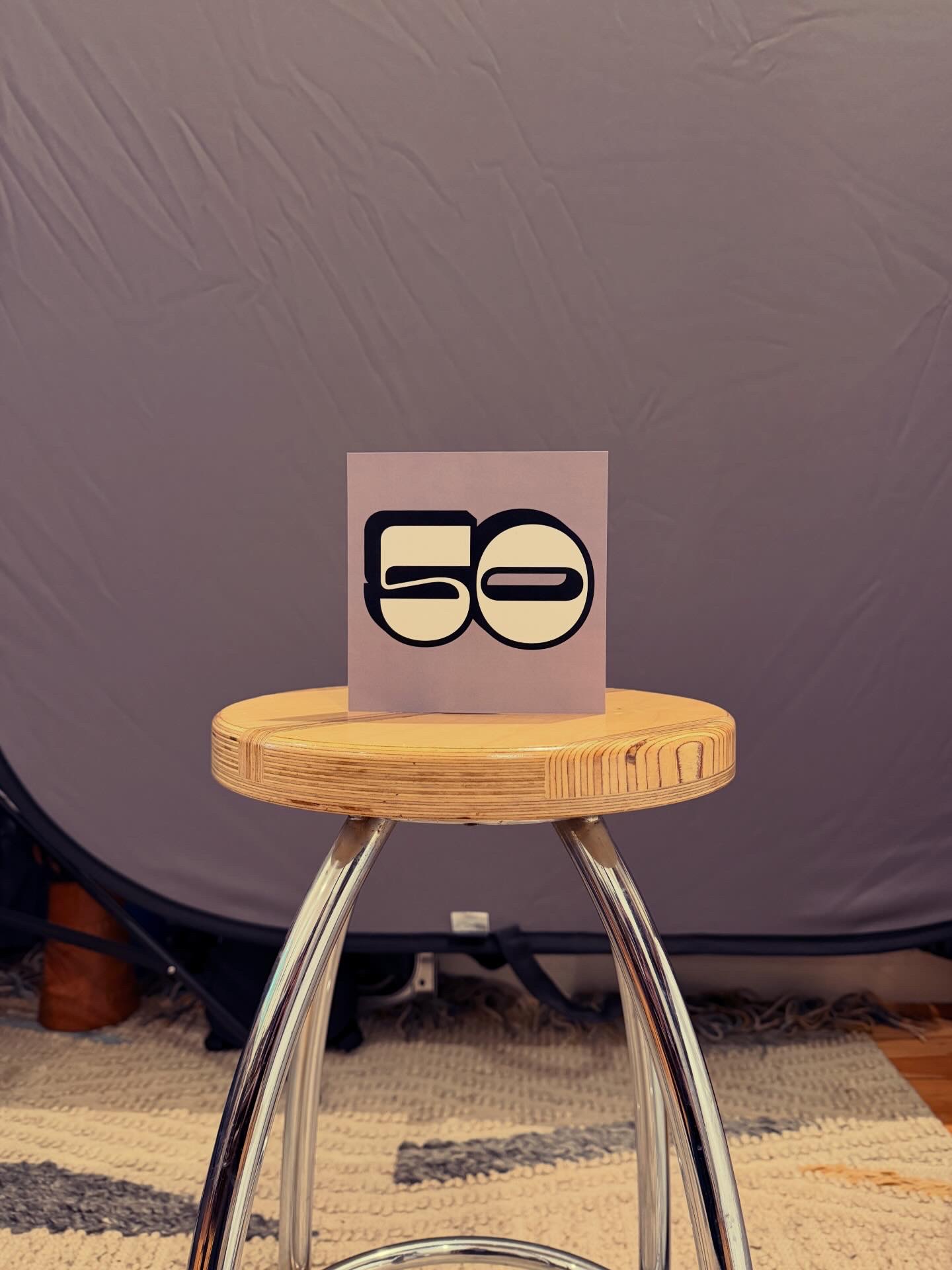
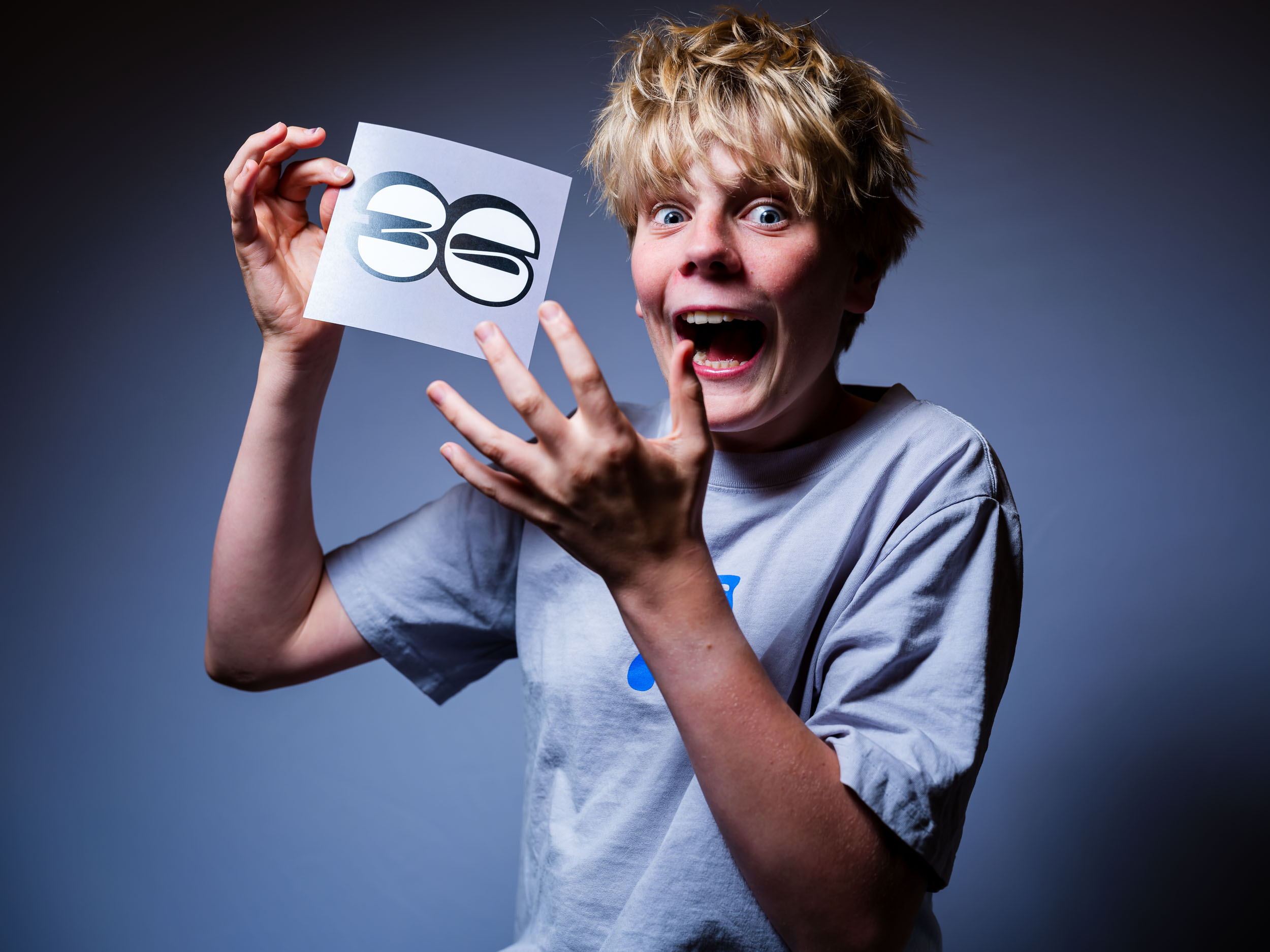
People really like having something to do with their hands in a photo. It’s weird, but if they’re just sitting somewhere, they rarely think ‘Wait, what should I be doing with my hands?’…but as soon as they’re in front of a camera, they start wondering ‘Should my hands be on my lap…no wait, just hanging by my side…no…maybe by my chin, but which hand?’ Suddenly, as a photographer, you have someone in front of you who looks like they’re using hands for the first time.
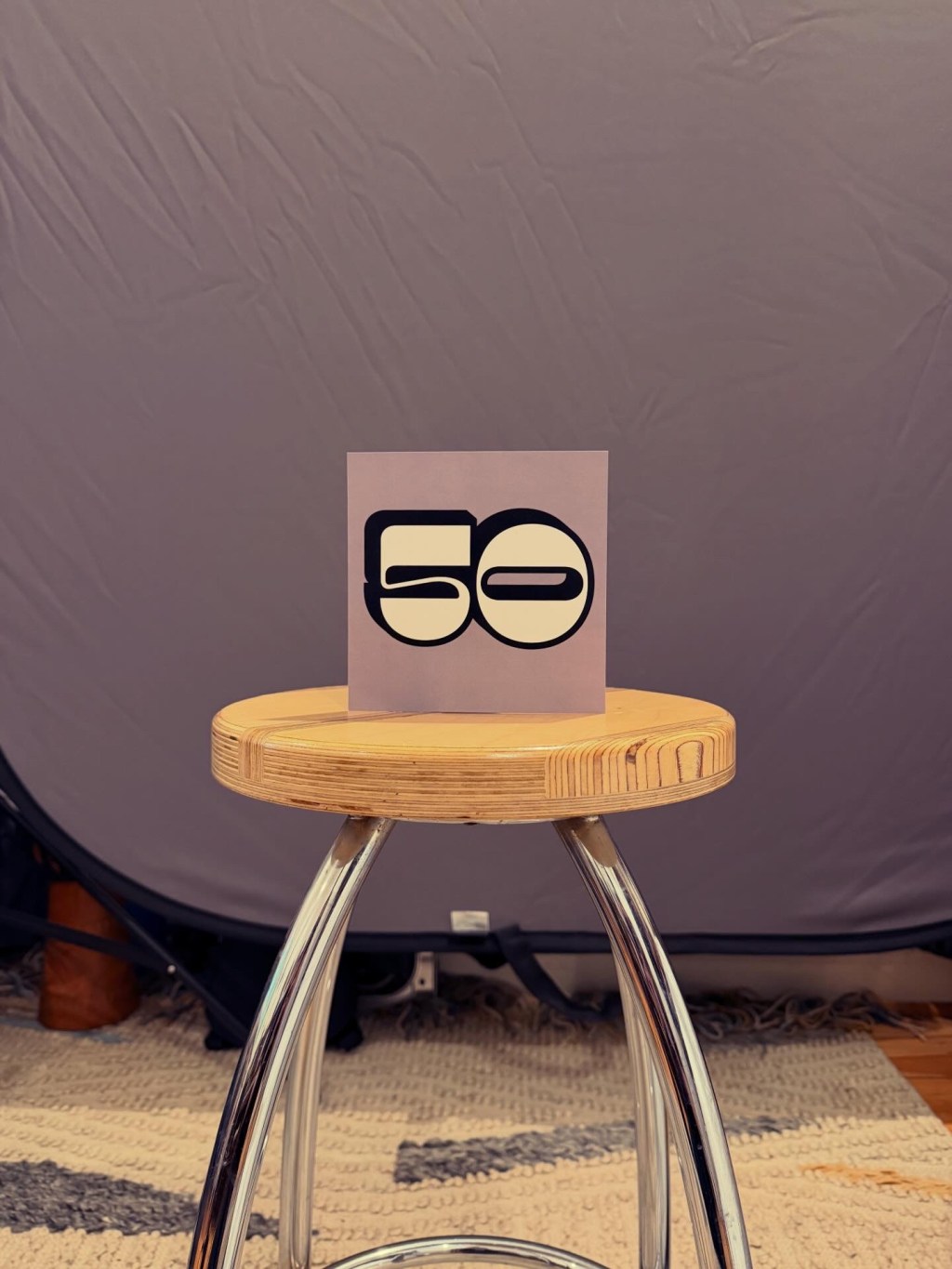
So one of the things I wanted for this project were some physical cards with the numbers 1-50 on them, so that each person had one to hold in one of the photos. I wanted the numbers to a nice linking theme, but not something that distracted from the person holding it. So with that concise brief I went to Daga at Figbird to create them for me. It’s fair to say, she nailed the brief!
Next episode
So that’s how I organised the ‘nuts and bolts’…but how did I go actually working with the people in order to get some photos of people looking genuinely happy? Well you’ll just have to read my next blog.