One of my favourite photographers, Zack Arias, was discussing a philosophy for whether to take a job. The philosophy wasn’t one that he came up with, but it’s one that he likes.
There are three values; Good money, good people and good work…every job has to hit two of these values before it’s worth doing. The last two months have seen a really big increase in the amount of work I’m doing through my own business, and so suddenly I’ve had to look at my philosophy for doing work, if I can’t do it all, I need to know what to say ‘yes’ to and what to say ‘no’ to.
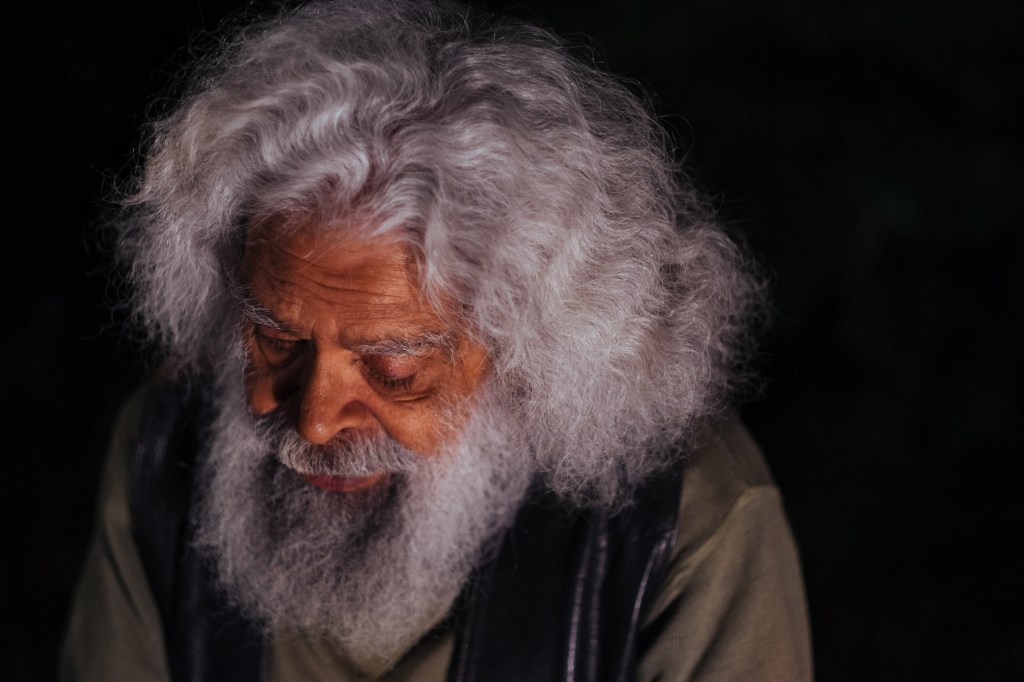
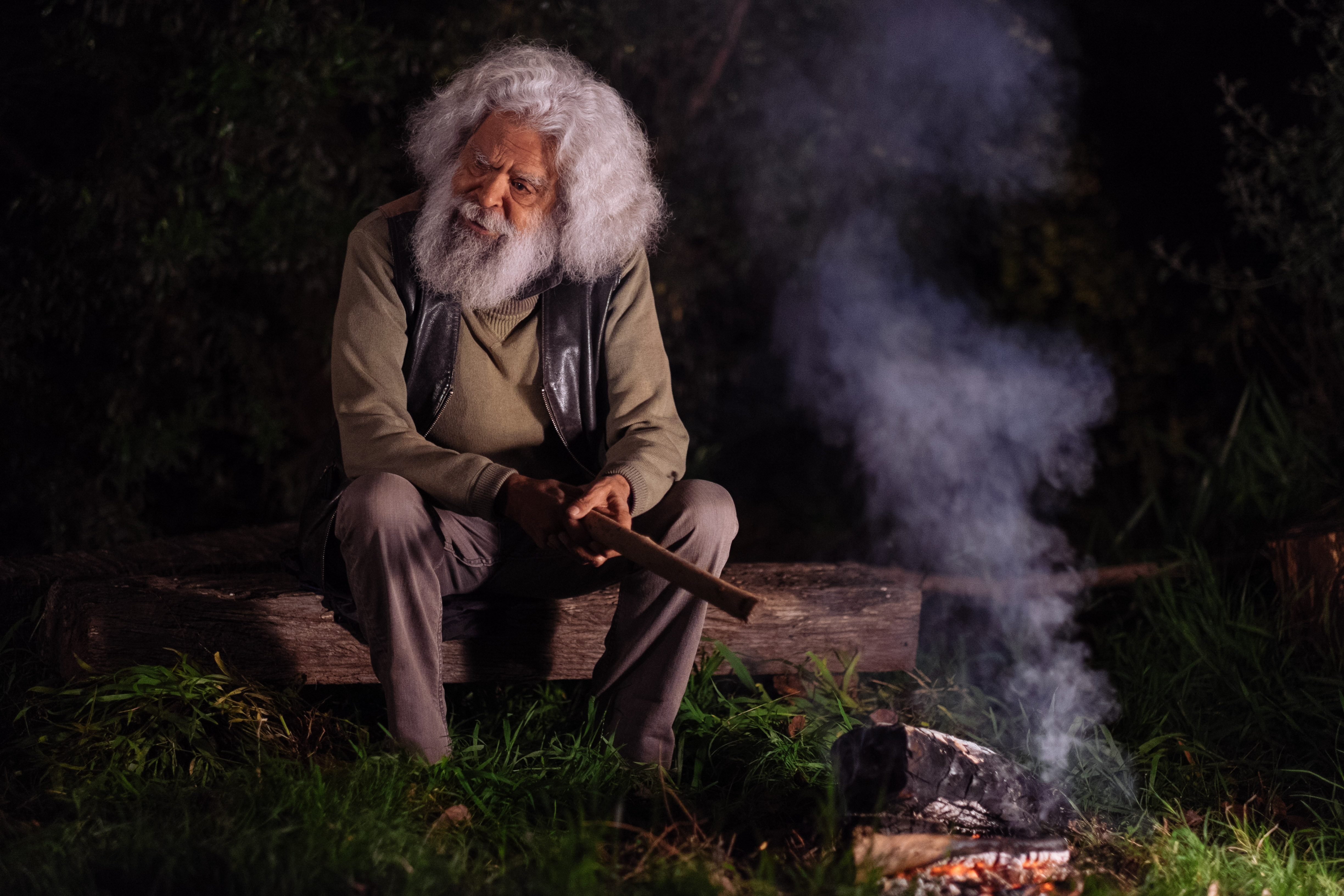
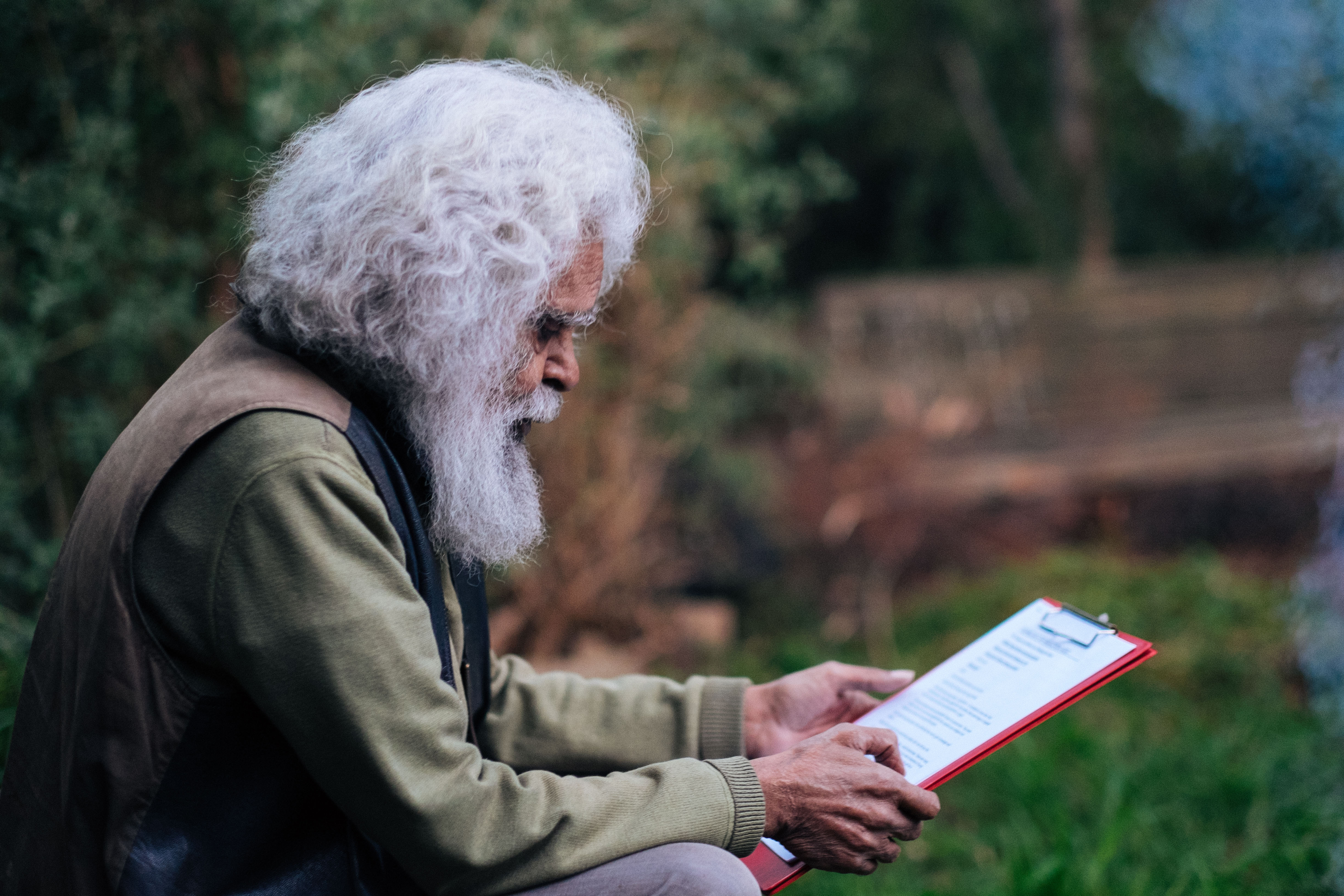
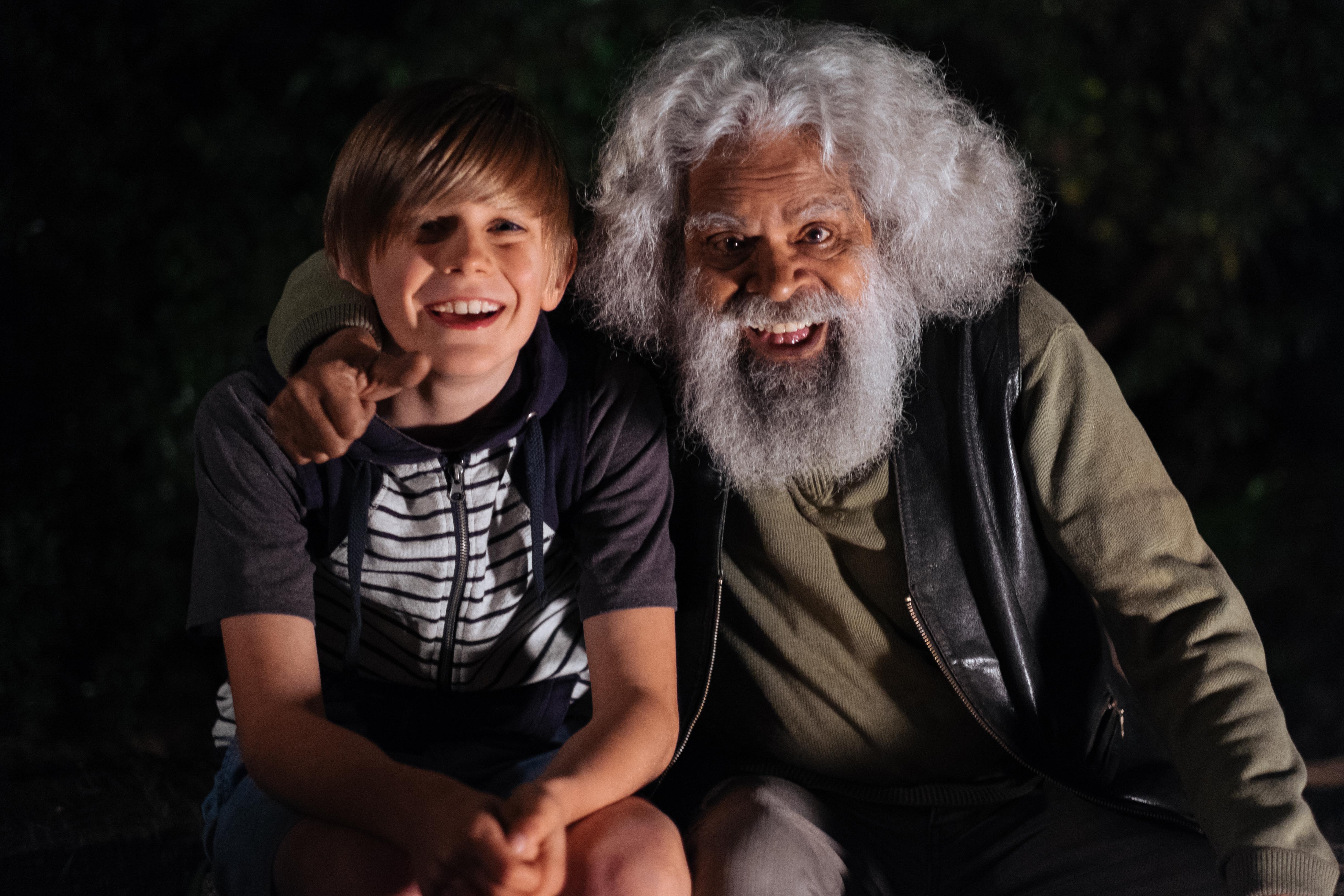
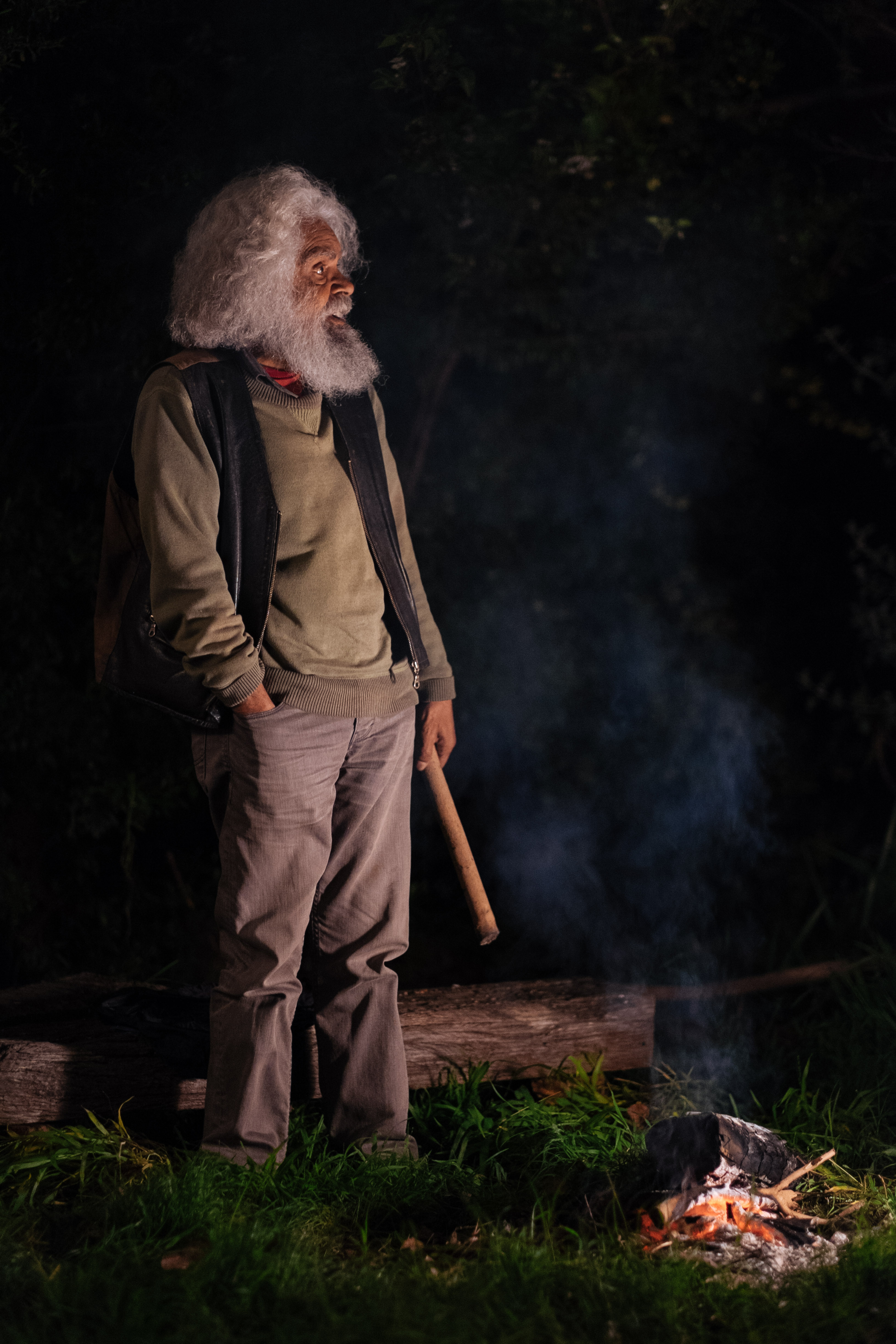
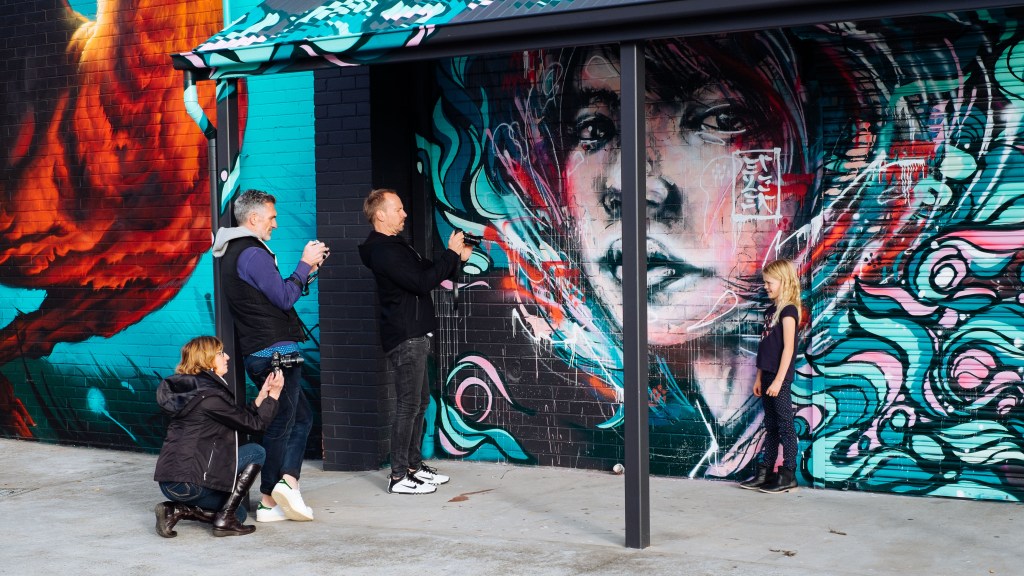
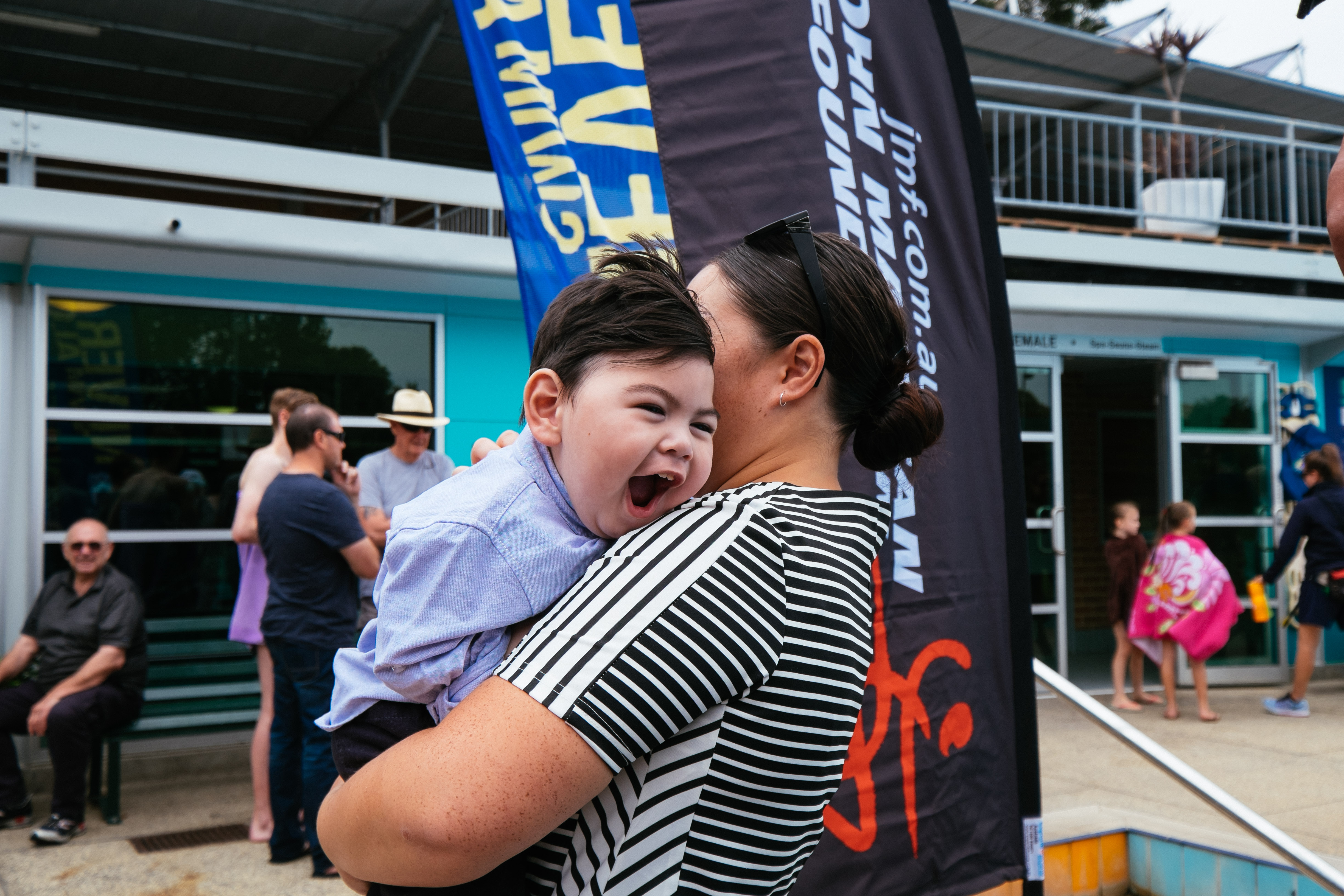
About a month ago I was approached to do a job with a family friend, Don Palmer. The job was not as a photographer or editor or anything that I was working towards…but more as a location scout and general gopher for the shoot. We were going to be shooting for his organisation Malpa, there was a DOP (cameraman) on the job called Mark Tipple and the talent for the job would be Uncle Jack Charles. The money would be exactly $0.
So I put the philosophy into action:
Good money – Negative…but then again they may simply be getting what they pay for.
Good people – I’ve know Don for nearly 20 years…and Katie has known him her whole life. He’s just a thoroughly decent person who I would happily donate my time to whenever he asks. The DOP (Mark Tipple) is insanely good with both stills and video, and Uncle Jack Charles is well…Uncle Jack Charles.
Good work – The video we were shooting was for indigenous kids who had been chosen to be taught traditional and western medical practices that they could take back to their communities. Which is a pretty amazing cause.
I haven’t worked on a video shoot where people who actually know what they’re doing are in charge for a long time…and I haven’t worked with an actual actor for even longer. Plus, if I bring along my camera there is every chance I’ll be able to get a few photos in between takes.
So no money, but brilliant people and amazing work…I said ‘yes’ to the job.
Heart vs wallet
Working in a creative field is always a bit weird when it comes to getting paid. I can’t imagine many people would say to their electrician ‘I’ve got this great idea for a house…but I haven’t got any money for it…could you do the electrical work for me, and then everyone will see how great you are as an electrician and so you will get lots of work from referrals?’ But if you do something creative people tend to think that seeing as you’re enjoying yourself, then you probably don’t really need to get paid. After all, they hate their job…that’s why they get paid.
At the same time, a lot of really great projects will simply never get off the ground unless people chip in to help out. So where do you draw the line? If you only go where the money is you will be creatively suffocated…if you only go where the lovely ideas are…you will be out of business within 6-months.
I’m sure you’ve seen this…but it applies nicely to photography and video work as well
So with the beauty of hindsight, did I make the right call?
Pros
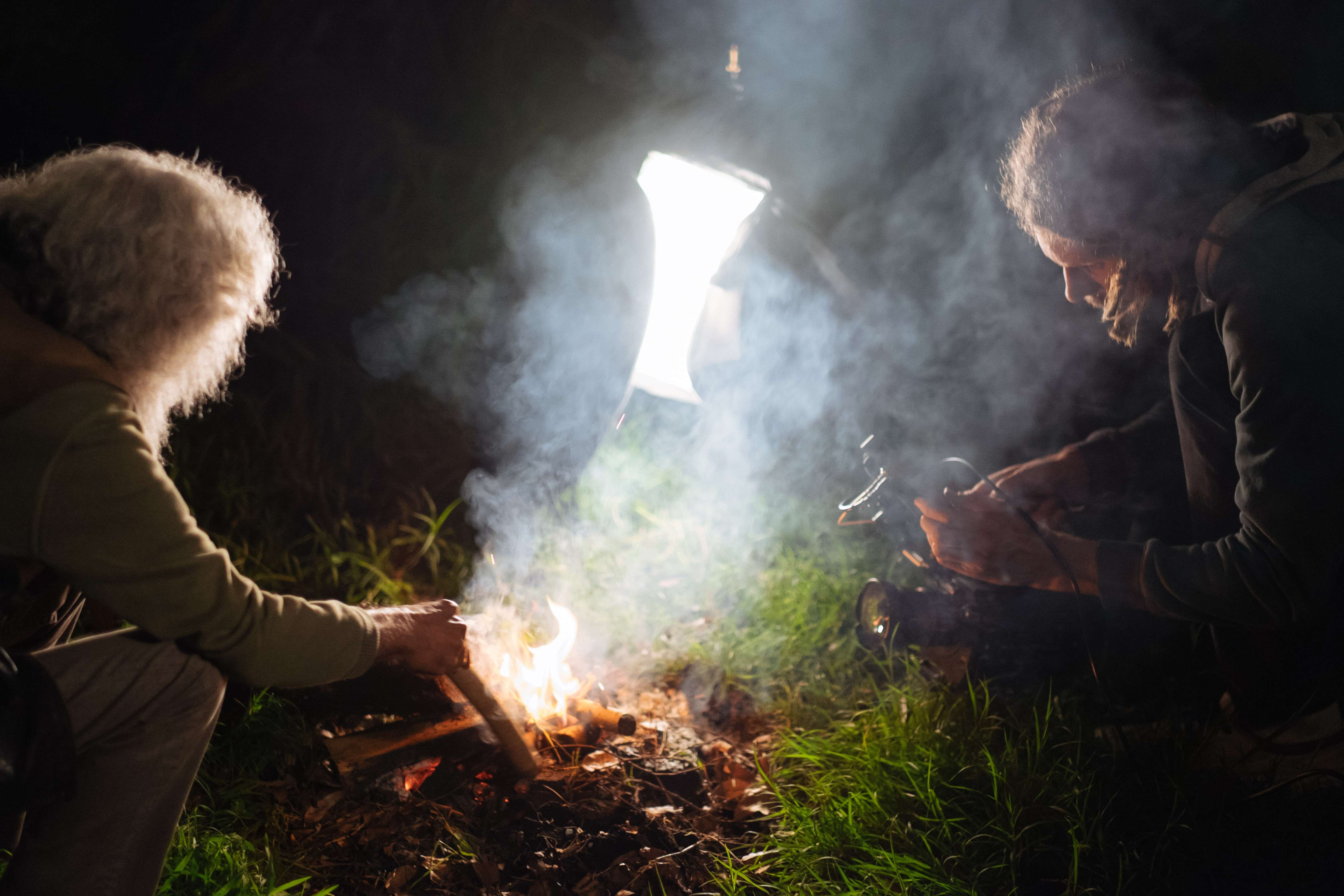
I got to watch a really good DOP in action which was a bit like getting a two hour masterclass for free.
Mark Tipple in action…my camera smelled like smoke for a week, so I shudder to think what his smelled like!
I got to watch a world class actor in action. Speaking as someone who spends most of his time filming either politicians or people who are not used to being in front of a camera. It was a revelation to watch someone who can nail a script time and time again, who can read with the pacing, inflection and timing that makes you feel as though they are speaking to you, rather than reading someone else’s words, and who brought so much energy to what he was doing.
Craftsmanship
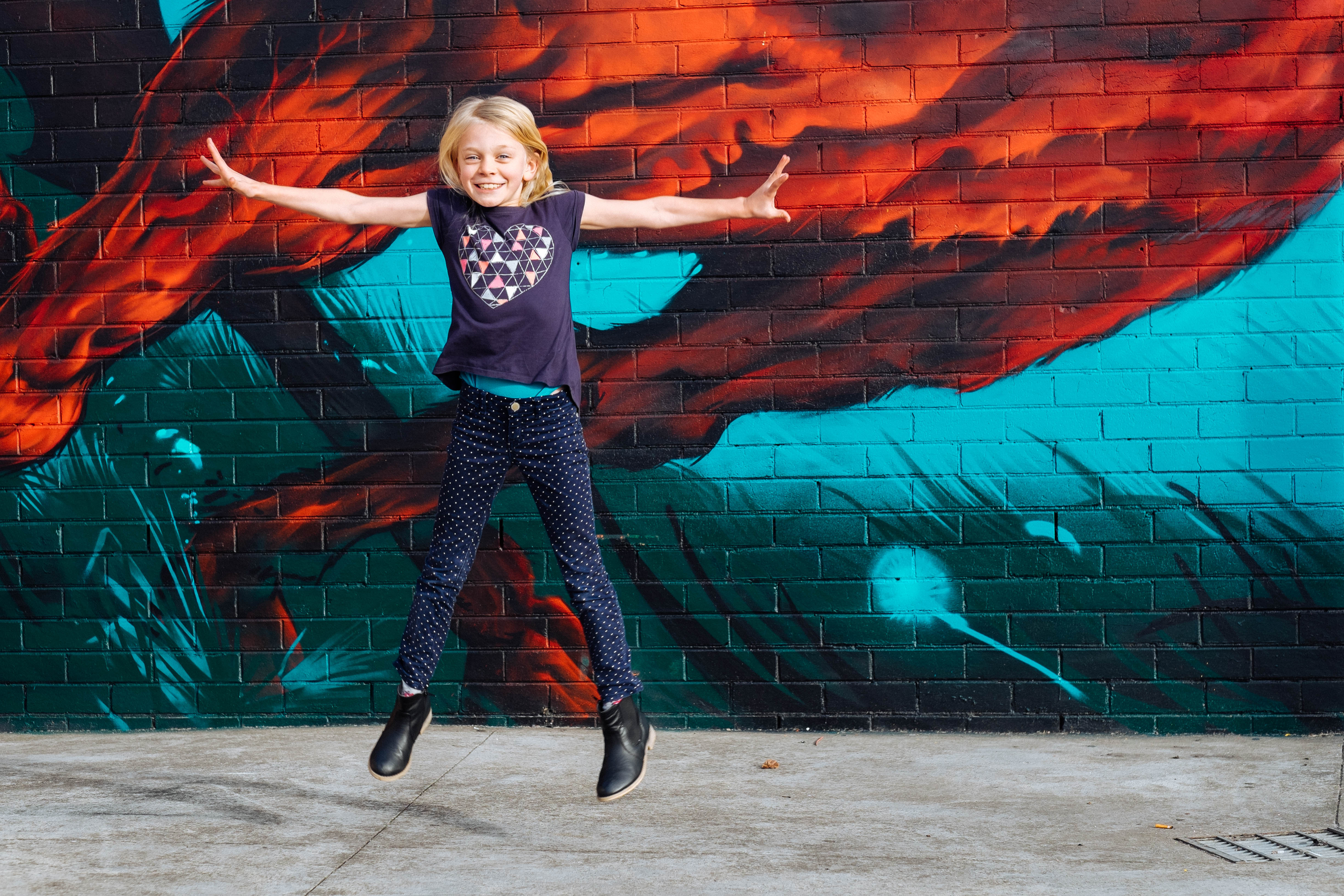
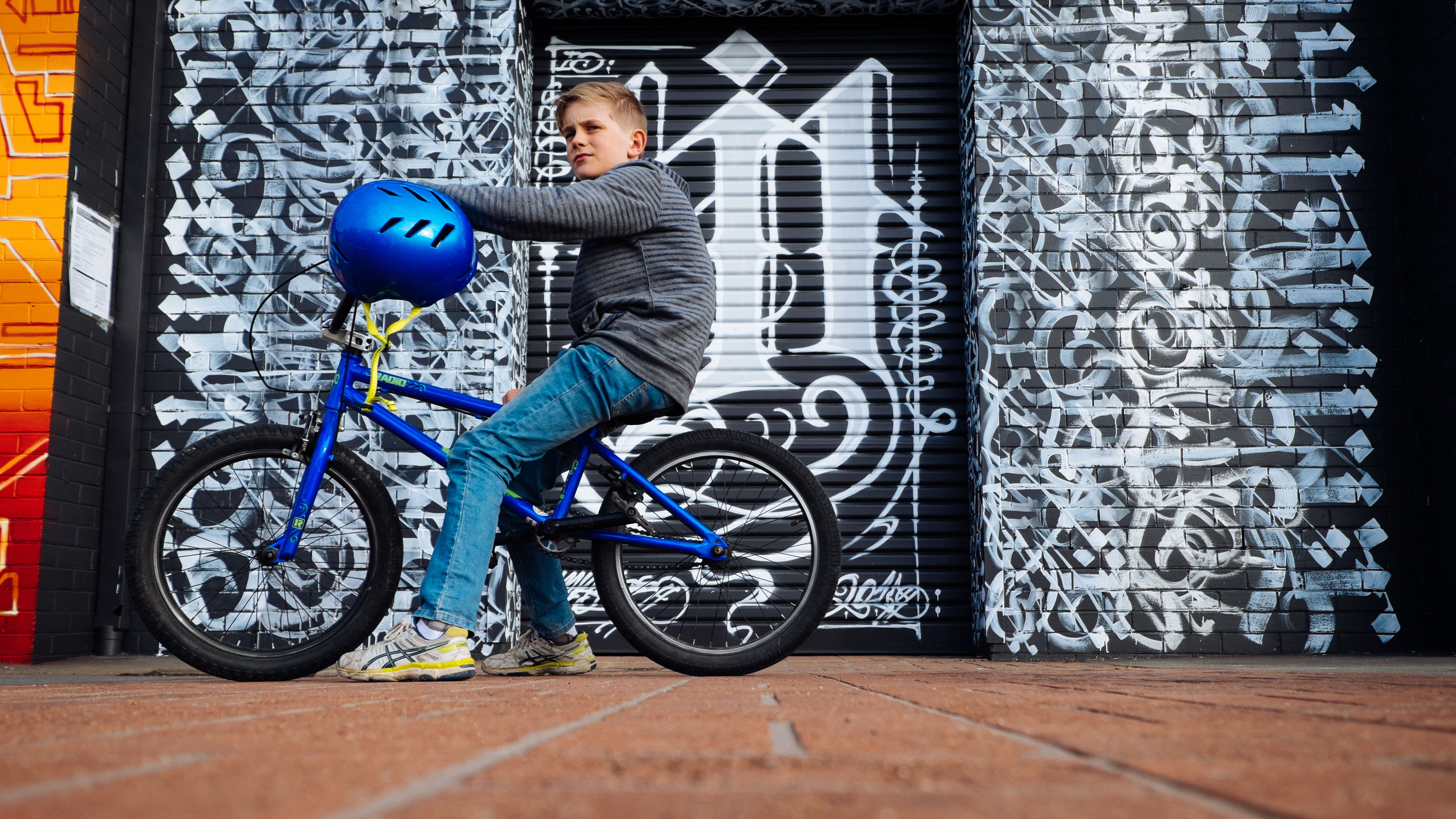
I got to introduce Josh to the world of being on a film-set. There is a weird alchemy that occurs on a film set when the cast and crew are happily working towards the same goal, and Josh got to live that first hand…and meet Uncle Jack Charles who had seen in ‘Pan‘ just the week before.
Not quite sure who is more excited to meet who.
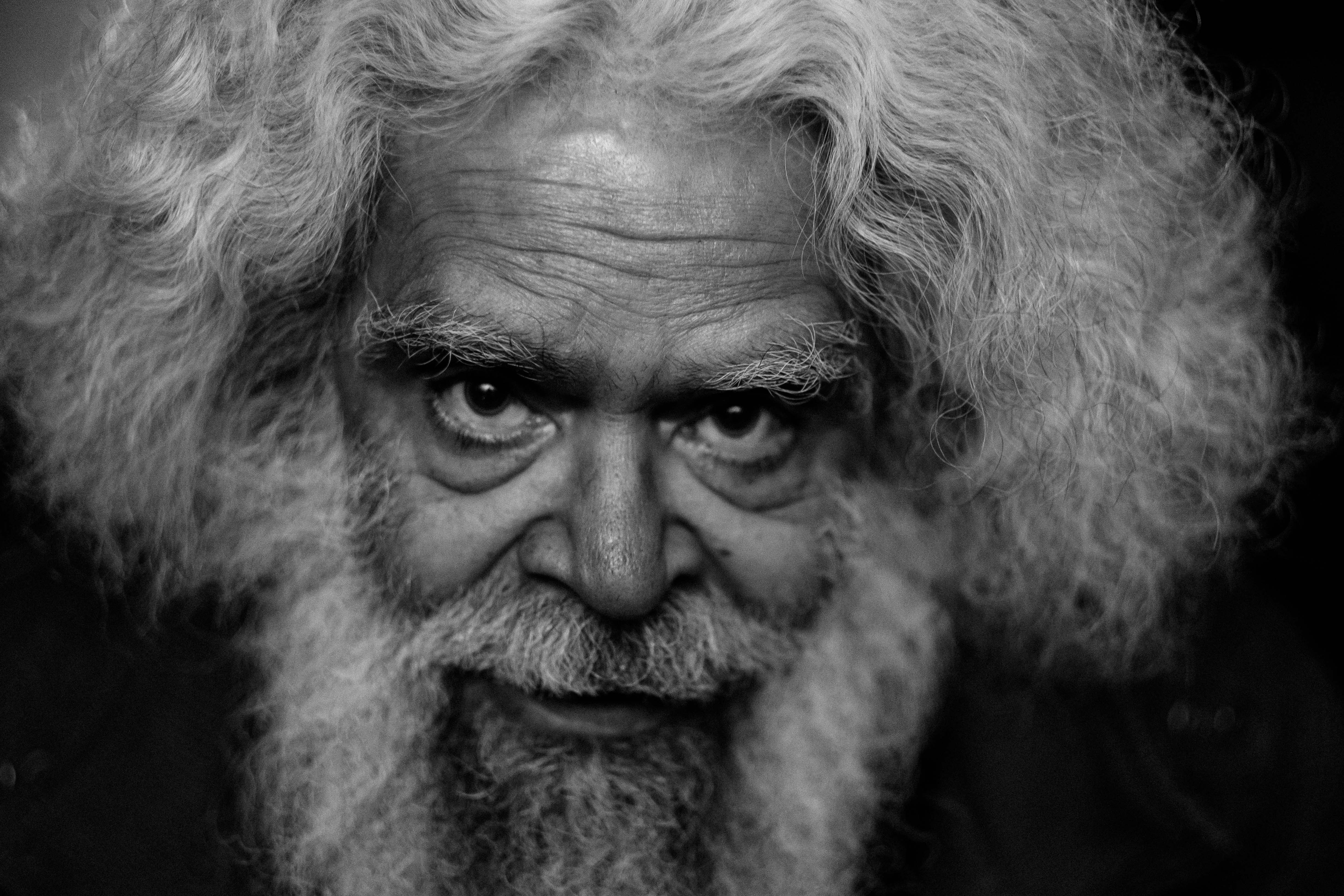
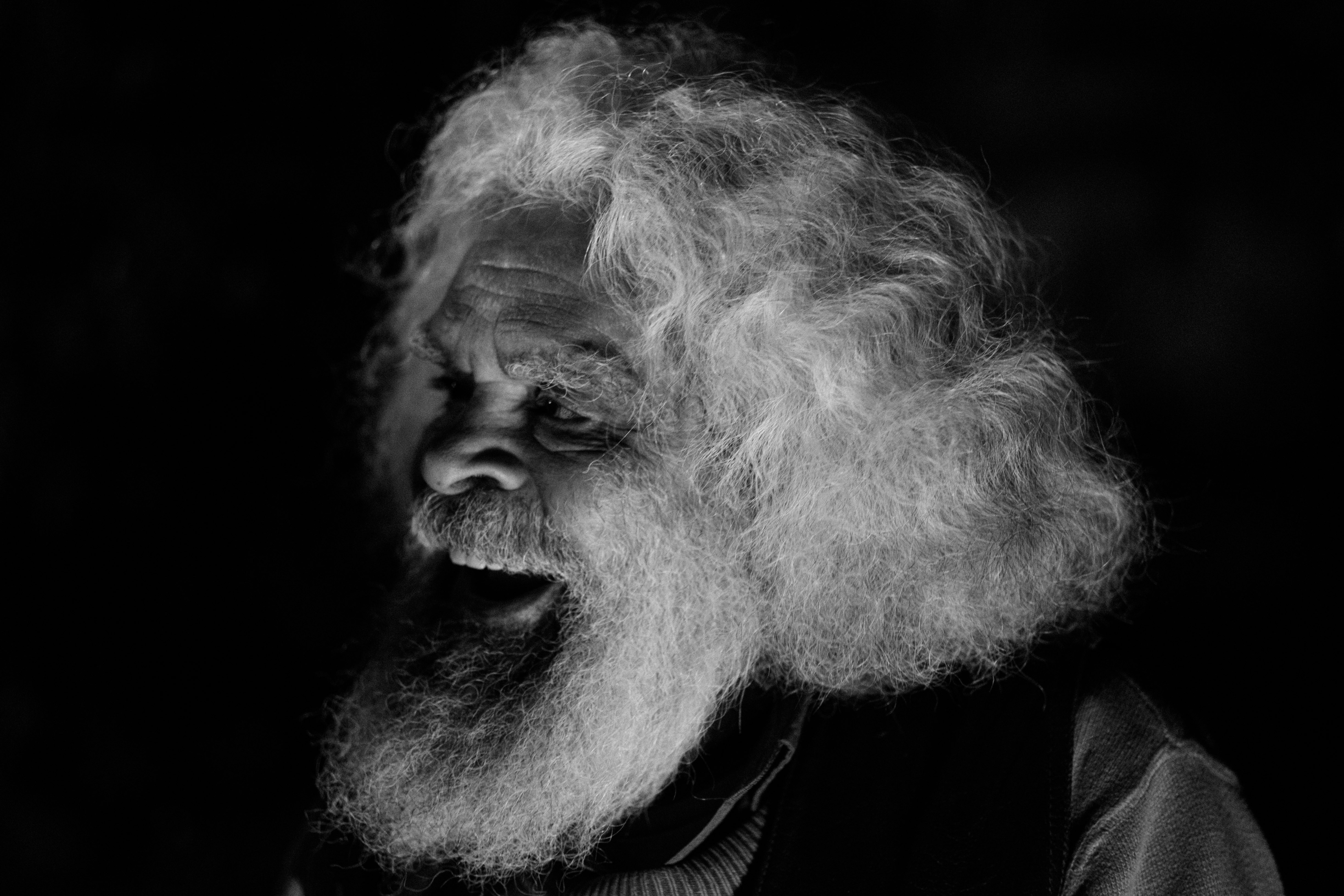
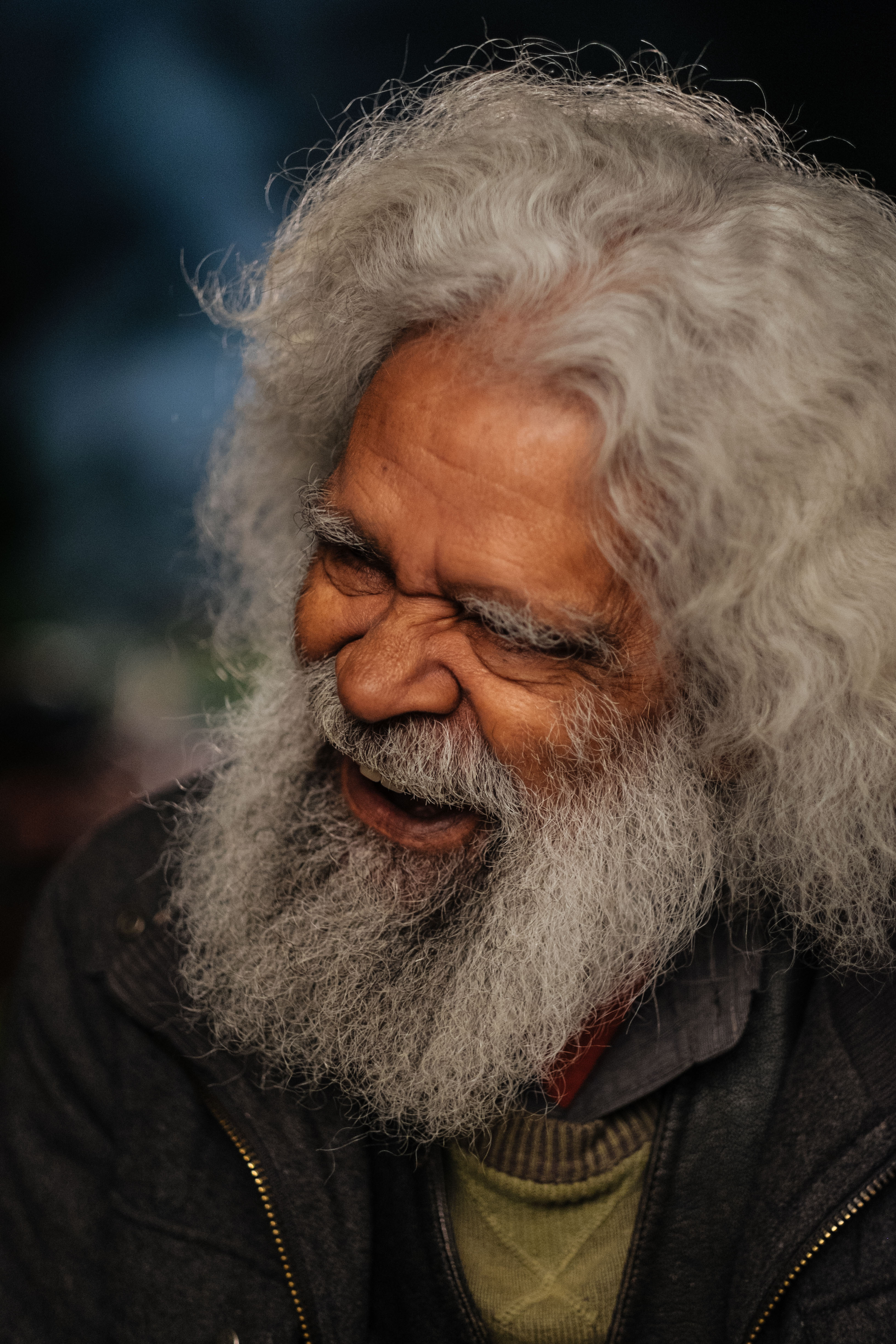
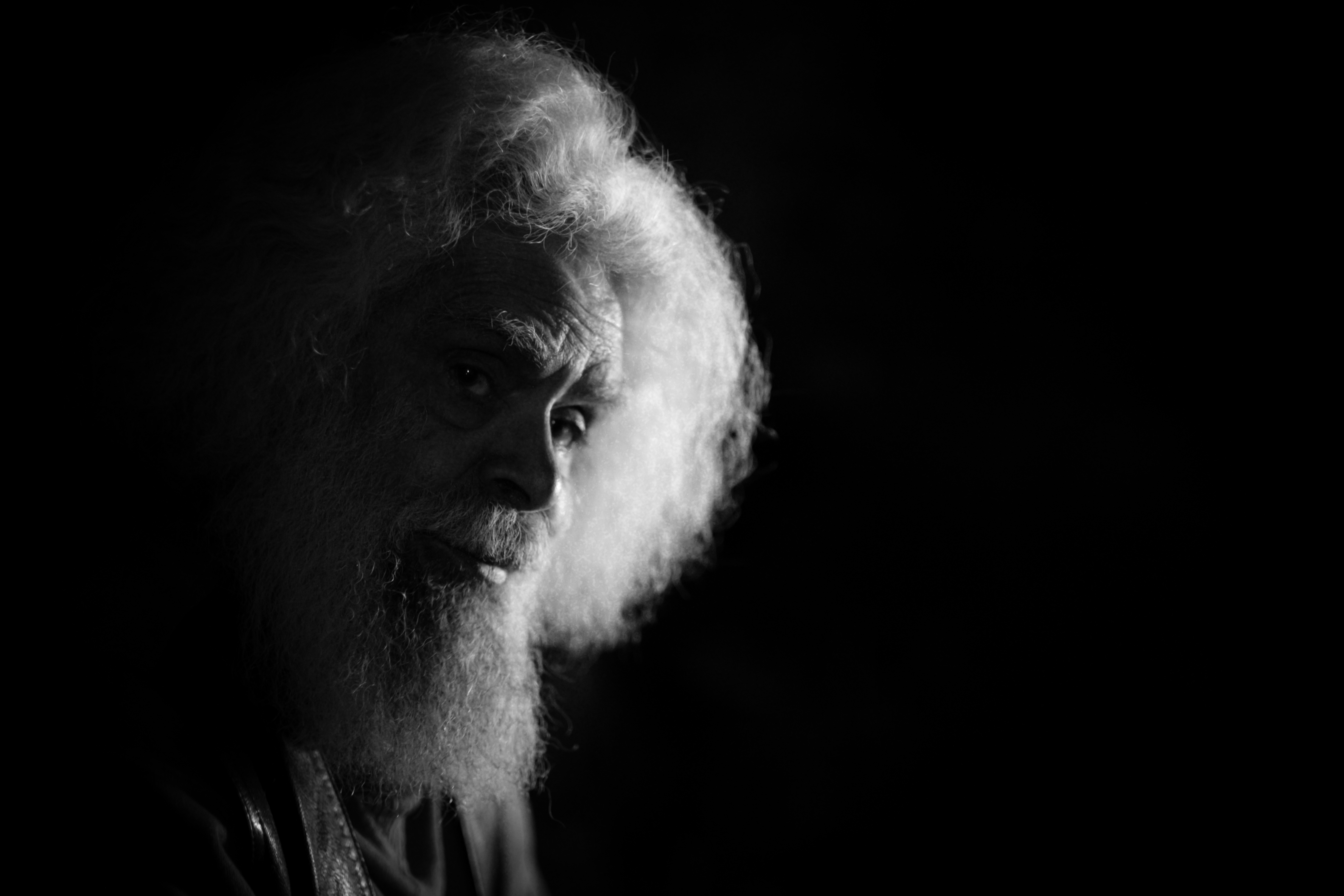
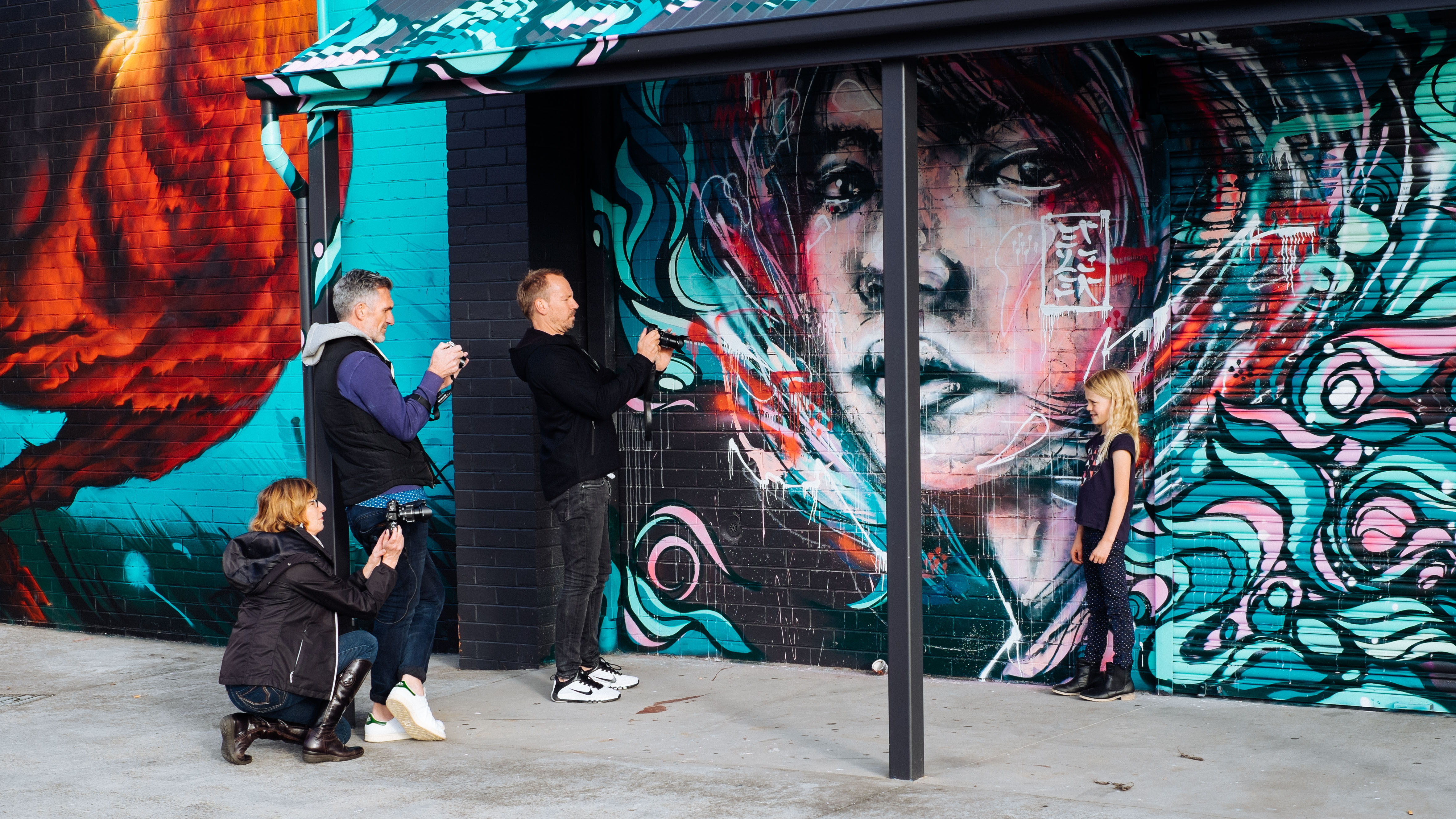
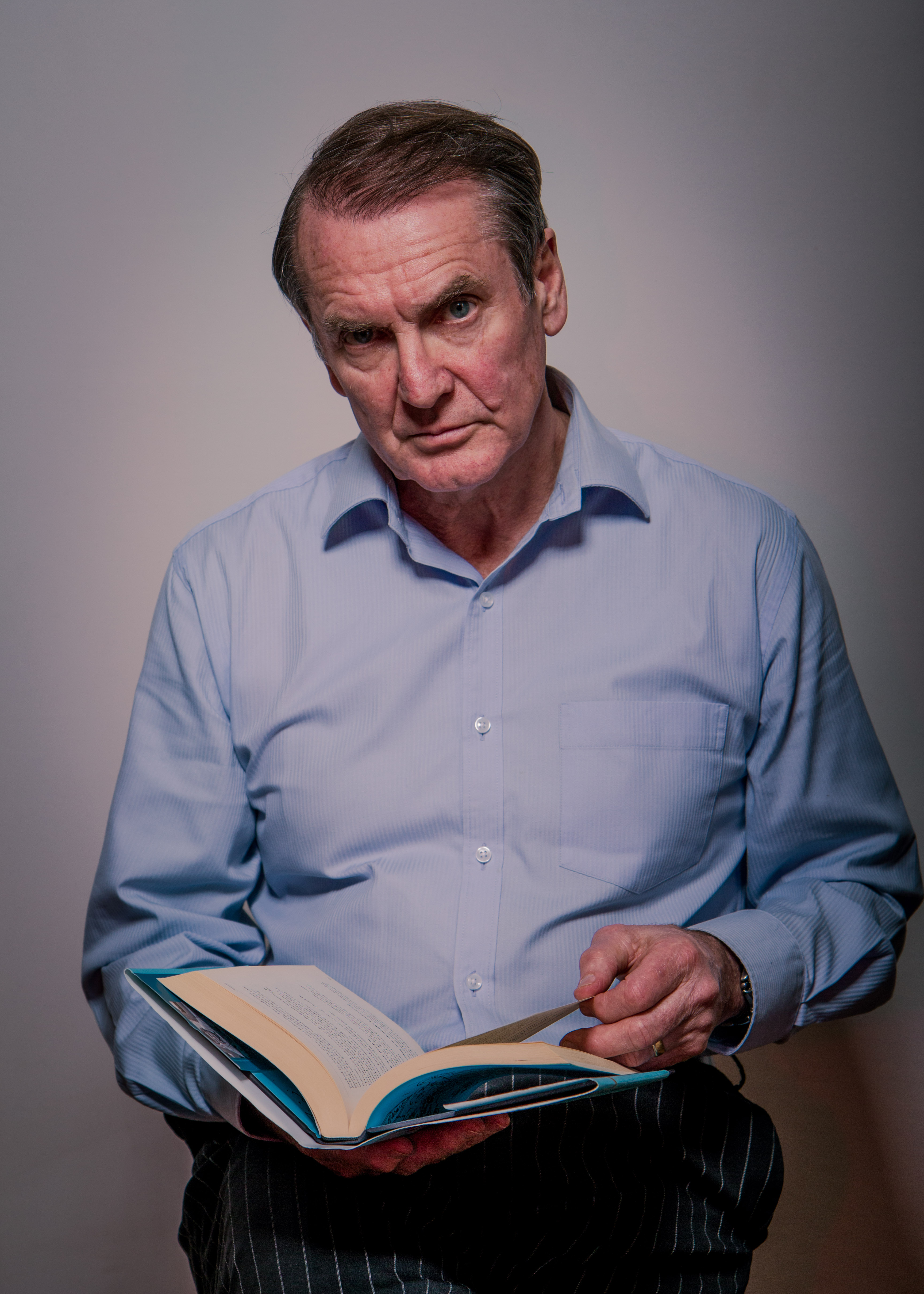
I got to take advantage of someone else’s lighting set up and take photos of someone as engaging and enigmatic as Uncle Jack Charles.
Am I devastated that I missed the focus on his eyes…yes, yes I am.Watching Uncle Jack was like witnessing a force of nature. He was relentlessly engaging.
Cons
I missed swim squad…and suffered like a dog the next week.
Conclusion
The Gillian Welch song ‘Everything is Free‘ (a song about artists giving away their work because “we’re gonna do it anyway, even if it doesn’t pay”) rebounds in my head every time I’m asked to do a job for nothing. But I would hate to become the sort of person who passes up the opportunity to work on an amazing project like this…and with people like Don, Mark and Uncle Jack.
Some experiences are priceless.
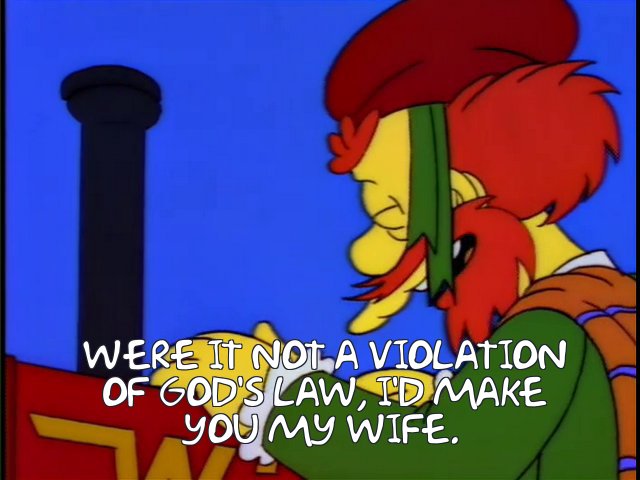
There’s a great moment in an episode of the Simpsons where Groundskeeper Willie solemnly whispers to his tractor ‘Were it not a violation of God’s law, I’d make you my wife’. Such is his love for this inanimate object.
Without wanting to scare you too much…I’m starting to feel the same way about my Fuji 35mm f1.4 lens.
But why?! I hear absolutely none of you ask. Well here are a few of my reasons.
Form
I am quietly confident that whoever designed the X-T1 was doing it with the 35mm lens in mind. It just looks like it’s meant to be there. Whenever I have another lens on the body, it looks like exactly that, a lens on a body. But with the 35mm it just looks like a perfectly balanced camera.
It’s also wonderfully unobtrusive. If you want to swan around announcing to the world that you’re a photographer and quite a big-deal, then a 5D with a 70-200mm does a wonderful job. But if you want to just blend in with your surroundings and keep people at ease, the 35mm is sublime.
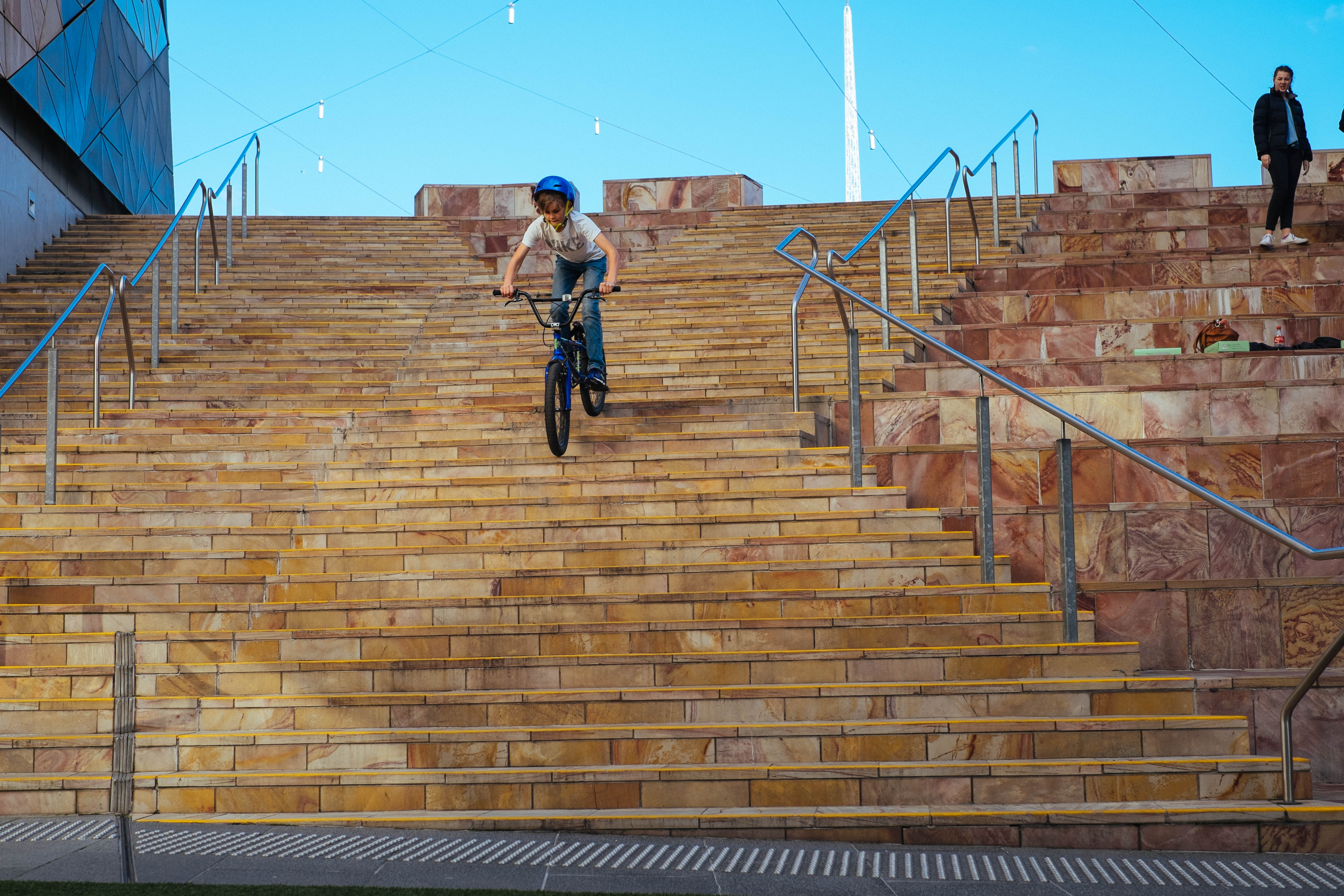
It also lets me live out the fantasy that I’m James Nachtwey or some other old-school photo journalist, trying to take that critical once in a lifetime shot, with only a few frames of film left on the roll…when in fact I’m just another Dad taking a photo of his son riding a BMX down some stairs, and if any of the 38 photos I took didn’t work…I’ll just make him do it again.
Function
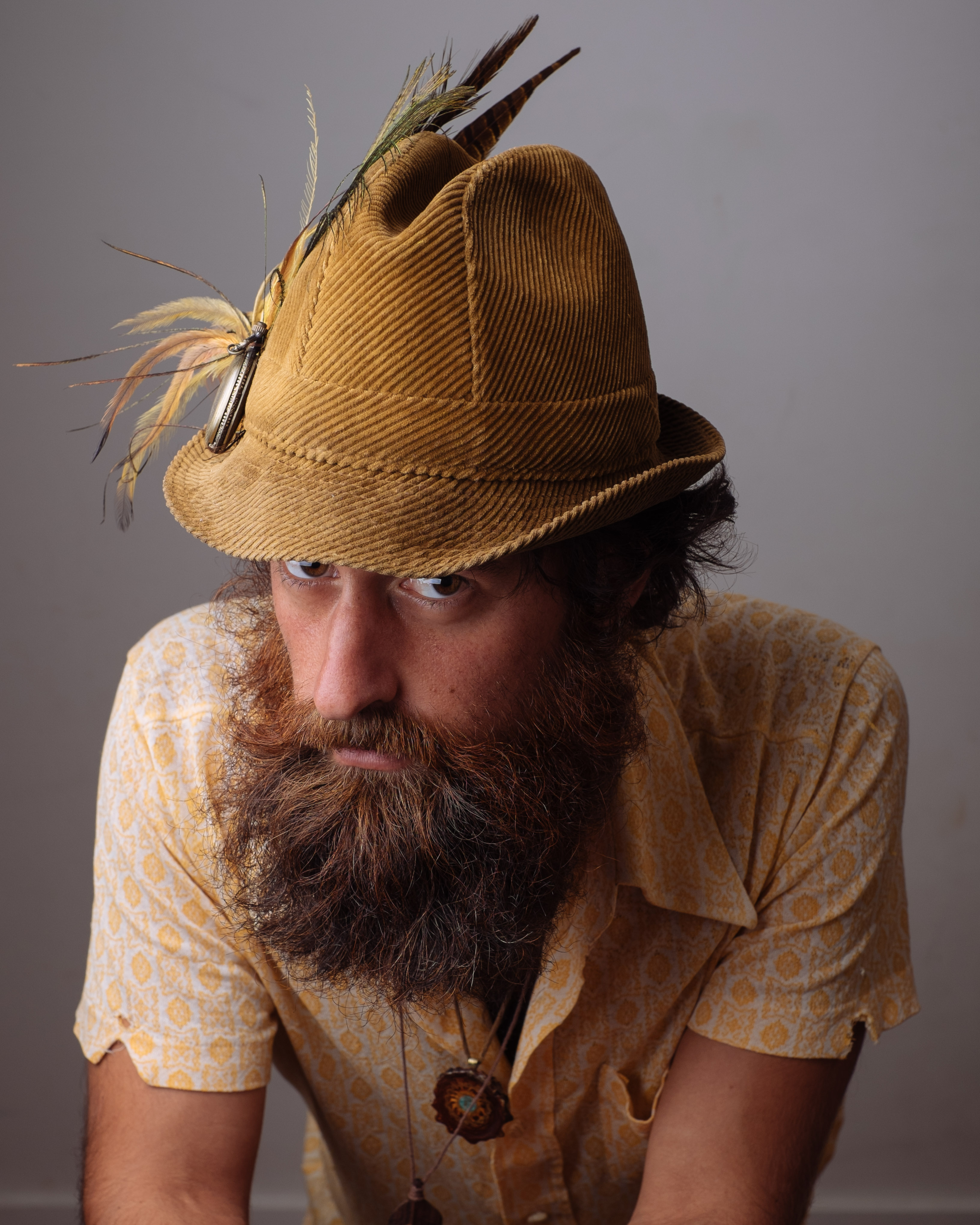
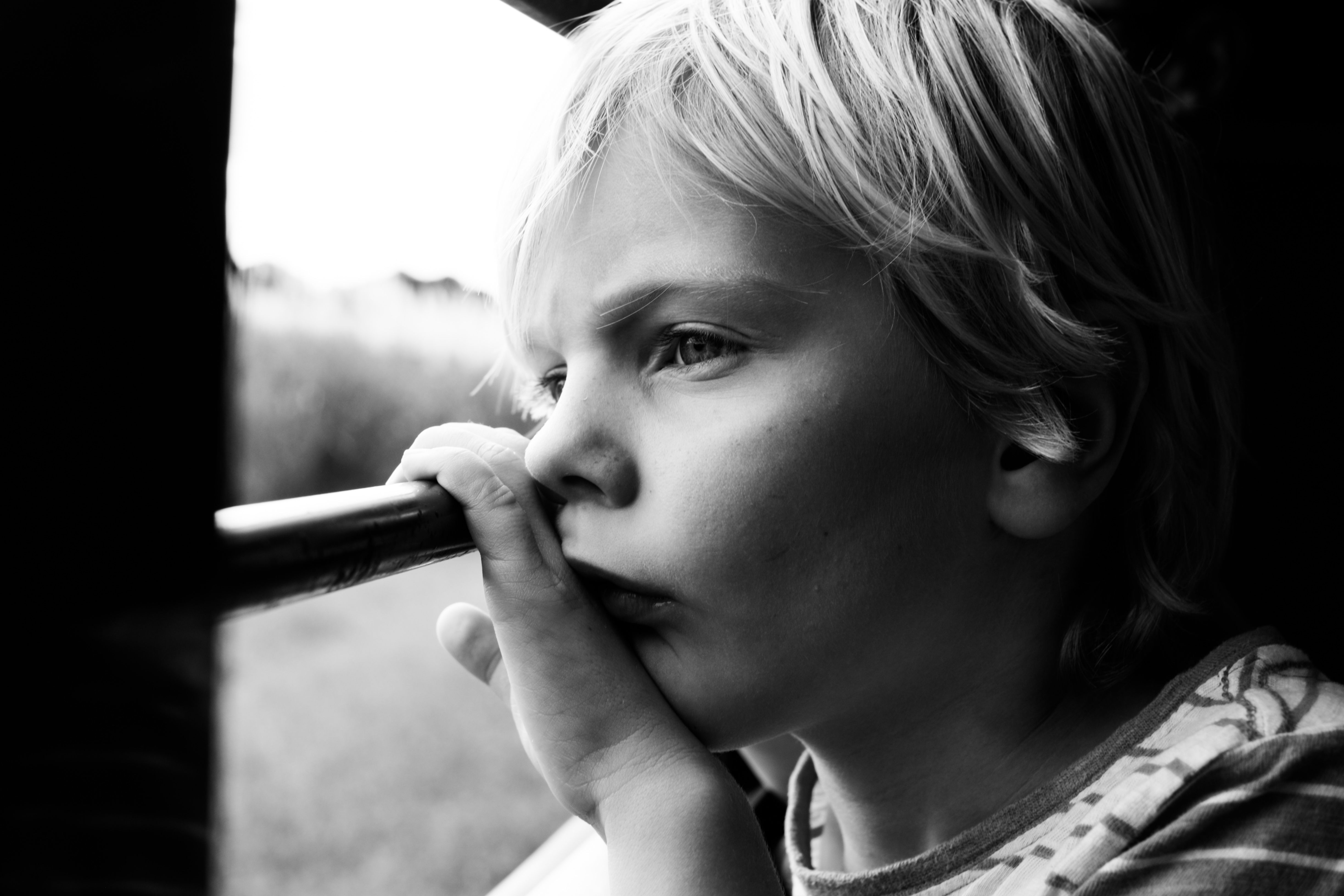
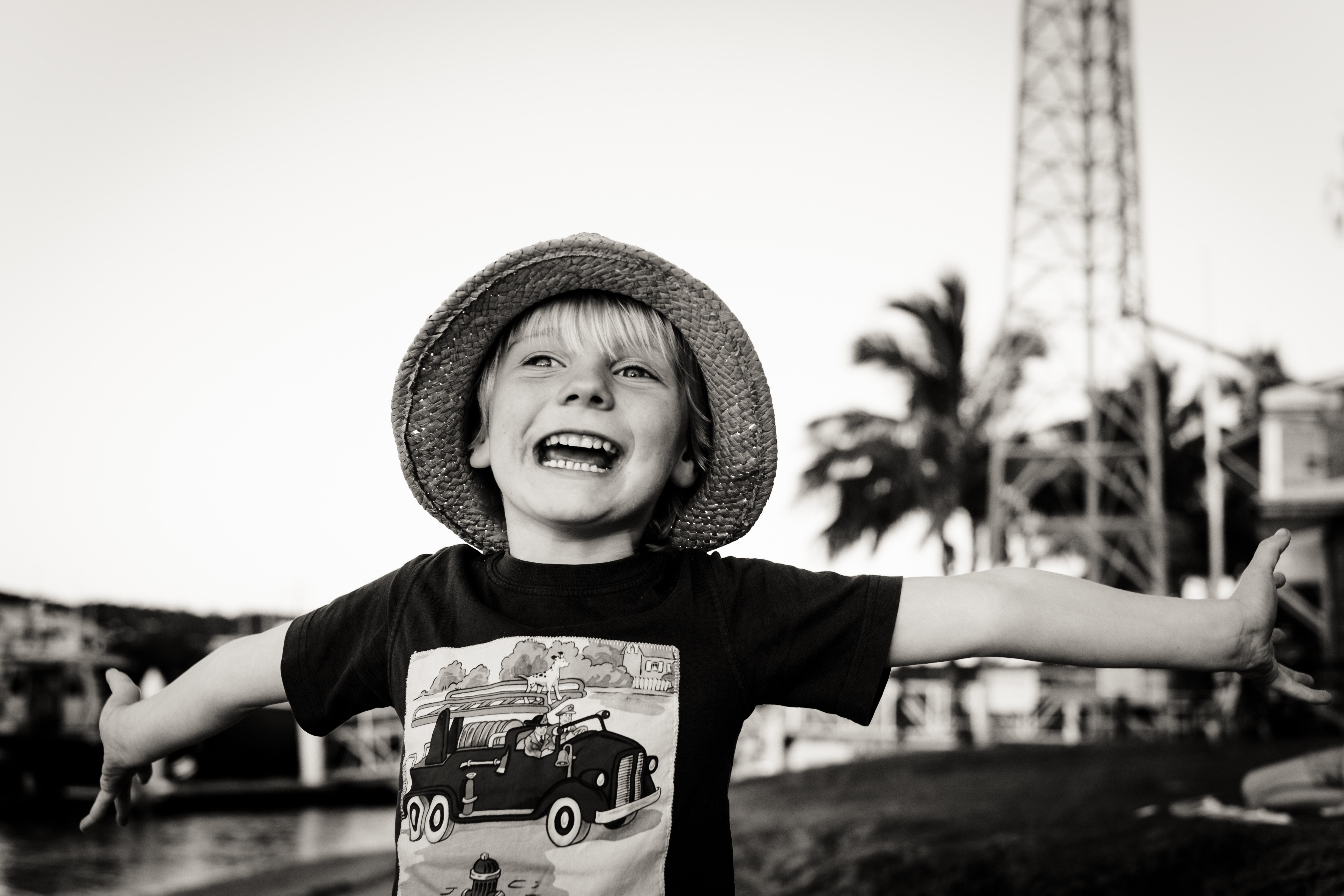
Want to shoot some portraits? The 35mm will knock them out of the park.
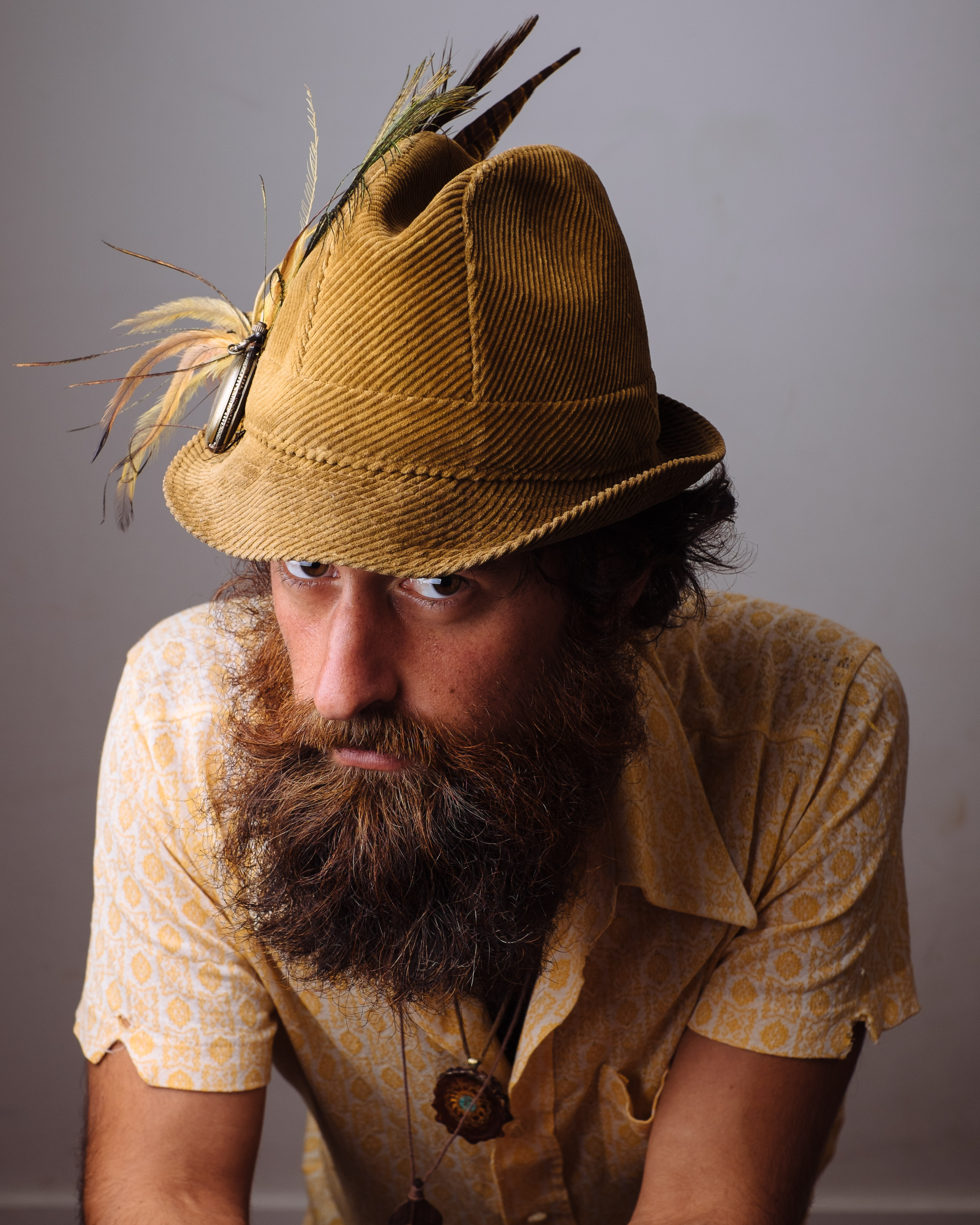
Man in a hat.Boy on train
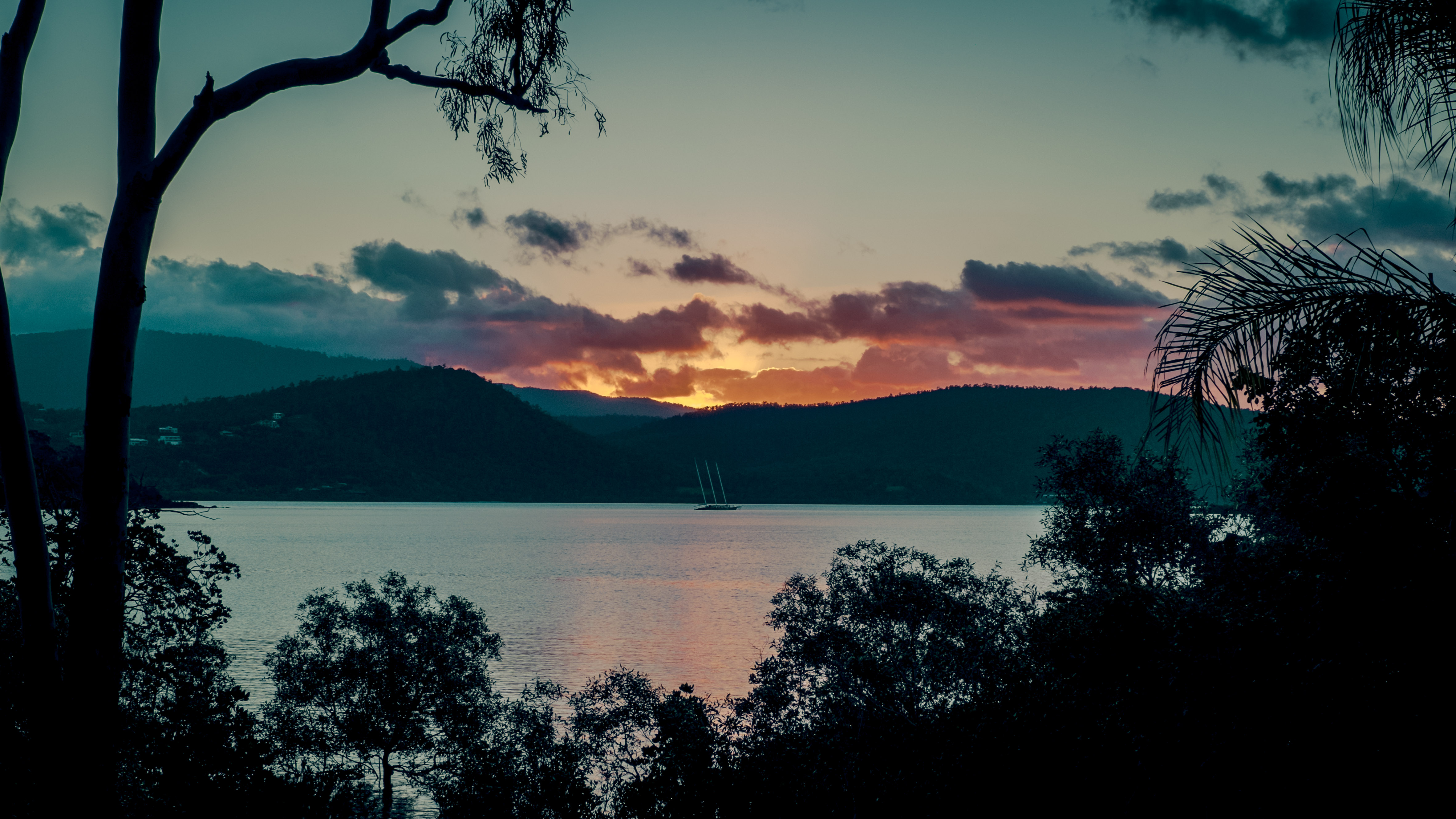
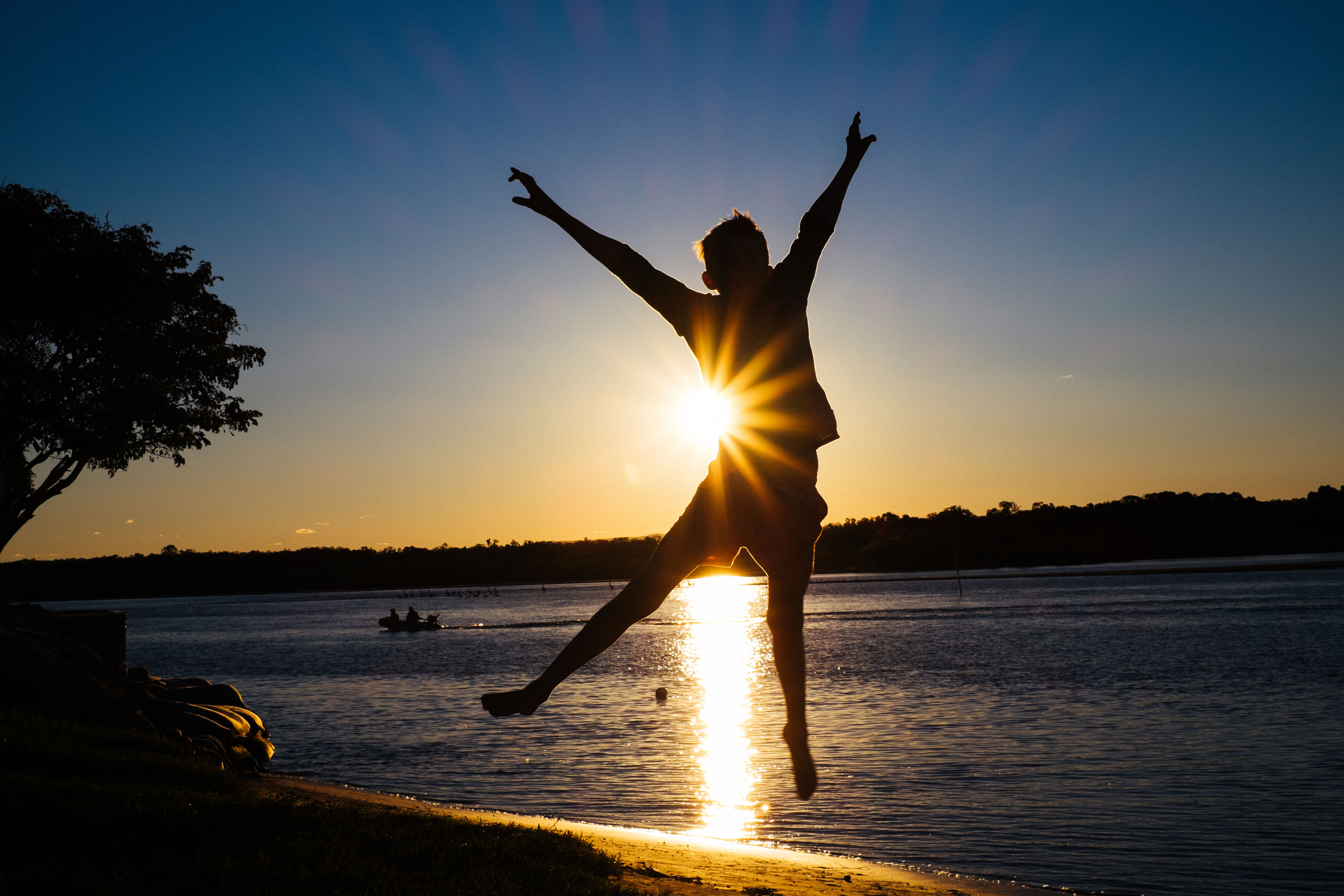
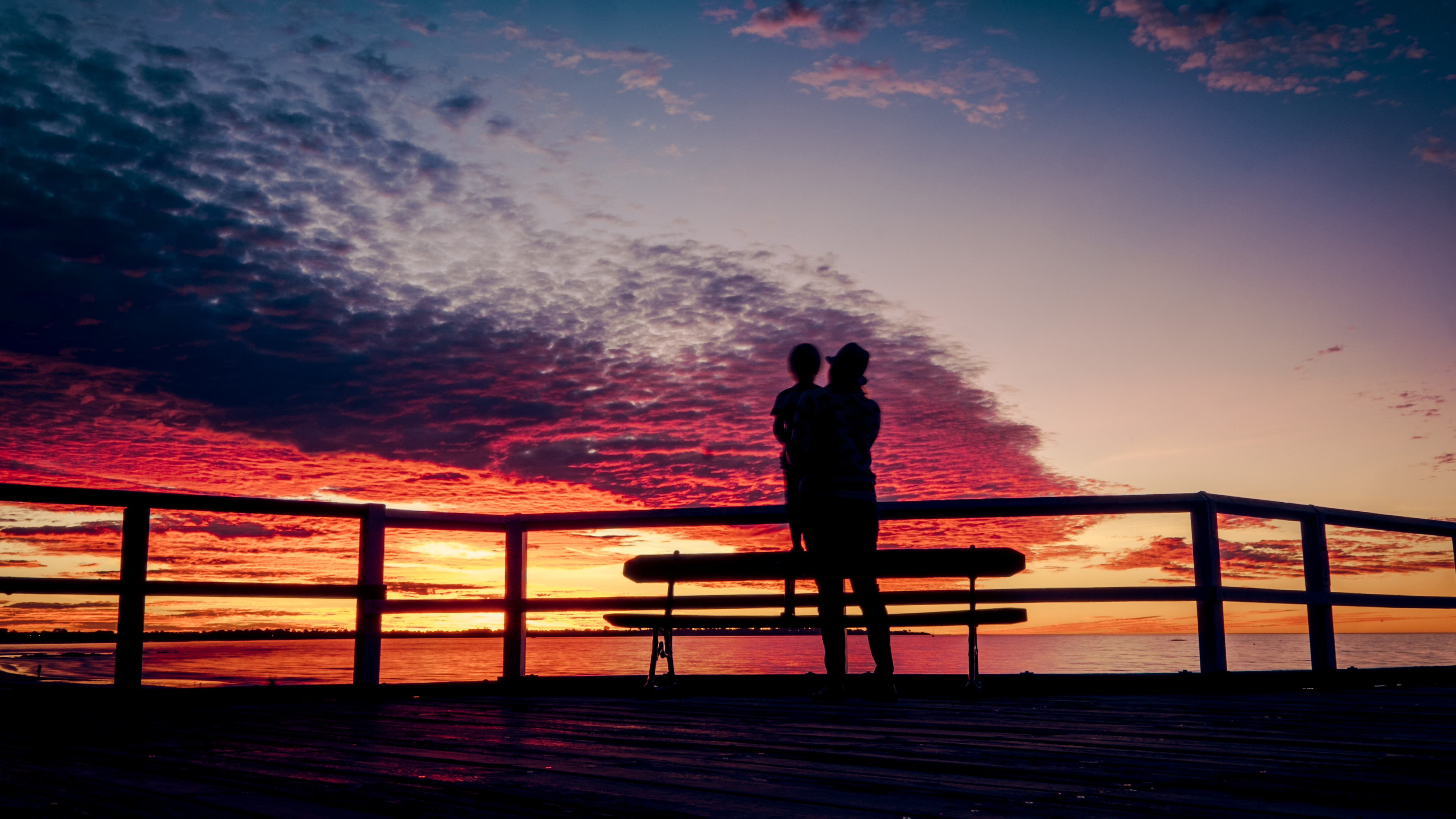
Want to shoot some landscapes? Again the 35mm will do the job.
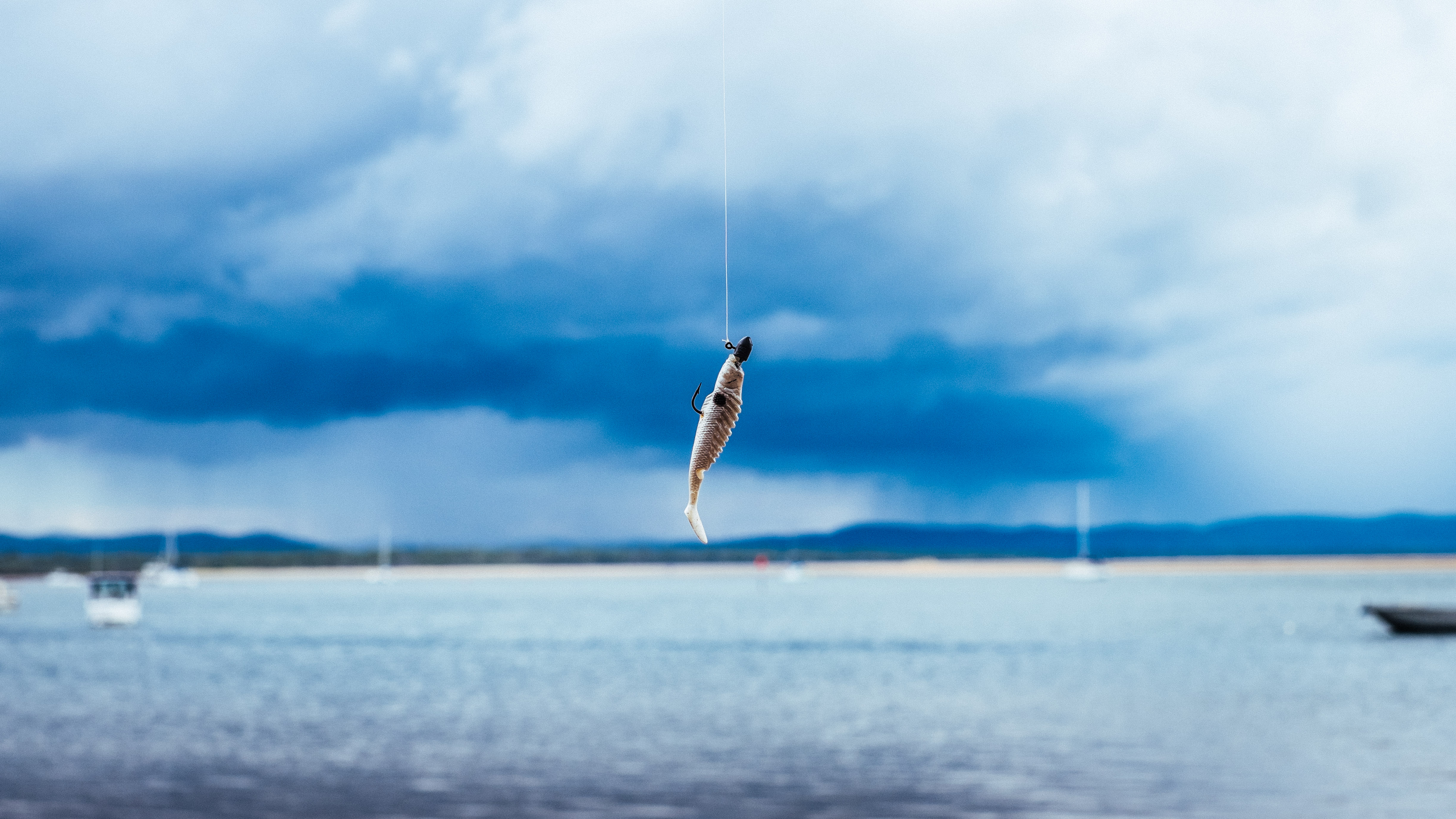
SunsetThe lure
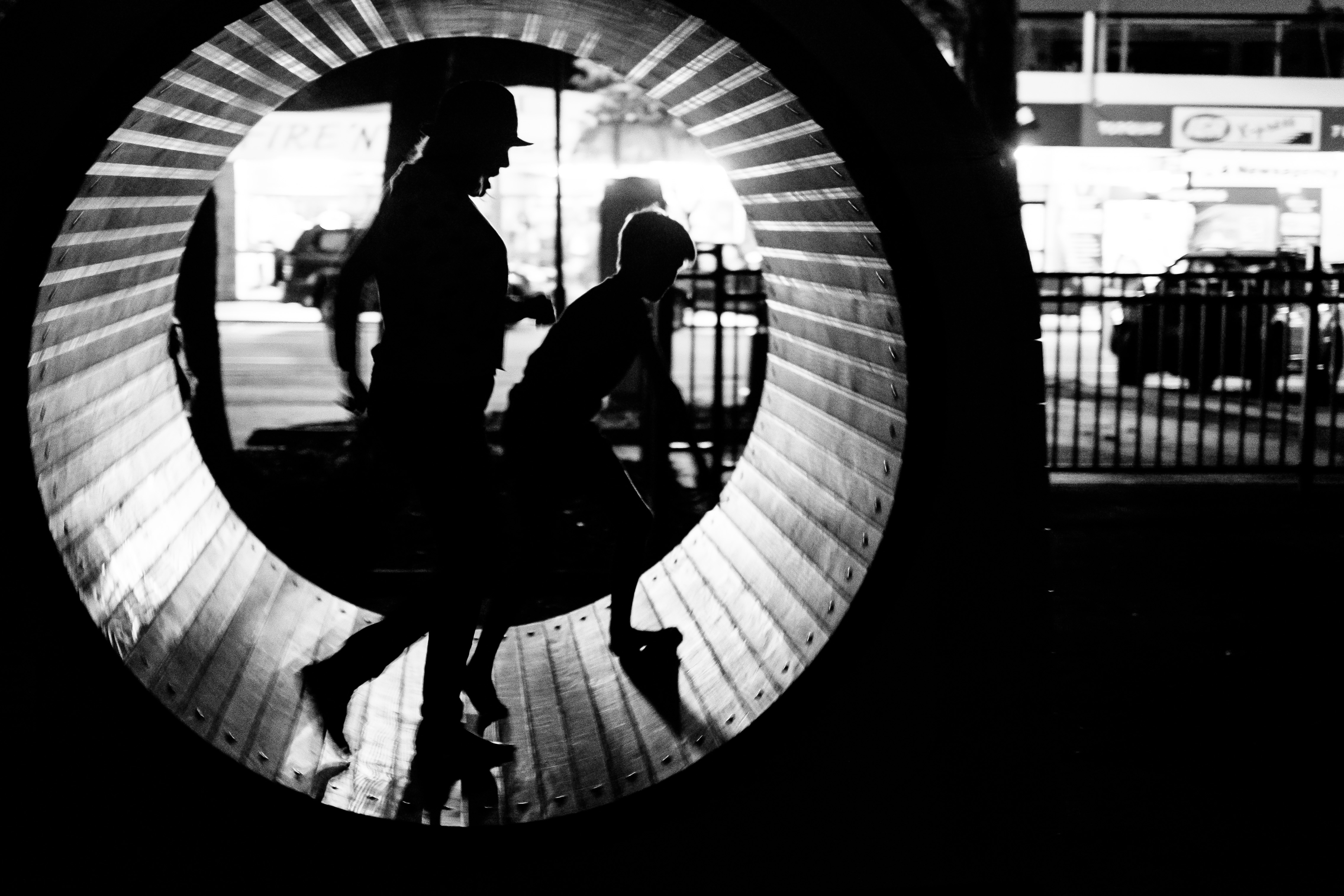
Want to take a photo of your wife and son running on a giant hamster wheel at night time? Ok…that seems a bit left of centre…but sure!
Hamster wheeling
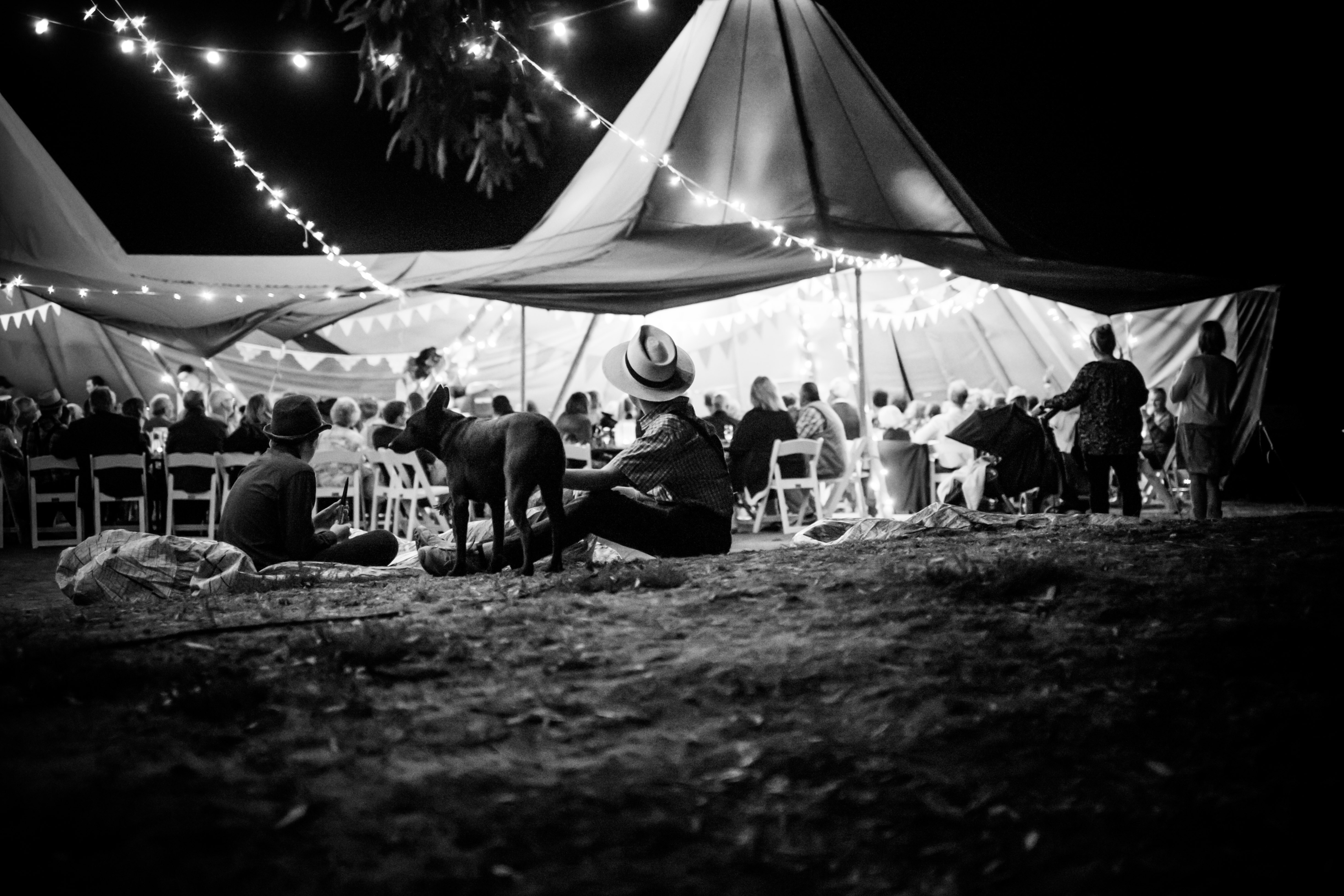
If you are after a travel lens, it is the one lens that I would take with me anywhere. If there’s such a thing as a ‘desert island lens’, this is it for me.
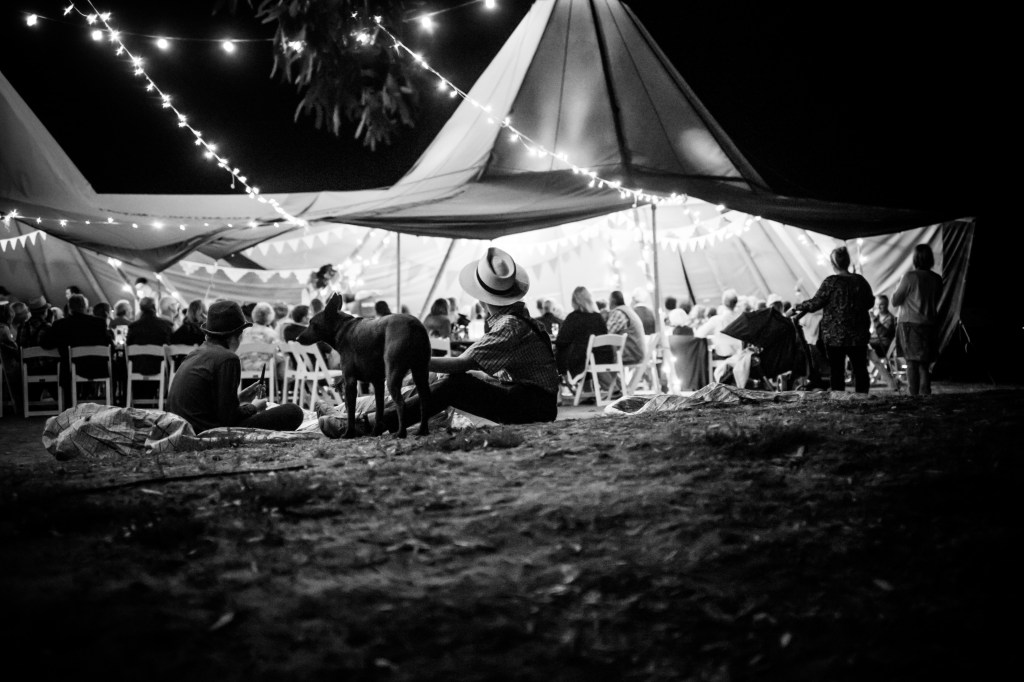
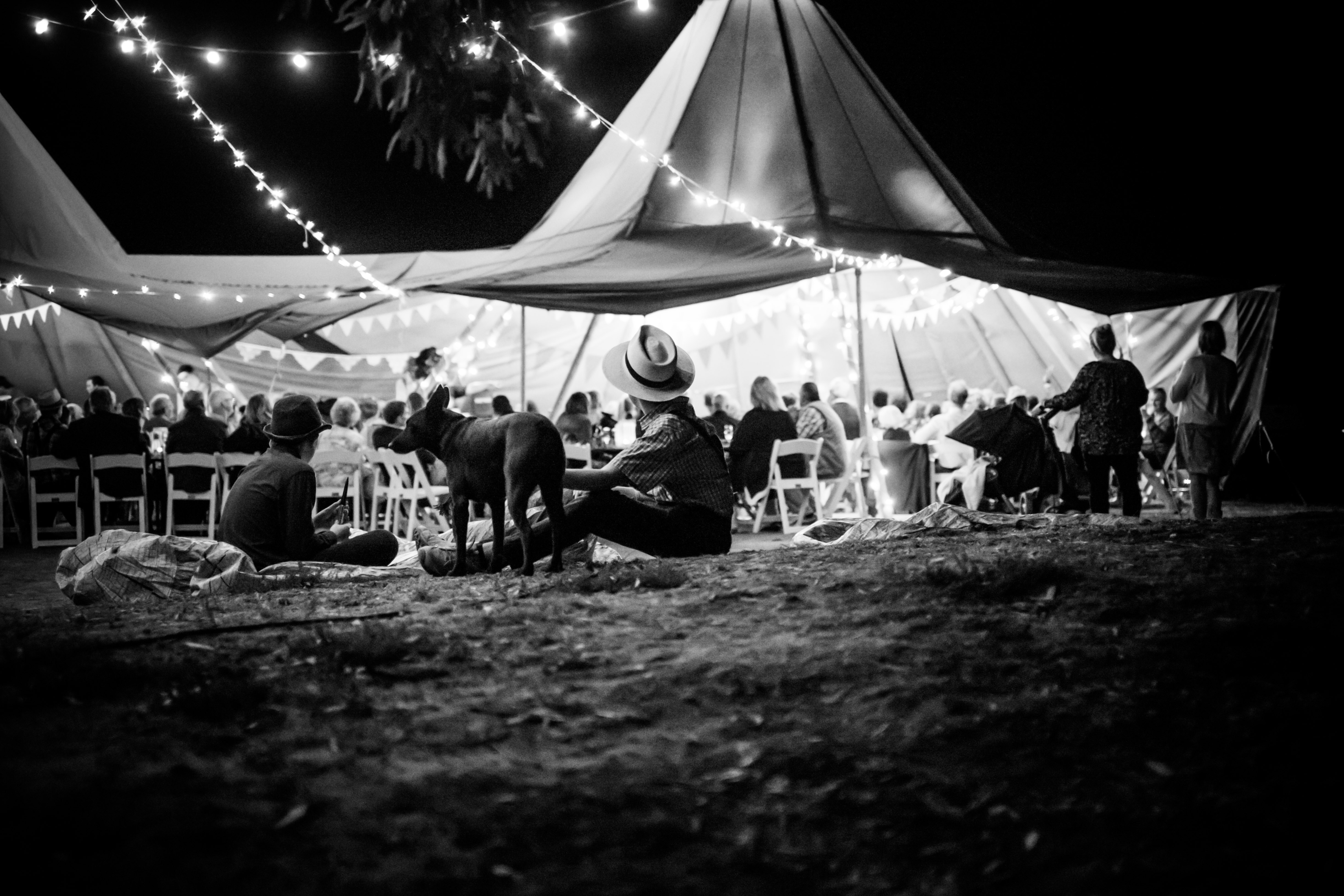
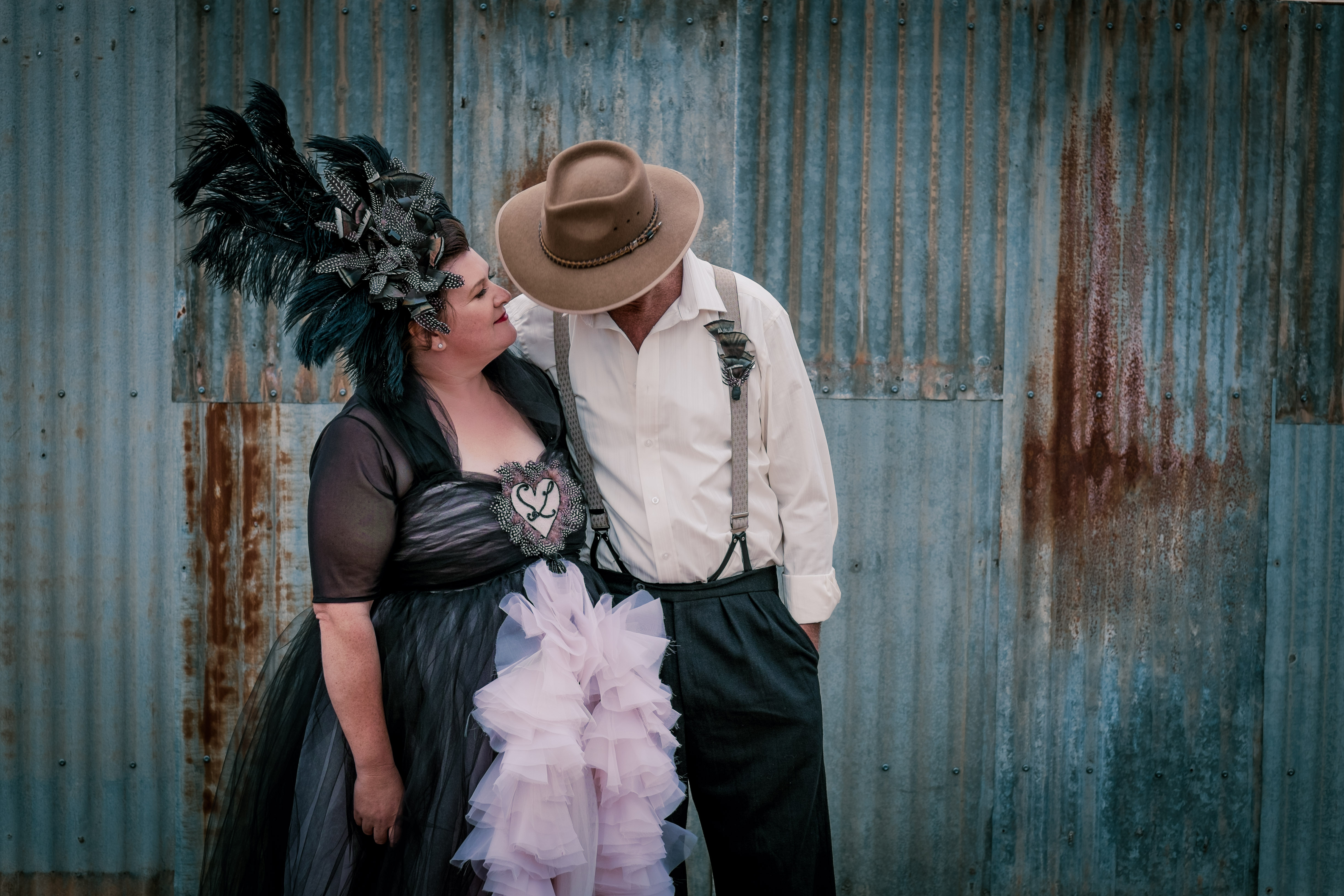
HolidayCountry wedding
But what about the 35mm f2 with weather sealing?
Good question. If Fuji would like to send me one I’m happy to run a comparison…but until then, I’m happy as a clam with my f1.4. As Zack Arias says ‘There’s a little bit of magic in this lens!’
In conclusion
If you’re looking to make the move to Fuji, then this lens should be on your list of initial purchases. If you’re already a Fuji shooter and you have this lens, set yourself a challenge of shooting on it all day (you won’t be disappointed), and if you’re a Fuji shooter who doesn’t own this lens…well you need to take a long hard look at yourself…ideally through the glass of a 35mm f1.4 lens…that you’ve just purchased.
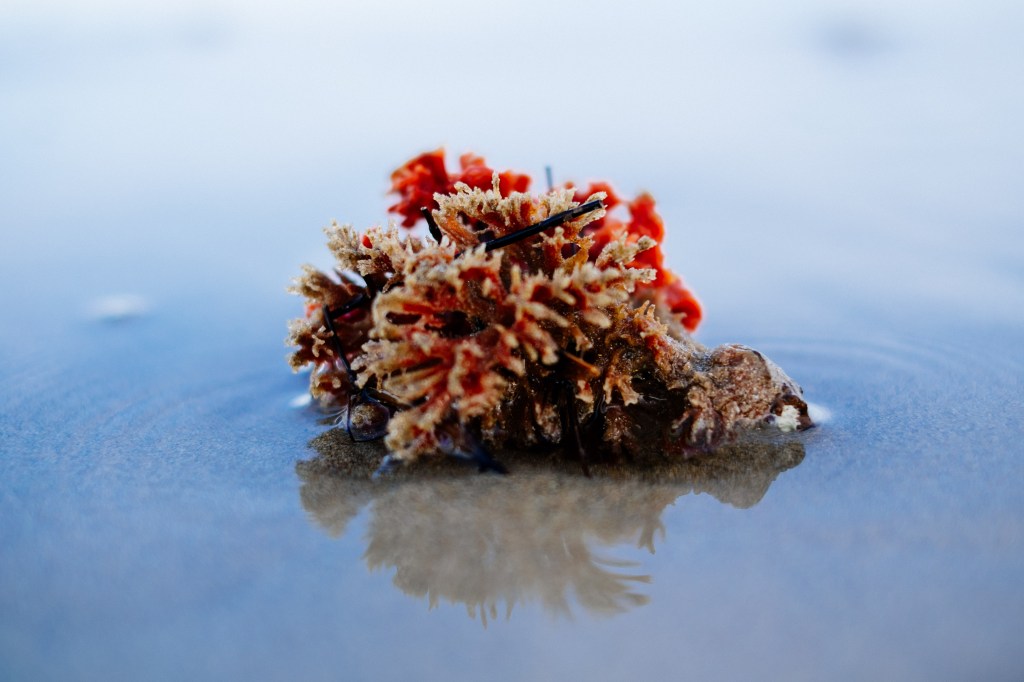
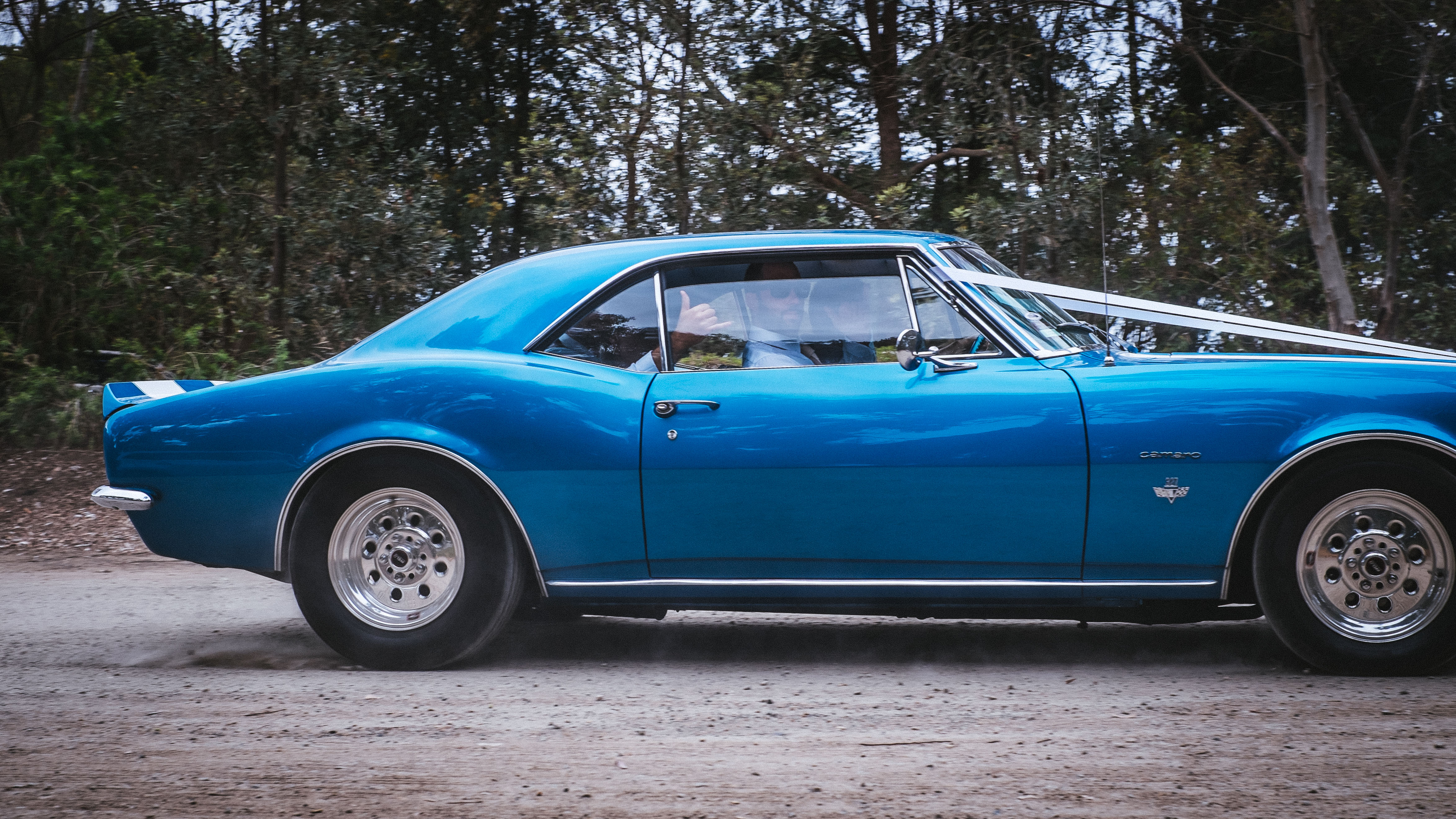
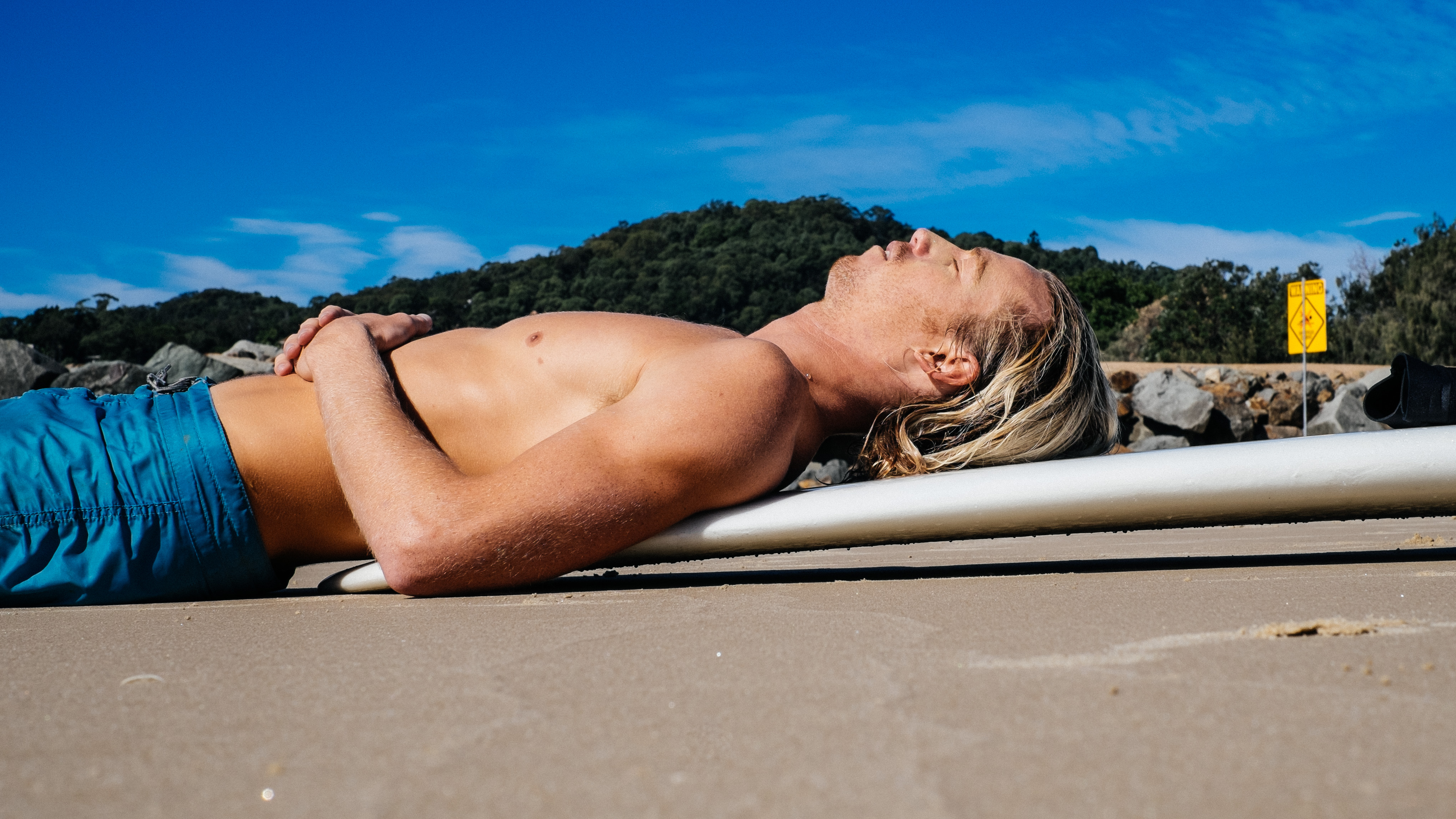
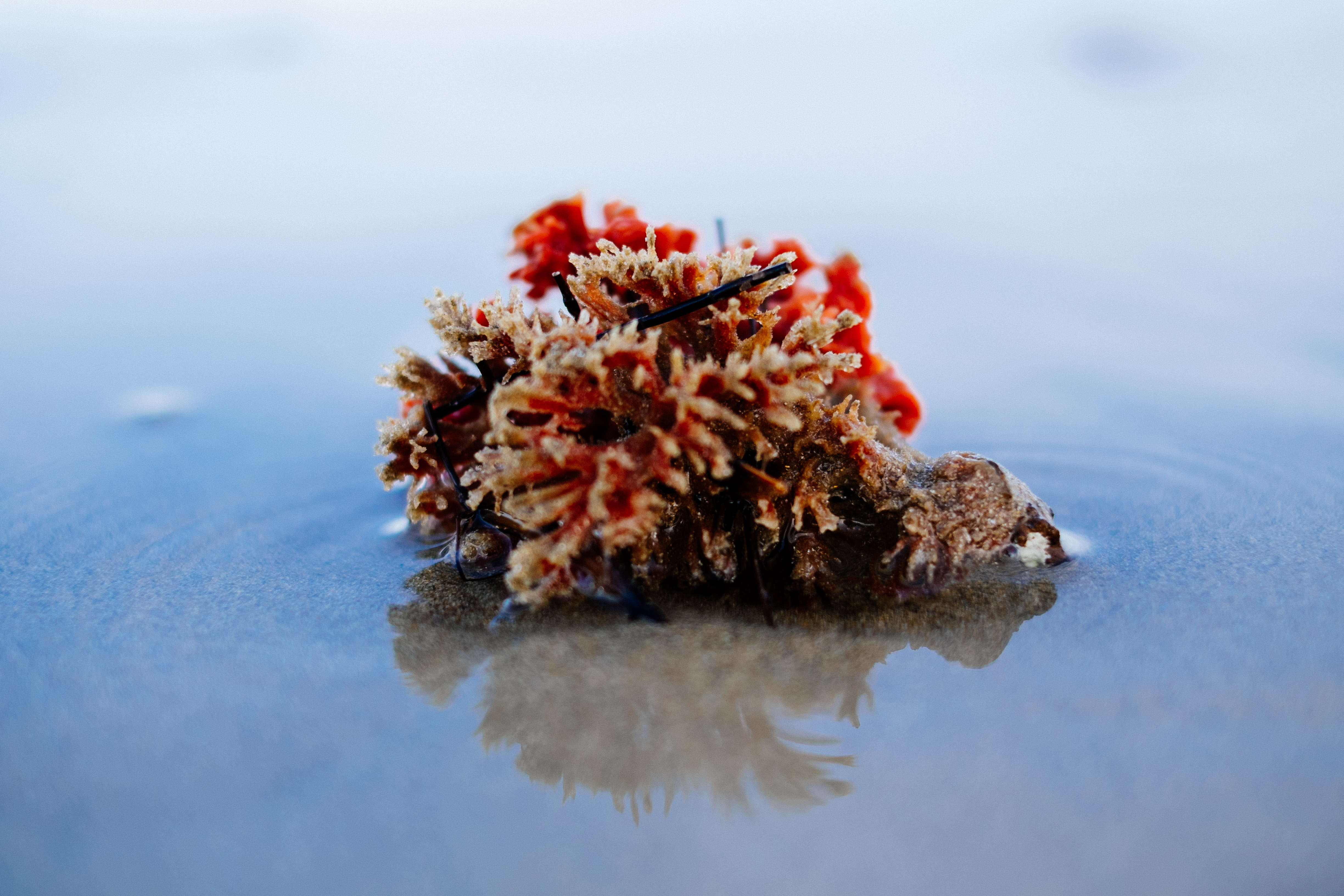
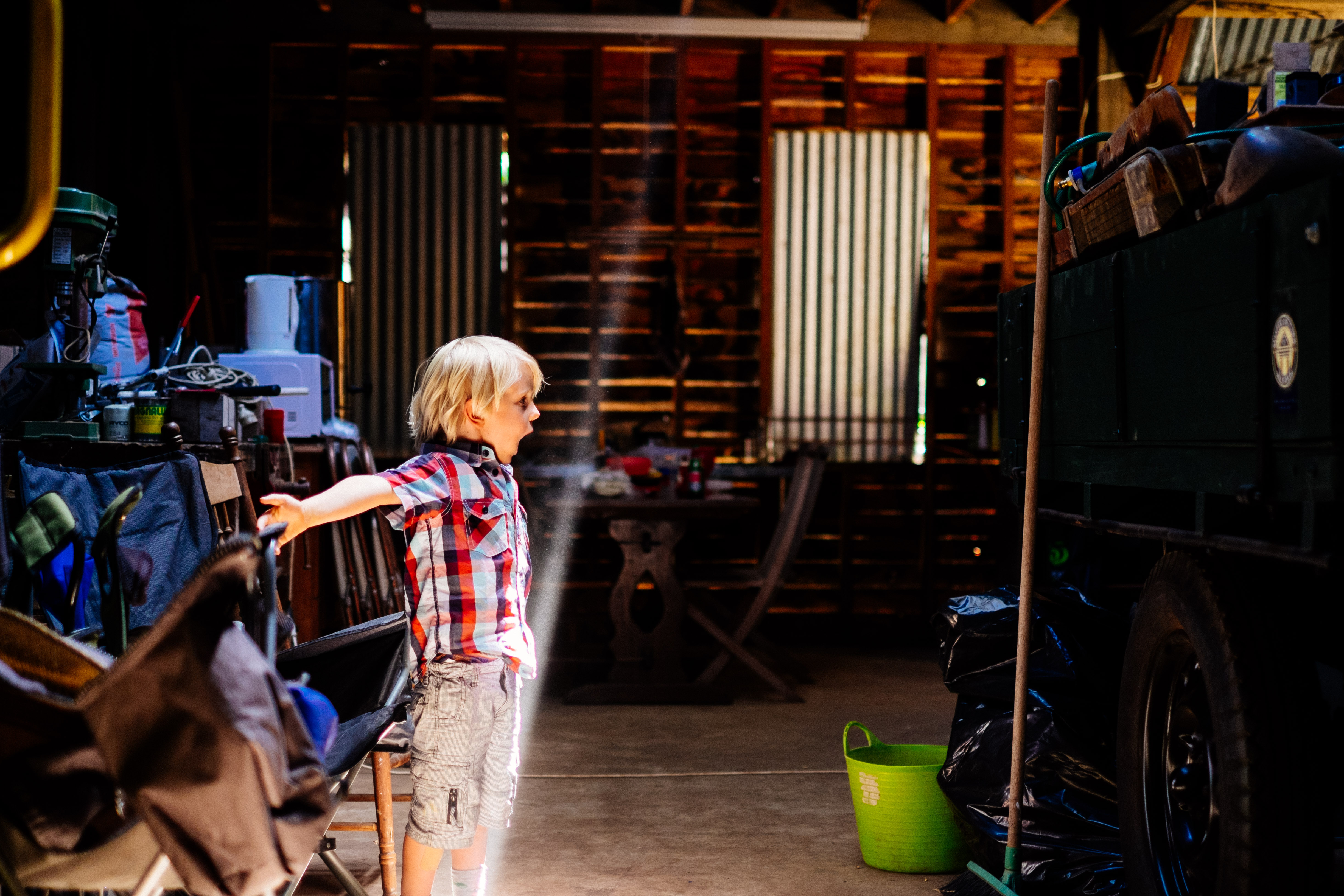
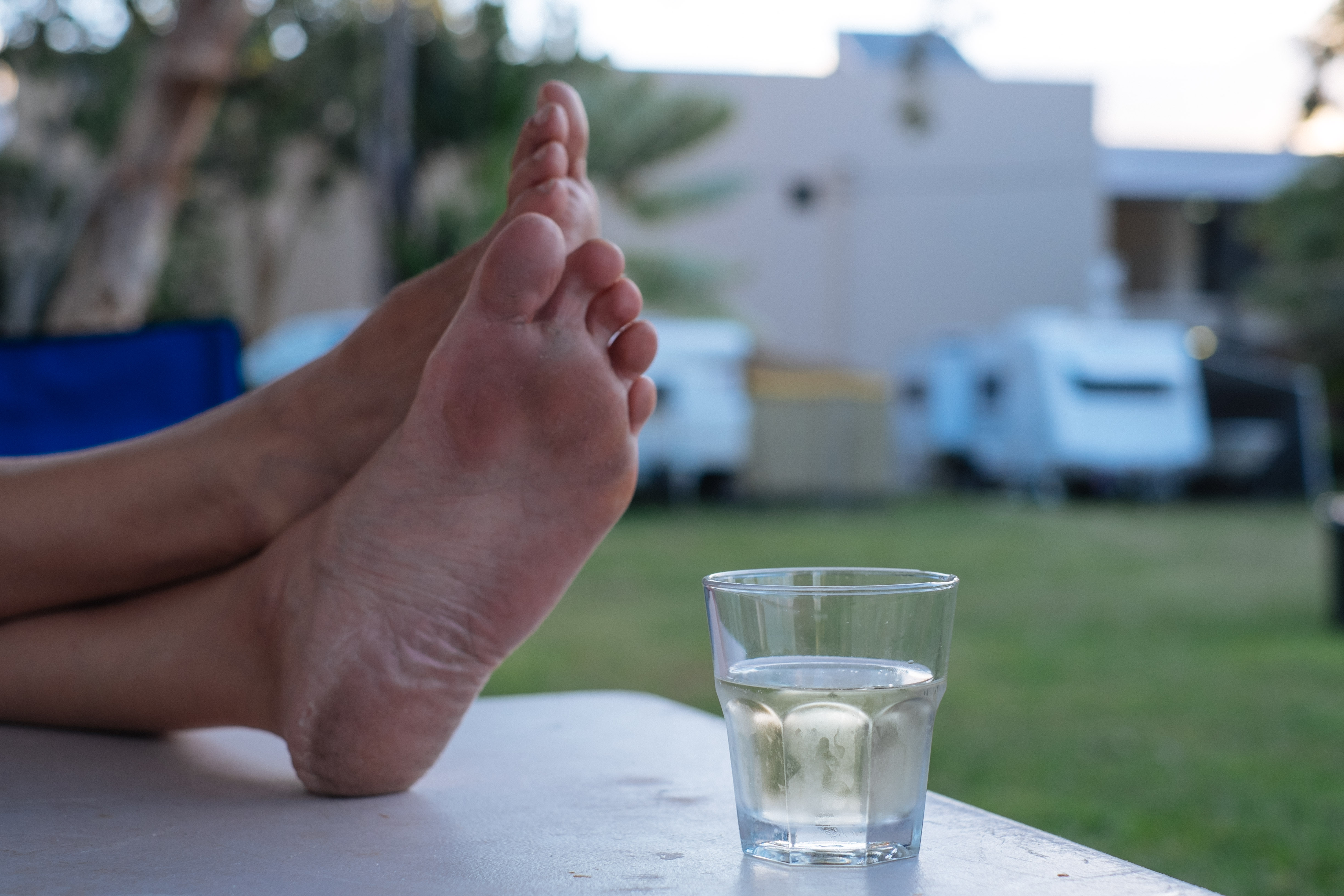
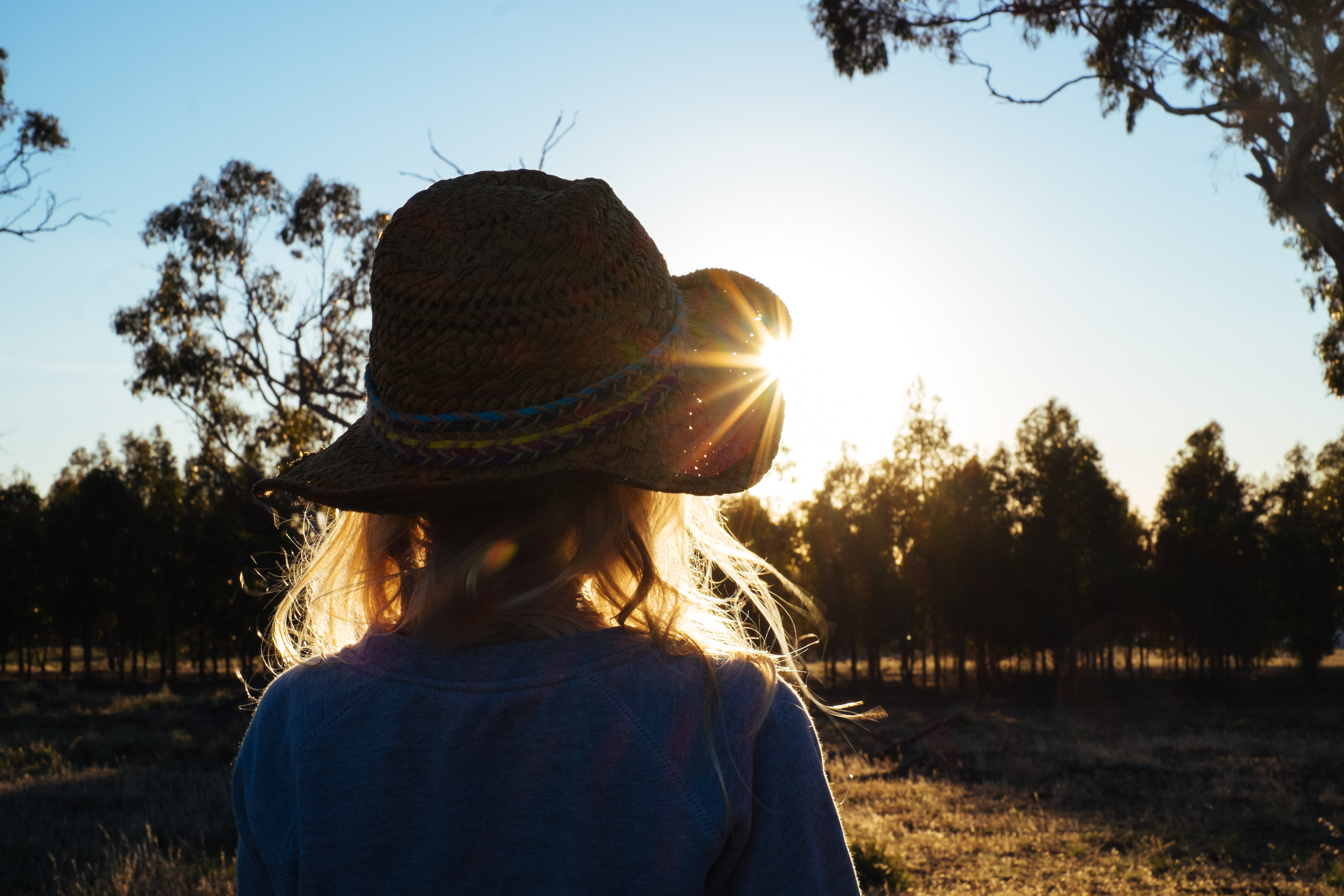
Wedding getaway carLife’s tough in NoosaFlotsamBlinded by the lightBare-feet and wineSunset at Hervey BayI love the 35mm this much!
If I were to break down my photographic journey, I would say that it has so far consisted of three phases: Phase 1: I knew nothing, and was happy to admit it. I spent about a year happily asking the dumb questions as I felt this was my right as a newbie. Phase 2: I didn’t know much, but felt obliged to hide it. I had taken some photos that people liked, had started using Lightroom and suddenly people were asking me questions about how I did things. I was still floundering with my camera, but had become quite adept at hiding that by using presets in Lightroom. But I couldn’t admit that, so I started acting like I knew a lot more than I did and as a result had to stop asking the questions that got me to where I was, and start learning via YouTube, web tutorials and podcasts. Phase 3: Realised I did know some things, and wanted to share them with other people. I had always had the fear that if I taught somebody my tricks, and showed them my Lightroom presets, then suddenly I would become redundant. Whatever work I had would be snaffled up by the people I had just given my secrets to, and the game would be up. But I eventually came to see that there are quite literally millions of people who know a lot more about photography than me…not many of them are either willing or able to teach this to other people. I’ve spent the last couple of year’s giving workshops on how to shoot and edit videos and they have always been well received…so why not do the same with photography.
And so, I decided to run my first ever photography workshop. Here’s what I learnt.
I’m not a teacher…so I won’t pretend to be one.
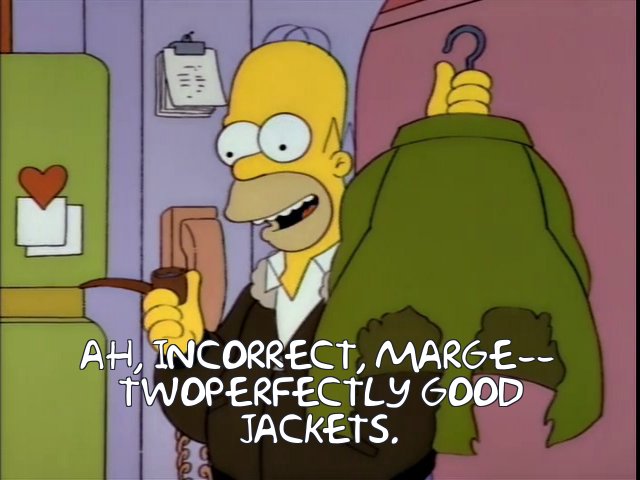
There is a great episode of the Simpson’s where Homer gets a job teaching at a local Adult Education Centre and announces to his family ‘Look now that I’m a teacher…I’ve sewn patches on my elbows’ and shows his leather jacket now has tweed patches on the elbows. Marge says ‘Homer, it’s meant to be leather patches on a tweed jacket. You’ve just ruined a perfectly good jacket!’ To which Homer holds up a tweed jacket with two patches cut out of it and says ‘Incorrect Marge. Two perfectly good jackets.’
In other words, in his desperation to become what he thought a teacher was…he was already failing.
So I was pretty determined to just be myself for the workshop. After all, it’s hard enough trying to pretend that you know everything about photography, without trying to pretend that you’re someone else at the same time.
So I basically sat the participants around our dining table and spoke to them as if I was chatting to a friend who had asked about photography. I had a rough outline of what I wanted to cover, but if we disappeared down a rabbit hole for 10 minutes while answering someone’s question…then that was fine.
Do unto others
I’ve done a few photo workshops and my strongest memory is spending at least 70% of the time listening to people either talk about themselves or about how the camera works. I spent precious little time actually using the camera. In fact, one of the guys actually doing the workshop said that he did a half day course when he got the camera, and the only practical thing they did was turn the camera on and off. So I was determined to make my workshop as ‘hands-on’ and practical as possible. When we spoke about ISO, we would take a shot at ISO200 and then without changing anything else, shoot the same shot at ISO1,000 to see the difference. Same with shutter speed, and the same with aperture. Then we would lock one them in and use the other two to get the shot we were after.
For the last hour I roped…OK, paid…my two eldest kids into coming over the (closed on Sundays) Preston Market to act as models while the people in the group took photos.
Admittedly, this is simply the way that I like to learn…but it seemed to go really well.
Trying out a fast shutter speed.
‘Everything is free now…’
One of my favourite Gillian Welch songs is ‘Everything is free’, which starts out:
‘Everything is free now, That’s what they say. Everything I’ve ever done, I’m gonna give it away. Someone hit the big score. They figured it out. That we’re gonna do it anyway, Even if it doesn’t pay.’
I’ve always thought that it was a treatise on the fact that musicians (or indeed any creative people) are now expected to simply give away what they do for free. Writers, photographers, graphic designers, singers…are all told to give their content to clients on the basis that it will garner them ‘exposure’ (and as my friend Tim Arch always says ‘People die from exposure!’) But implied in Gillian Welch’s song is also the fact that part of the fault lies with the artists, because they love what they do and are going to do it anyway. It’s a bit of sad reflection of where we are as a society. We have become so conditioned to the fact that a ‘job’ is something we do, so that we can afford to do what we really want to do. If you actually enjoy your job, then you’re kind of cheating…and as such, you have to factor this cheating into what you charge for your services. After all, if you’re enjoying it…it’s not really a job!
So deciding what to charge for the workshop was actually a real challenge. After all, I had never done this before, so I probably shouldn’t charge too much…but if it does go well, then I’ve set my precedent for charging already, if people want a follow-up workshop (as has been the case) you can’t really say ‘Yep happy to do another workshop…but now it’s 50% more expensive’.
In the end I charged $110 for a 3 hour workshop. This felt right for my first one…but given how well it went, I think I will probably bump up the price for the next one.
The numbers game
One of my other memories of other photo workshops was of having large groups where vast amounts of time was wasted dealing with the litany of reasons other people’s cameras weren’t doing what they were supposed to. So I was very keen to make sure that I didn’t have more than 4 people in the workshop.
I’m willing to admit that part of the reason for saying that I wanted to keep the numbers low was also that if only one person said they wanted to do the course…then I could say ‘Well that’s great…because I wanted to keep the numbers down.’ Then I could walk to my room, close the door, and cry, and cry, and cry.
In the end I had 3, and this was pretty much perfect. I think that as I do more of them, I will be able to get this up to 5 people…but if there are any more than this, or if there is a big discrepancy in their skill levels, then I think it would be a real struggle to give everyone the attention they deserve.
Traps for young players
Have you ever had that experience of someone with a different phone to you saying ‘I can’t work out how to get to my photos, can you help?’ and then spending the next 10 minutes desperately trying to navigate your way around a device you’ve never used before muttering ‘Why the hell is that there? Who designed this menu?! Oh God, what did I just delete?!!!’ Well now imagine doing this in front of three strangers who had paid for the privilege. Let me assure it’s not fun. Obviously the more of these I do, the more adept I will become at navigating around the various menus of the various camera brands without swearing or saying ‘Look I think I’ve just broken that…how about you just shoot on your phone for the rest of the workshop?’
I was genuinely worried that I wouldn’t be able to fill in 3 hours with the basics of photography…but I soon discovered that for every 15 minute segment I had prepared, there were at least 5 half hour long rabbit holes that I could fall down if I wasn’t careful (‘So that’s how you can get more light into your photo using ISO/exposure/Aperture. But you could also use flash [blah, blah, blah]…and if you are using flash you can use on-camera or off-camera flash [blah, blah, blah]…and then you need to think about using diffusers [blah, blah, blah]…and speaking of diffusers [blah, blah, blah]…oh sorry, our three hours is up.’)
So, know your audience, tailor the information to them and then stick to it. People who are looking to move beyond using the automatic settings on their DSLR are not interested in a 10 minute investigation of the inverse square law.
Ask for feedback after the workshop. This doesn’t mean saying ‘Did you guys like it?’ as you usher them out the door. It means actually following up with them a day or two after the workshop with a few basic questions, and making sure they feel comfortable telling you the truth (and trying to not get too hurt if they have some negative feedback). If you want to do this again, you need to know what worked and what didn’t…and then fine tune your next workshop accordingly.
The crew
So in conclusion
When I think back over the last 7 years of taking photos, there have been quite a few ‘Aha!’ moments…but they are usually interspersed with months of ‘Blah’ moments where you feel as though you’re just treading water. So doing a workshop with people who are just starting with their DSLR is kind of rewarding in that you suddenly get to realise how far you’ve come and how much you’ve learnt.
I also realised that when I was just starting to throw myself into learning about photography, I was really looking for someone who could mentor and guide me through to the next level. So it was really nice to be that person to somebody else.
But if you’re not the sort of person who likes to stand in front of complete strangers and talk to them for 3 hours…then there are probably easier ways to make your money.
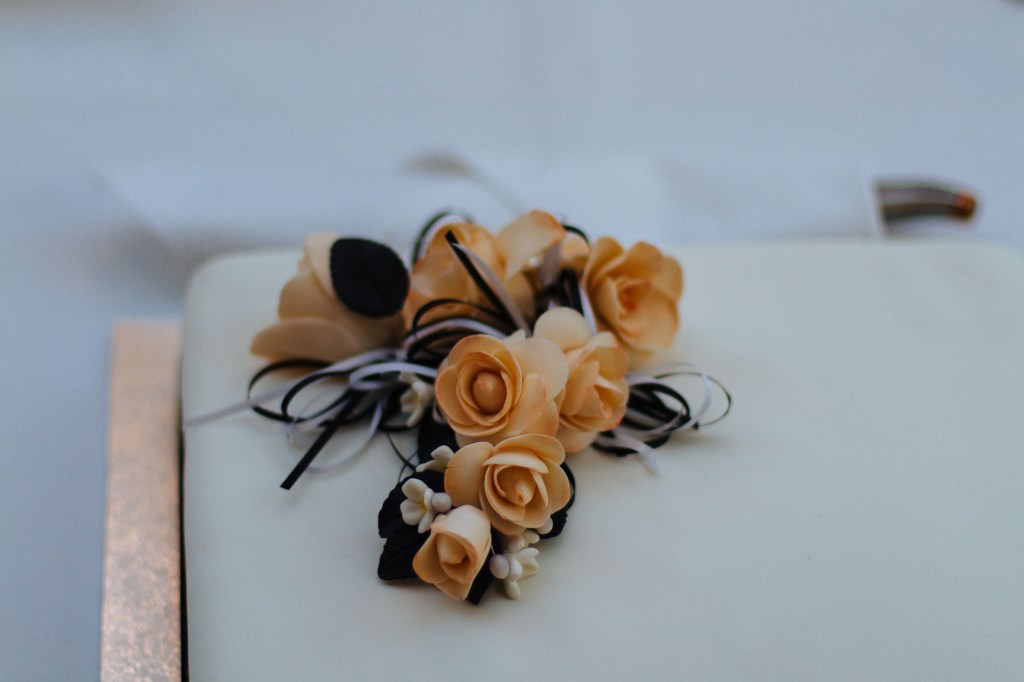
Last but not least, if your wife is willing to bake a cake, and the participants are a really great group of people, and you have access to a coffee machine, and the weather Gods shine on you, and you do a lot of preparation, and you have kids who are willing to model for you, and a local bingo hall has recently been covered in art-work…it really helps!
And of course…if you are interested in taking the first step away from the ‘auto’ settings on your camera…let me know.
I was once taking photos in a bar in Melbourne and the guy next to me started asking a few questions about my camera. We chatted for a few minutes about the relative pros and cons of Canon, and then he said ‘Well, no prizes for guessing what I shoot with’ at which point he lifted his suit pants up to his knee to reveal a tattoo running the length of his calf saying ‘Pentax’. Up until that point, I didn’t even realise that Pentax still existed, and yet here was a businessman who had their logo permanently etched into his skin. It really brought home the fact that photographers do tend to invest themselves in their photo brand. You learn the form of the camera, you know how to quickly navigate settings, you know what the capabilities of your camera are, and most importantly, you’ve probably dropped a sizeable amount of money on lenses and other gear… so when you make the jump from one brand to another it can be a scary and cathartic experience. I should know, as I’ve just moved from a Canon 550D to a Fuji X-T1. So if you’re thinking about jumping ship, here are some things to consider.
My first portrait shot on the Fuji
Do I really need a new camera?
New gear is awesome. It can be smaller, lighter, faster, have a bigger sensor, make us look more pro…and in truth, it can help us take better photos. But it can also cost a shirtload of cash, and can sometimes be used to hide our inadequacies. So I reckon you need to be confident that you’ve learnt everything that you can from your current camera. You need to make sure that the new camera will make you a better photographer…not just give you nicer photos.
I’ve been shooting on the 550D for five years now. In five years the technology in cameras has come a long way. Things like ‘face detection’ and built-in wifi, just weren’t on the table when I bought my 550D…and the thought of taking a decent photo at ISO800 was fanciful. So any new camera was going to make life easier right away. But I also felt that I had pushed the camera as far as I could. I had learnt a hell of a lot on a great entry level DSLR, and now it was time to upgrade to a few bells and whistles.
Blinded by the light
How deep is your love?
If you’re not really into photography and you’ve made it this far, then well done…or commiserations on your lack of alternative things to do with your time. But you should probably know that a lot of information is sent from the lens to the camera, not just the image, but a whole lot of information about the image. For example, autofocus is sent as a message from the lens to the camera. So, while you can always buy adaptors, it makes sense that Canon lenses talk better to Canon cameras, than say a Sony lens talking to a Canon camera, or Fuji lens talking to a Nikon. So while you may be able to mount the lens on your camera, you may find that it doesn’t autofocus because the lens and the camera work on different systems. The long and the short of it is, if you’re looking to change to a new brand of camera, you may find that a number of your lenses will not make the transition. So your new purchase of a camera may require additional lens purchases as well. Which can make for a pretty expensive exercise.
Fuji, Canon & GoPro…and it all fits in a backpack!
For better or worse, I was pretty lucky that I only had the two Canon lenses (a 50mm f1.4 and the 17-55mm f2.8). But if I was to move to Fuji, then I was pretty much writing them off. I had come to terms with this…until a friend offered a 2nd hand Canon 5Dmk3 with some really nice lenses. Which leads nicely to my next point…
Shallow Inlet
Dollars and sense.
There is no shortage of really good cameras out there. By the time I’d done all of my research I had reduced my list to; the Fuji XT-1, the Sony A7r2, the Lumix GH4 and the Canon 5Dmk3. Should the Olympus OM-D been on that list?…yep. But was I having so much trouble choosing between 4 cameras that adding a 5th camera was just going to make me cry?…also, ‘yep’.
They all had different pros and cons, the 5D would let me stay in the Canon ecosystem and let me go full-frame…but then it’s a big camera, and the lure of the mirrorless was strong. The GH4 shoots beautiful video and I could get the body with a good range of lenses for the same price as the body of some of the other cameras…but it wasn’t a considered a great stills camera. The Sony was the way of the future, great video and great stills…but at a price to match. My original idea had been the Fuji…but with more video work coming my way, its shortcomings on the video front made it less attractive.
So after weeks of cross referencing tables, drawing up lists of pros and cons, and boring everyone to tears with my constant analysis of these tables and lists…I went with the Fuji. Why? Because, that’s what I really wanted. The other cameras all made sense, but when it came down to it, the Fuji is the one I had my heart set on. Also…
Zack Arias told me to do it.
Looking for information about cameras on the internet is a bit like drinking from a firehose. There is just so much information, and so many opinions (most of them differing) that it’s overwhelming. What you really want is a professional photographer who can take you through all the relative pros and cons of a camera. To tell you what lenses would be best suited suited to your style of shooting, and to walk the talk by actually using the camera they recommend. Fortunately for Fuji, they have Zack Arias doing just that. He goes through all of the cameras, then all of the lenses, then breaks people down into a range of users and suggests the best combos for them.
This information was invaluable. So much so that I pretty much followed his recommendation verbatim. So if you’re looking to make the move to a new system, make sure you find a source you trust and then work out exactly what you want, because now it’s time to take the plunge and purchase your new gear.
Country wedding
Clicks and mortar
If you live in Australia, then you know that buying online is going to save you about 30% over buying in an actual store. But you will also know that websites don’t have a ‘haggle’ button that you can press and knock some money off the price…which is something you can do in store with an actual person. Also, there is a lot to be said for supporting a company that pays local people. So in the end I decided that if I could get the gear that I wanted from an actual store, for within 10% of what I could get it for online…then I would buy it locally. While I couldn’t get the camera body and lenses for this price, by the time I had haggled getting a camera bag, SD cards, a spare battery and mic adapter thrown in, I was there! So on the day of my 40th birthday I got to walk out of the store with my new camera and a bevy of lenses (for the record; an X-T1, 10-24mm f4, 35mm 1.4, 56mm f1.2 and 50-150mm f2.8).
That new camera feeling
Post-purchase regret
The best thing about dropping a large amount of cash on a new camera system is that it will change everything for the better! You’ll be faster, shoot better photos, look more pro, become a better lover (actually you may have to chose between the first one and the last one). Which is awesome right up to the point where you miss a shot because you where you normally stab your thumb to adjust the auto-focus has instead changed the ‘film stock look’ of your photo, or you can’t for the life of you work out how to make your flash fire remotely, or you discover that you have to upgrade Lightroom because your camera isn’t supported by the version you have. This isn’t what you signed up for!!! Why did you change?! Why couldn’t you just leave well enough alone?!!! I wonder if you can sell this and return to the warm embrace of the ecosystem you chose to leave?!
Stop.
Calm down.
It’s all going to be alright. Remember when you bought your first good camera and you spent weeks freaking out at all of the options at your disposal? Remember how you spent ages just shooting on ‘automatic’ or ‘aperture/shutter priority’ until you got the hang of things? Well you’re just going to have to do that again…but now you have the advantage of years of experience in working with people, and framing a shot on your side. So while you’re not as good as you were on your previous camera yet, you’re also not back to square one. So get out there and shoot!
However, if after a month or two you are still getting photos that are as bad as the ones you bought new gear to improve…then the problem may be with you. So go and do a photo course and brush up on your skills…or take up macrame…macrame’s nice.
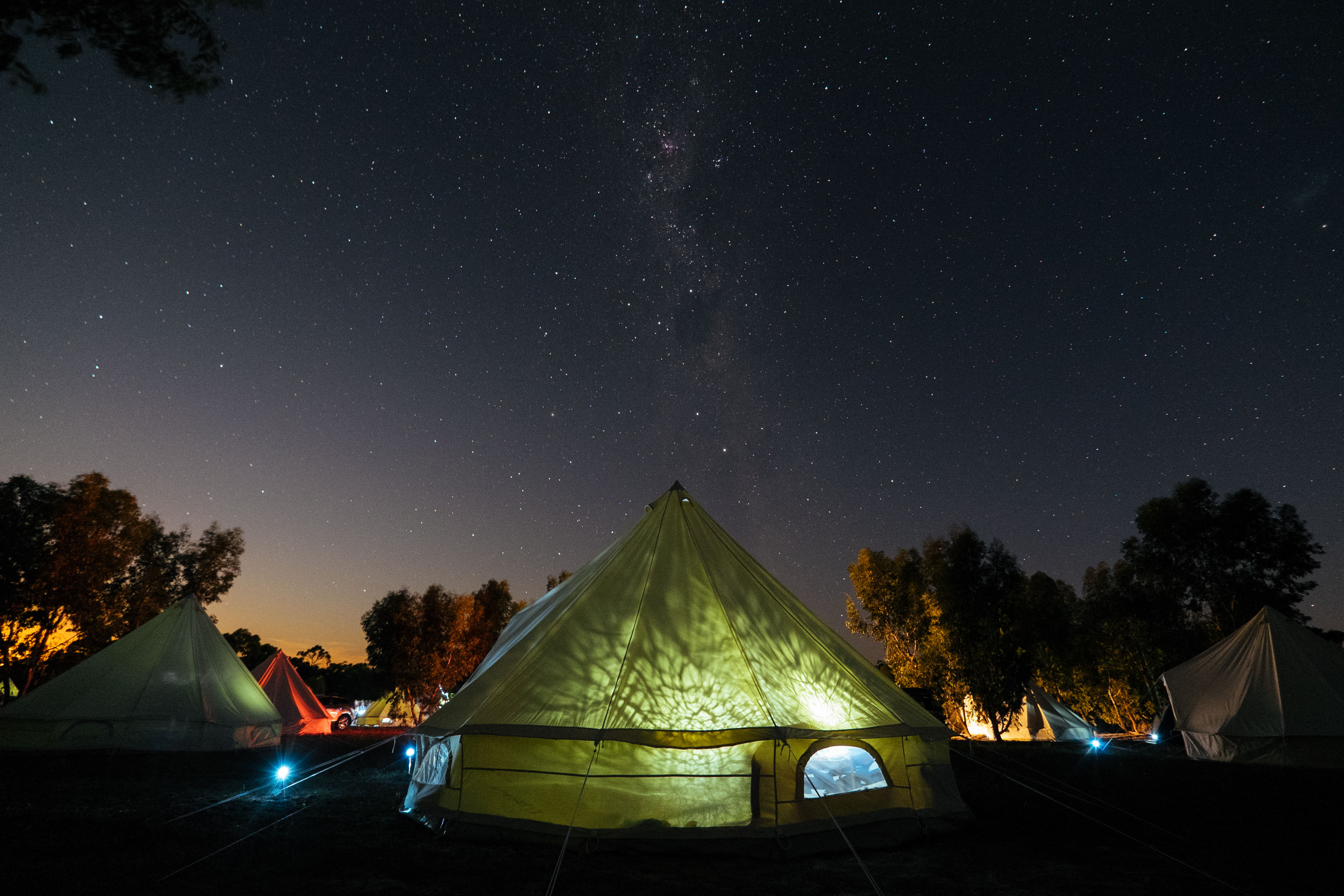
Yurts and universes‘I stop and think, this is Australia’
Four months in
It’s now four months since I jumped head long into the Fuji world. In that time I’ve shot over 1,000 photos on the Fuji (well, I’ve shot a lot more…but I’ve kept that many). I’ve shot a wedding. I’ve followed a guy doing 8 Ironman’s in 8 days and shot both photos and videos. I’ve captured some treasured memories of my family, and most importantly I’ve really enjoyed getting out and taking photos again.
So if a fear of the unknown is the only thing holding you back from taking the leap to a new brand, then just remember ‘Life begins on the other side of your comfort zone’.
The opportunity to document someone attempting 8 Ironmans in 8 days in the 8 States/Terrritories of Australia doesn’t present itself all that often…in fact when Craig Percival mentioned it to me, he also mentioned that he would be the first person to ever attempt this feat. I readily said yes, as it was a very good way of ensuring I wouldn’t be asked to join him for any of the swimming/riding/running.
By the time all of the logistics and financial implications were sorted, we agreed that I would travel to Canberra to see Craig finish there, then travel with the team to Sydney, sleep the night in Sydney, then document all day in Sydney, fly home to Melbourne the next day and then film and photograph Craig’s final Ironman in Melbourne.
Fuji, Canon & GoPro…and it all fits in a backpack!
Things got off to a poor start due to the predilection of Melbourne drivers to crash into each other as soon as the roads get wet…despite leaving the city at 4.30pm, my 6.45pm flight had left by the time I got to the airport. So I had to book another flight…and given that there weren’t any more flights into Canberra, I had to fly to Sydney instead. I called Kate Patterson to let her know that I would meet her at the accommodation in Sydney, and I got the distinct impression that things were not going well in Canberra…and that perhaps my throwing another spanner into the works was about as welcome as a cold-sore. In fact, Craig was unlikely to finish the Canberra Ironman until about 2-3am, and so the team was going to drive directly from Canberra to the pool in Sydney to start the next one. Craig would sleep in the car as would the rest of the team…although ideally not all at the same time as that would make driving treacherous.
Clearly this was not the ideal start to my filming and photography…but a little drama never hurt anybody.
But when Craig arrived at the pool the next morning I realised that it hadn’t been ‘a little drama’, and it had indeed hurt him. In fact Kate and Lindell pulled me aside to tell me that during the drive from Canberra they had agreed to pull the pin on 8in8in8. Craig would do as much of the swim as he could…but that was it. It was over. As the guy who was meant to be documenting a triumph…I quickly realised that my day was over before it began.
But then 3 x Ironman World Champion Craig ‘Crowie’ Alexander jumped in the pool with Craig and I thought I may as well take some shots…so here, in no particular order, are my top 8 shots from the 8in8in8. These are not necessarily the best photos, or the photos that best encapsulate the whole thing, but they are the images that captured the key moments for me as a somewhat embedded observer.
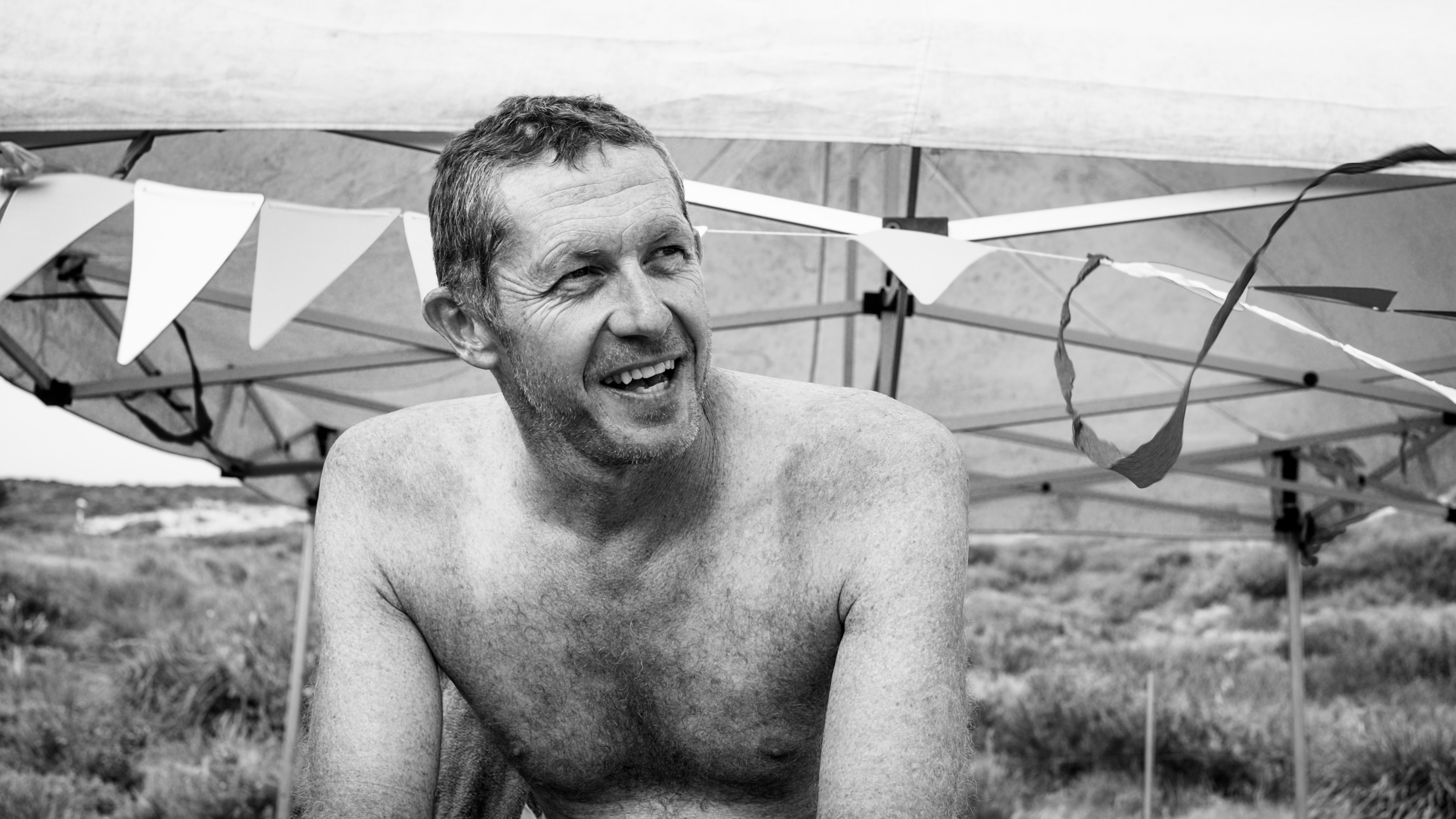
#1 The before shot
A few days before 8in8in8
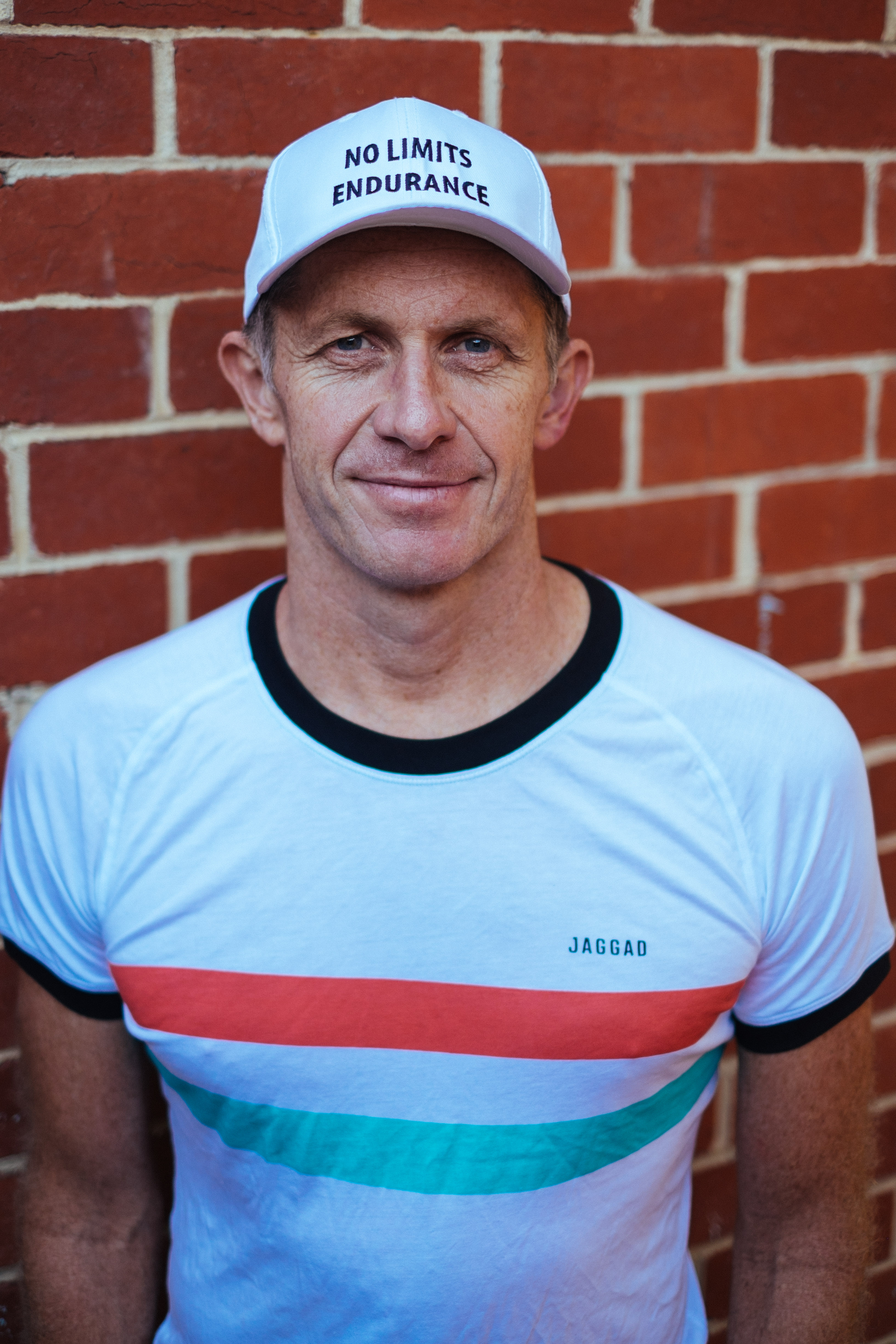
Traditionally the ‘before’ photo is used to show how much someone has improved in the ‘after’ photo. How much weight they’ve lost, or how ripped their abs are now. But I think that in the ‘after’ photo for this one, there probably wouldn’t have been the relaxed smile, the quiet confidence and the ‘let’s do this’ attitude…I also think the t-shirt would have said ‘Ragged’ instead of ‘Jaggad’.
#2 The swim in Sydney
Gotta love the GoPro
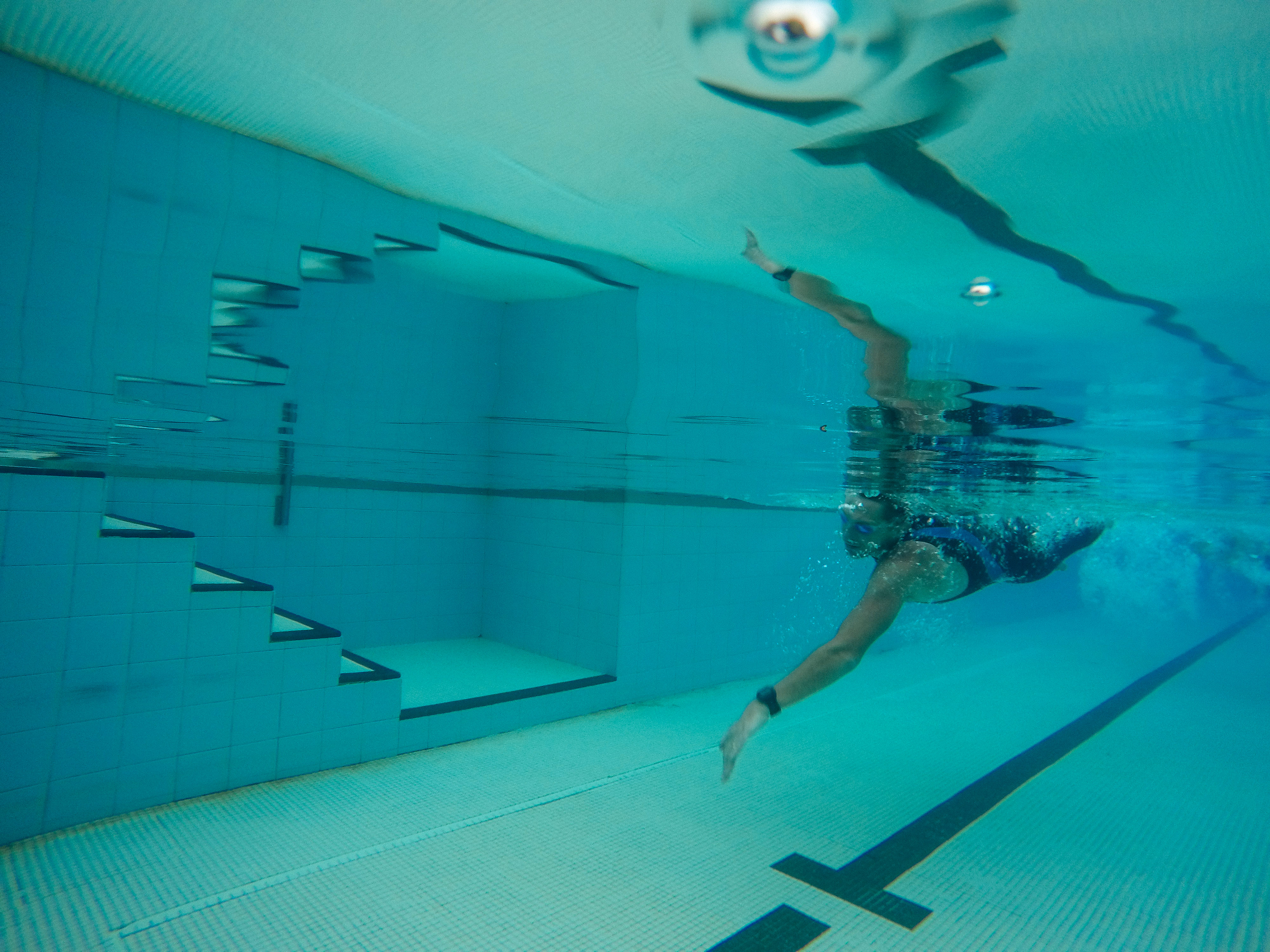
If you ever want a brutal reminder of just how out of shape you are, let me assure you that donning the budgie-smugglers and hopping into a pool with a 3 x Ironman World Champion and a man who has done 5 Ironmans over the last 5 days is a remarkably good place to start. But I was determined to get some under water footage of Craig swimming, so myself and the trusty GoPro jumped into the pool. After I got the footage I was after I decided to get some photos too. One of the challenges with shooting with this GoPro is that it doesn’t have a viewfinder, so you can’t actually see what you are shooting. You just have to line up a shot that you think will work and shoot. I was shooting on burst mode so that I got 10 shots in 3 seconds. The other nine shots in this burst were rubbish (catching a swimmer mid stroke can either look powerful and fluid…or like they are coming a distant second in an underwater dancing competition), but this one I love. The reflection creates really nice symmetry with both the stairs and Craig’s arm, and more importantly I know I never would have got it if I hadn’t swallowed my pride and jumped in the pool.
#3 The power of words
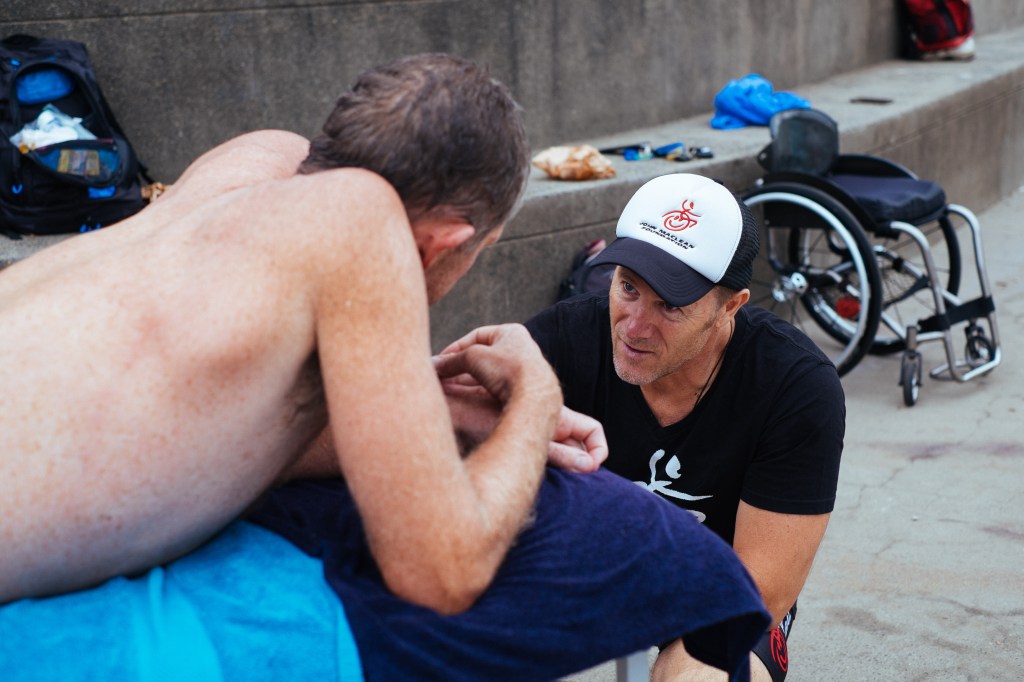
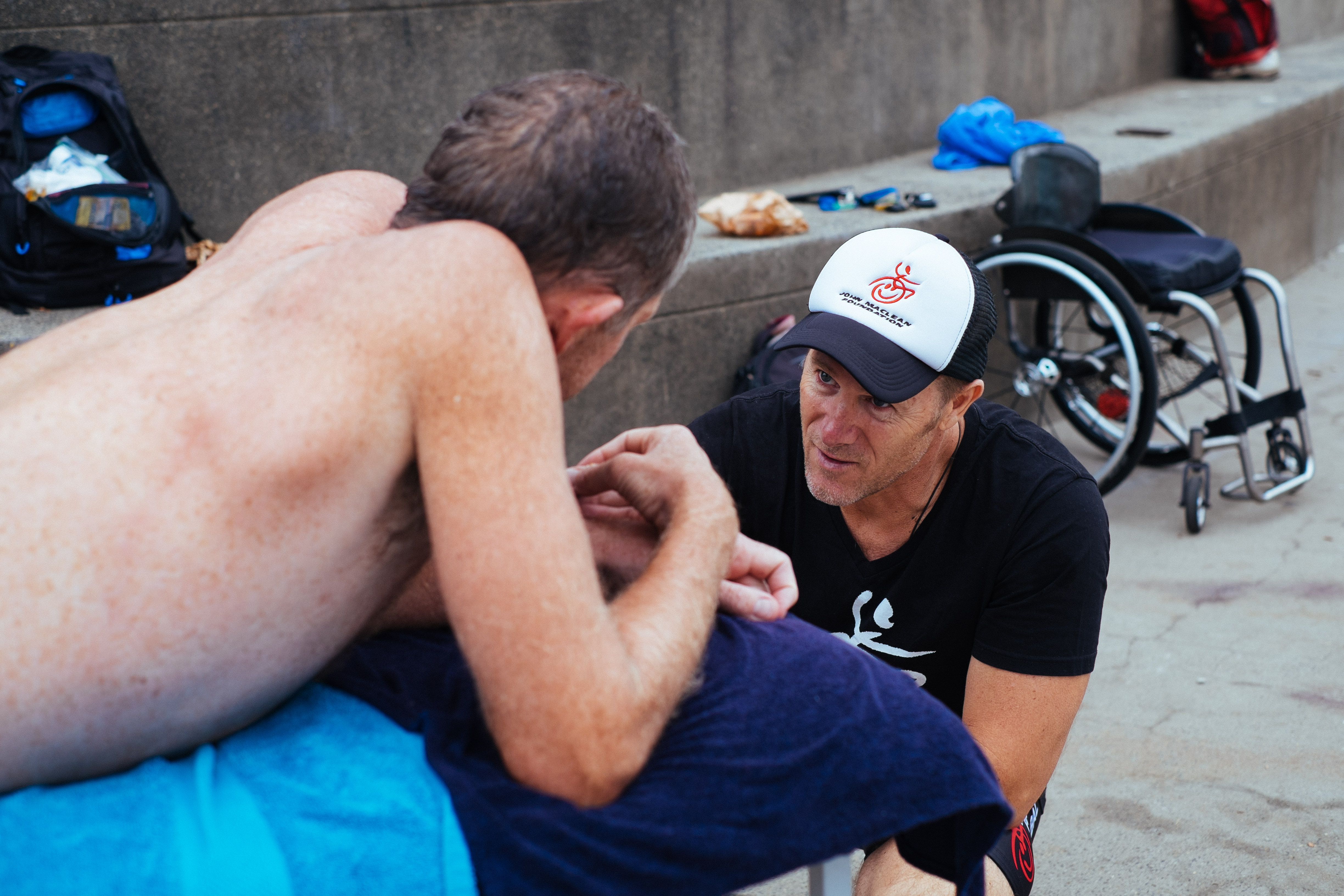
When John Maclean talks, you listen.
As I said earlier, Craig had decided to pull the pin on the 8in8in8 on the way from Canberra to Sydney. He had pretty much done the swim because Crowie and John Maclean were there. But the local Cronulla Tri squad had sorted a masseuse to come and give Craig a rub down, and while Craig was lying there John Maclean came over to talk to him. Sometimes you can see two people talking and just sense the gravity of what they are talking about, and this was one of those times. I knew I had to capture it, but when I took the photo from the side so that I could see both of them, it just didn’t work. So I scampered the other way so that I could see Craig, but that still didn’t work. Then I went behind Craig’s shoulder and realised that I could see John’s wheelchair in the background and knew that this shot would really tell a story. So I framed up the shot, pulled focus on John and waited for him to look up towards Craig…when he did ‘snap’, I knew I had the shot I wanted.
Over the last couple of months I’ve been working really hard on not just taking a shot from one angle, but trying to take it from a variety of angles. In this case it really paid off.
#4 The painful reality
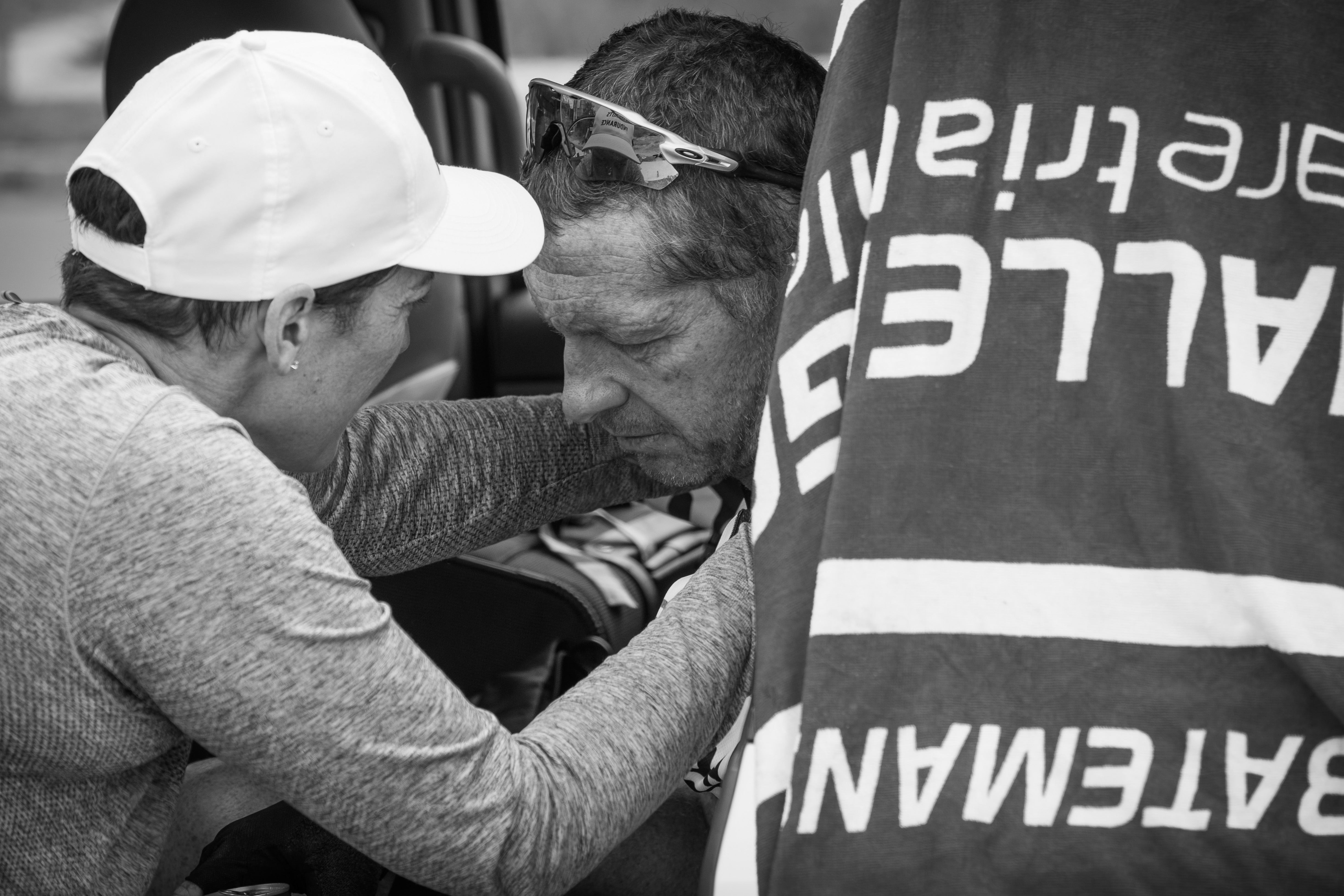
60kms into the 180km ride,and still a marathon after that. Sometimes the only person who can support you is the person who knows you best
When I think of some of the most powerful photos I’ve seen, I realise that the photographer hasn’t been trying to help the starving child, or save the people running from the explosion, or stop the horror unfolding before them. They have made a decision that their photo will do more to change a situation than anything else they can do. For better or worse they have had to choose between taking a photo, and actively helping someone, and they have chosen to take the photo.
While of course not on the same scale, I had quite a few moments on my day in Sydney with Craig when I was tempted to take a photo that showed the physical and mental toll the day, and the indeed the previous five days…and no doubt the thought of the next two days, were having on Craig. To show how broken he was. But it just didn’t seem right. I felt as though I would be betraying Craig, Lindell, Kate, Ginny and everyone else who was supporting him.
So when I saw this moment, I knew I had to get it. It showed just how shattered and exhausted Craig was, but it also showed the wealth of support that surrounded him.
#5 Getting ready for the run at Cronulla
‘You’re still here mate?’
Perhaps this is the reward for not getting in Craig’s face for the preceding 11 hours. It was about 5.30pm, Craig had just hopped off his bike and was preparing to do the marathon along the Cronulla foreshore. I was just waiting to get the right shot of him when he looked at me, laughed and said ‘You’re still here mate?’ As with a lot of the other photos in this blog, this shot serves as a signpost to a turning point. I wasn’t there for the first five days, so I don’t know this for sure, but I felt as though Craig had spent the first five days enjoying people’s support, but not relying on it. But over the course of the day, Craig had let his defences down and realised that if he was going to do this, he was going to have to rely on the support of a whole lot of people he had never met.
So for the next 7 hours he walked the marathon, and people came from all around to walk with him. Earlier in the day he had been worried about what people would think of him if he walked the marathon…but by the end of the day I think he knew exactly what people thought of him BECAUSE he walked the marathon.
#6 The cheer squad at Prahran pool
This group of kids cheered Craig’s every lap.
Craig’s motivation for doing the 8in8in8 was to raise money for the John Maclean Foundation. Last year when he told me he wanted to raise $80K from this, I did my best to pretend that this was achievable. But deep down I wanted to say ‘Are you out of your mind?! I think you’re gravely overestimating the generosity of people’
Fast forward three months and Craig is swimming his final swim leg of the 8in8in8, and after the swim he is going to present a cheque to Tommy Le’Au and his family so that he can get a wheelchair. Tommy’s siblings and cousins had perched themselves by the side of the pool and were cheering him every time he went past. I’ve got three young kids and I know how hard it is to keep their attention for the time it takes to swim one lap of a pool, let alone 76. But these kids clearly knew what Craig was doing and why he was doing it…and they wanted him to know how much they appreciated it.
For the record, Craig has already raised over $84K and has now set his goal as $100K…so if you haven’t donated already, every little bit helps…and this is who you’ll be helping
Tommy and his Mum.
#7 Midnight in Melbourne
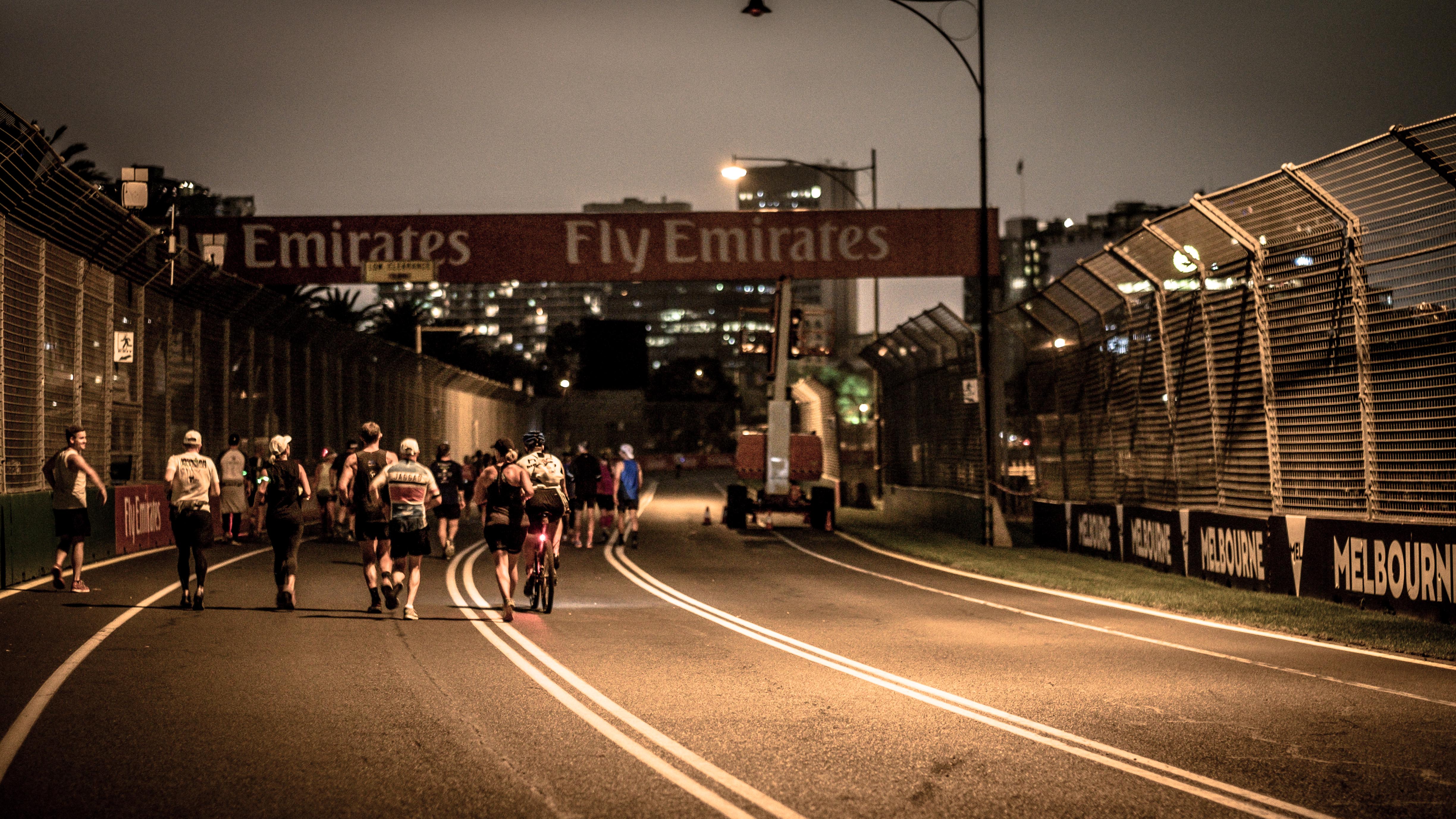
Running on the Albert Park Grand Prix track.
It’s nearly midnight on Sunday, we are on the closed roads of the Albert Park Grand Prix track, there are over 50 people still running with Craig, and he’s just let us know that he’s confident of finishing this epic event. If that’s not worth a photo, then what is? Of course the challenge is that it’s really dark, they’re too far away to use a flash…but that f1.2 56mm lens that you beat yourself up for buying, has just come into it’s own!
#8 ‘You know I’m going to do this!’
‘You know I’m going to do this!’
Kate Patterson had worked tirelessly in the lead-up to the 8in8in8…and while ‘tirefully’ isn’t an actual word, if it were, then she would have worked tirefully for duration of the 8in8in8. Surviving on smatterings of sleep, taking days off work to be there when Craig needed her and doing all of the media and social media stuff along the way. She was indefatigable.
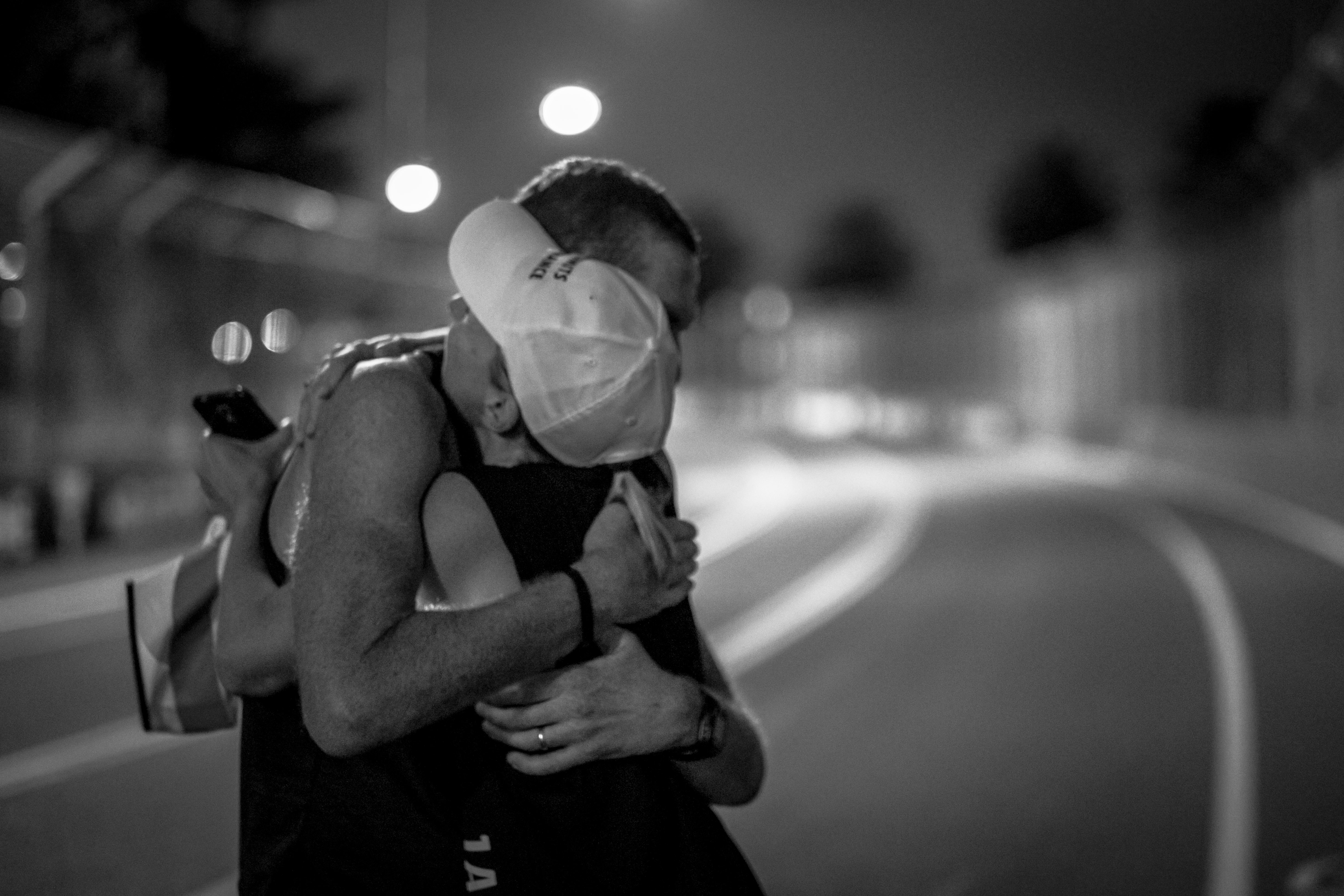
About an hour into the final run (on the Albert Park Grand Prix course no less…another thing that Kate had managed to organise), I had perched myself at the 2km turnaround point of the run and was giving Kate some photos for her to feed the ravenous beast that is Facebook. When Craig ran past, then doubled back and said ‘You know I’m going to do this!’ and gave Kate a hug. He still had another 4.5 hours to run, but this was the first time I had heard him say this, and the first time he had let his game face slip, and reveal a little bit of the optimist inside.
Technically this is not a great photo. It was really dark where we were so the ISO is ramped up to 1600, I was clearly hunting for focus so the image isn’t sharp, but it captures a moment…and that’s all I ever really want to do.
Now for the movie
For those who don’t already know I’m putting together a short video about 8in8in8. I’m hopefully shooting the interviews next week, and then will be furiously editing it for a couple of weeks. I’ll do my best to write a few posts about this process.
But in the meantime I just want to thank Craig, Lindell and Kate for taking me on for this project. To Amanda, Grant, Ginny, Shrek, Ailie and everyone else who helped me out along the way, thank you so much, it was greatly appreciated. Last but not least to everyone who supported Craig whether it was in person, or on social media, or by donating to support JMF, you were part of something pretty special and I hope it inspires you to do something great.
It’s a strange world we live in where you can have a mentor that you’ve never met in person, but followed from thousands of kilometres (or miles for our American viewers) away via the internet. But that’s how I feel about Zack Arias. I’ve never met him, but his videos and website have had a more profound effect on my photography than anything else. So Zack I’m genuinely bummed to know that you’ve had a less than ideal 2015. Especially as, under your proxy mentorship, I have had one of my best years.
Your Onelight video cajoled me to try shooting with a flash…and your John Keatley video dared me to take the plunge and approach a stranger and ask to shoot their portrait.
Your ‘Inspiration Interpretation’ blog made me rethink the way I use exercise as a way to inspire my photography…and I got so carried away I wrote a blog about it and tried (admittedly unsuccessfully) to get it published on your site.
Your ‘Art of editorial’ and ‘Shoot Rabbit’ videos gave me some amazing pointers on getting people comfortable and getting them to pose, that I tried out on my Dad.
But most, most, most importantly, I watched your Fuji guides and read your descriptions of the cameras and lenses so much that I think I wore down that part of the internet. The net result being that when I turn 40 in three days time, I’m putting all of the money I earned on a recent job, into purchasing a Fuji kit. And I am so excited about this, it’s concerning.
So I’m genuinely sad that you’ve had a rough 2015. But if I could have produced even 10% of what you did this year, then I’d be shouting it from the rooftops. But more than that, you’ve put so much back into the world. So thank you. If ‘what goes around, comes around’, then you are going to have one hell of a 2016!
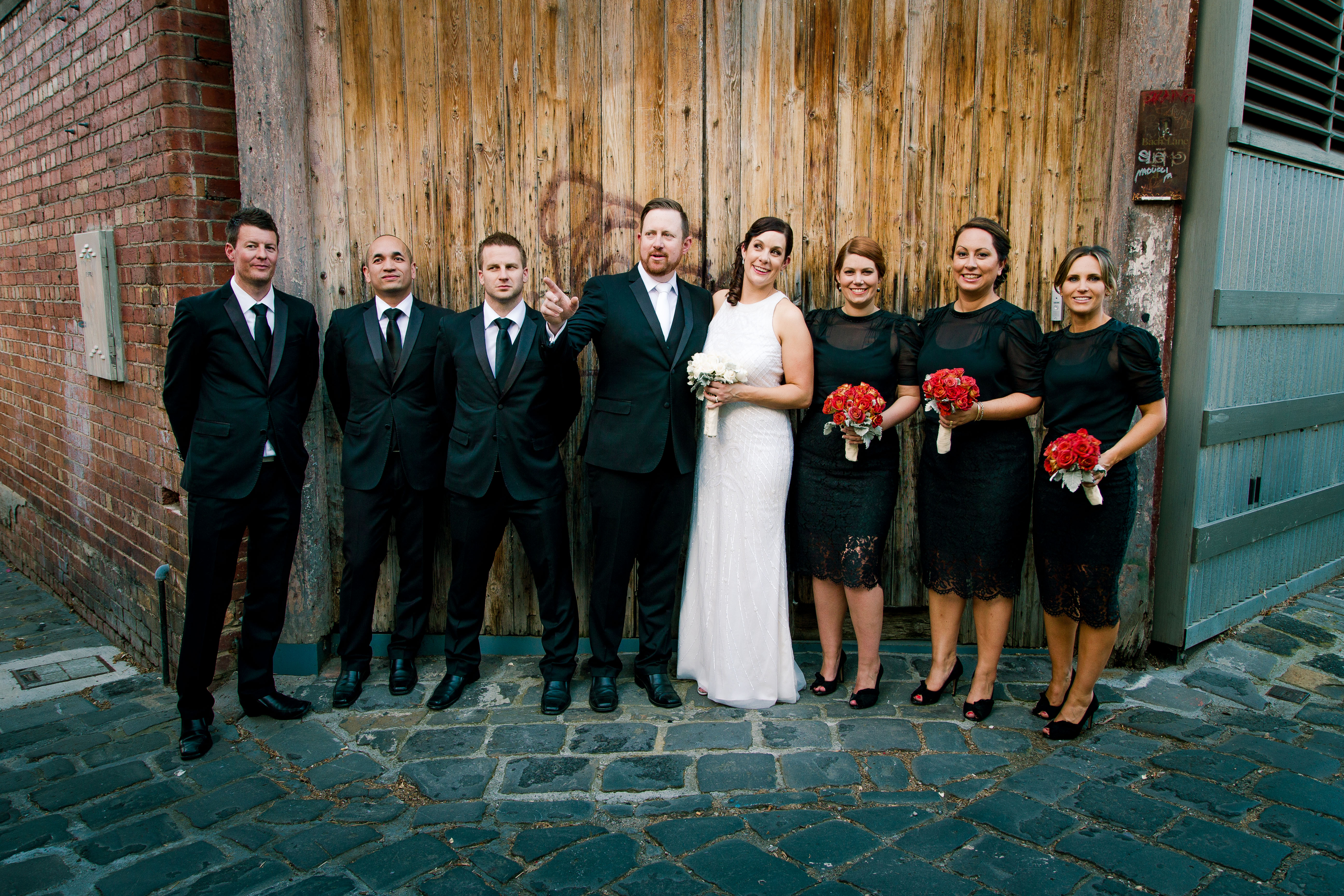
Last year a mate of mine (the inimitable Tim Arch) asked if I would be interested in shooting a wedding. I thought that this would be a good opportunity to work with someone who knows what they’re doing and to learn a few tricks of the trade, so I said ‘Sure.’ But a few days later I re-read his message and suddenly realised that he hadn’t actually said that I would be assisting him, and after a flurry of DMs on Twitter I came to realise that in fact Tim would be attending the wedding…and I would be shooting it by myself. So I explained that while I felt happy with the way my photography was progressing…I didn’t really feel comfortable being the ‘be-all and end-all’ for someone’s wedding day. So Tim said he would explain this to the Bride and Groom, and a few days later he let me know that they were still happy to have me shoot their wedding. So it was time to HTFU and shoot my first wedding!
Was it terrifying? Yes. Were there things I could have done better? Yes. Did I learn more in about 4 hours than I had in the previous year? Yes. Will I ever shoot another wedding? I don’t know…but at least it’s not a definite ‘No!’.
So I’m no expert on wedding photography…but here’s what I learnt.
Preparation
Admittedly this is not going to come as a massive surprise…but the more prep you do, the easier the day will be. I had a few meetings with the groom before hand and a meeting with the bride and groom about a week out from the wedding. This was invaluable for making sure we were all on the same page in terms of what I was going to shoot.
I also headed over to the venue the day before at about the same time as the wedding was going to be to make sure I had a few good ideas for where I could shoot the group shots. While I was there I also roped a friend into walking towards me so that I could work out what shutter speed I would need to get shots of the bride walking towards me.
You may not use any of the the info that you glean from this preparation (Lord knows I certainly did!), but you will be able to carry yourself with the confidence that comes with being prepared.
I discovered this location on a walk a few months earlier and thought it would make for a great shot.
Improvise
Preparation is great…right up until that moment you when the spot you had in mind for the group shots suddenly isn’t available and you have to come up with another option. Or when the bridal party is crossing the road to get from one location to another and you see a chance to shoot them with an iconic Melbourne tram in the background (admittedly this shot didn’t work…but at least I got it!) So keep your eyes open for opportunities, and don’t freak out if you have make a last minute change.
Make sure you get a few shots that ‘tell the story’ of the day. This one serves as a good introduction.
Carry a shot list and ideas for shots
I’m sure that once you’ve done a couple of weddings you will know what shots you need and how to get them. But for me, having a list on my phone of the shots I needed to get and a few ideas for setups was invaluable. If you’re shooting the wedding by yourself you’re going to be flat out trying to keep people happy for the camera, taking the shots and making sure that they are working. You won’t have a whole lot of time to think about where you should be shooting next, or what would be a good set up. So if you’ve got a list, you can just refer to that and know that at the end of the day you’ve got what you needed to get.
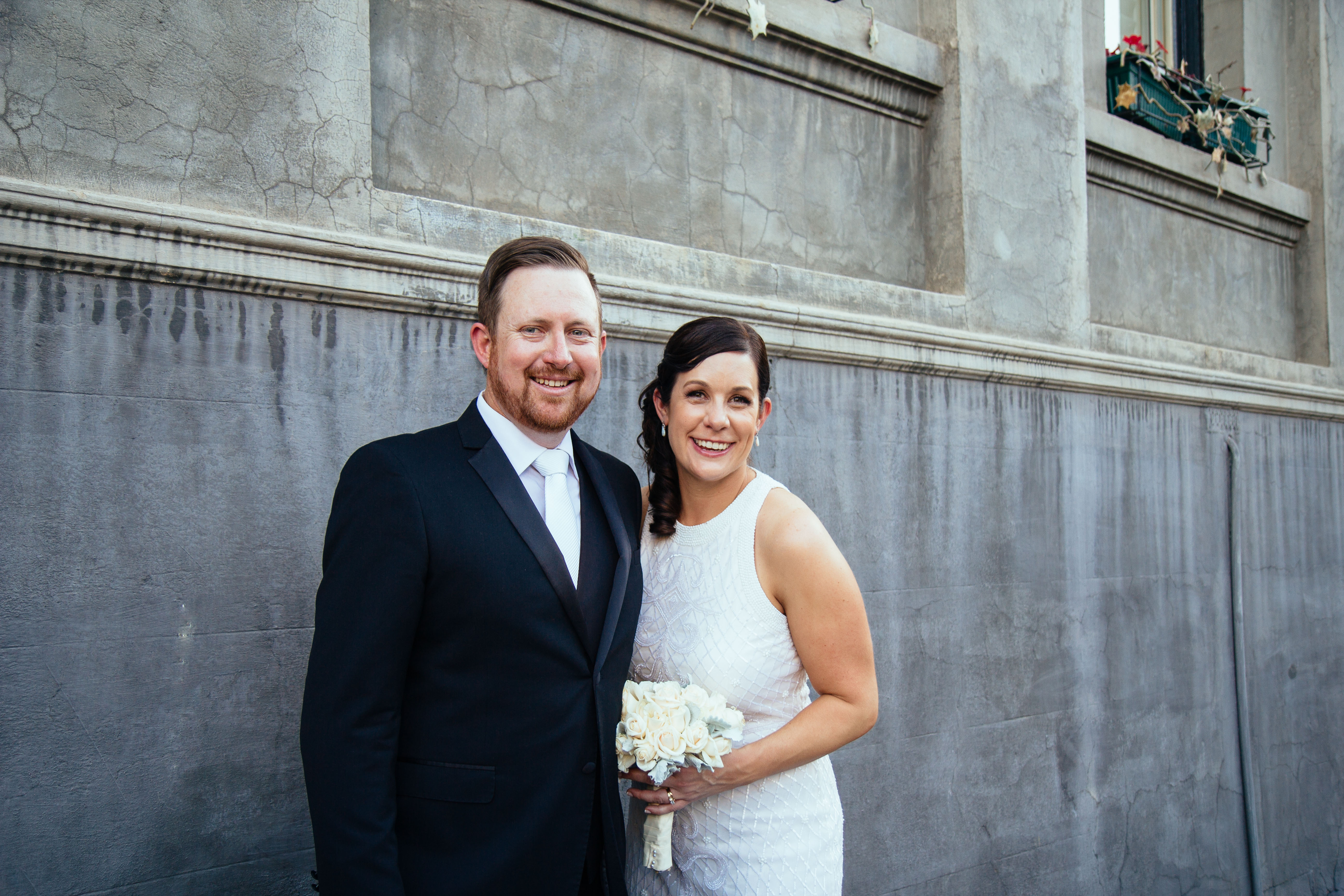
I hadn’t intended to take a shot here, but the light was great and the grey background really made the bride and groom pop…also the bride suggested the photo and I’m too smart to refuse.
Go with what you know
I spend a lot of time taking photos of my kids, so I know the importance of waiting for a shot to happen, rather than trying to manufacture it. I’m also more comfortable shooting people with available light than with a flash. So there were moments like these where I knew I had nice light and I knew I could get a good shot if I waited for the right moment
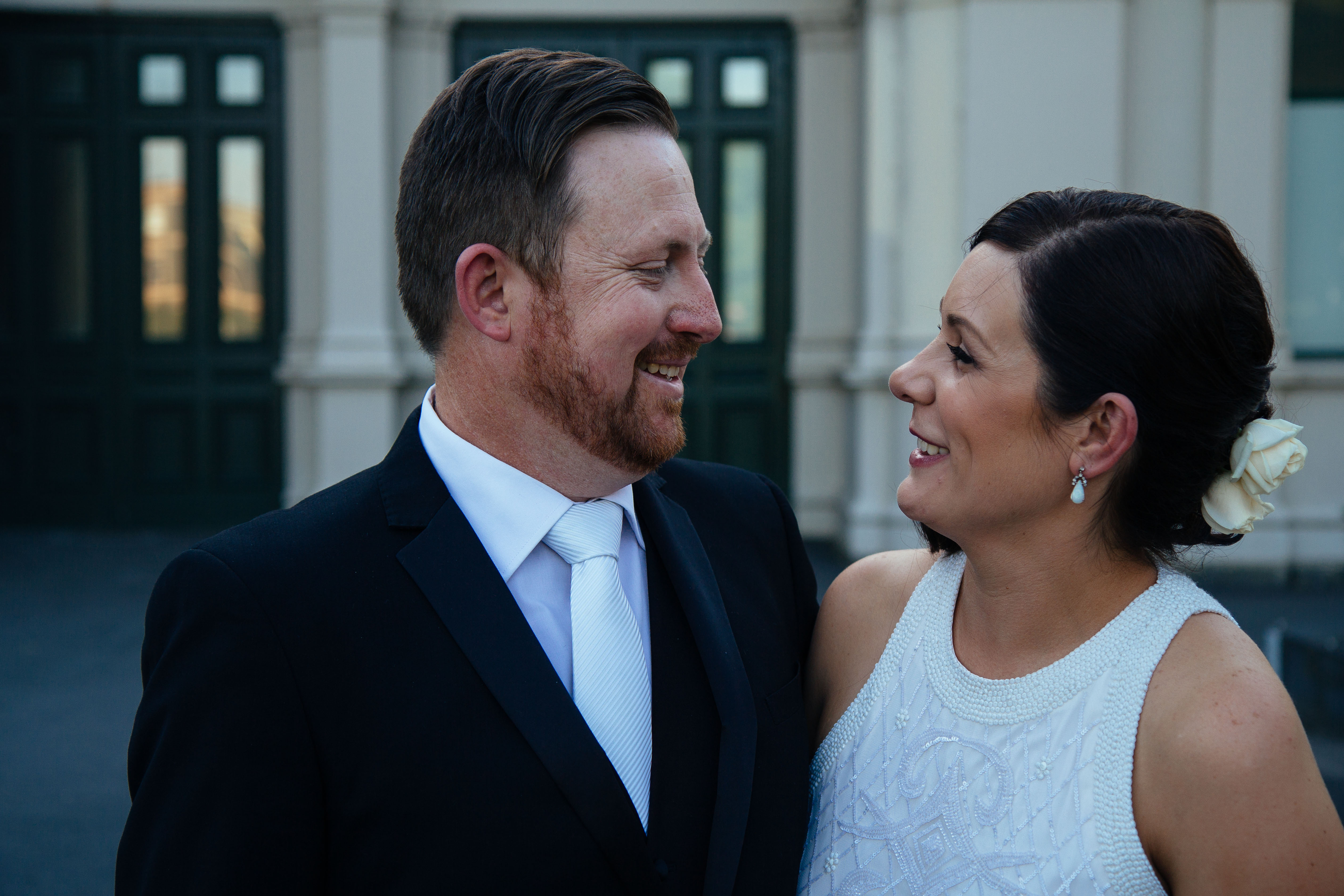
Future bride and groom
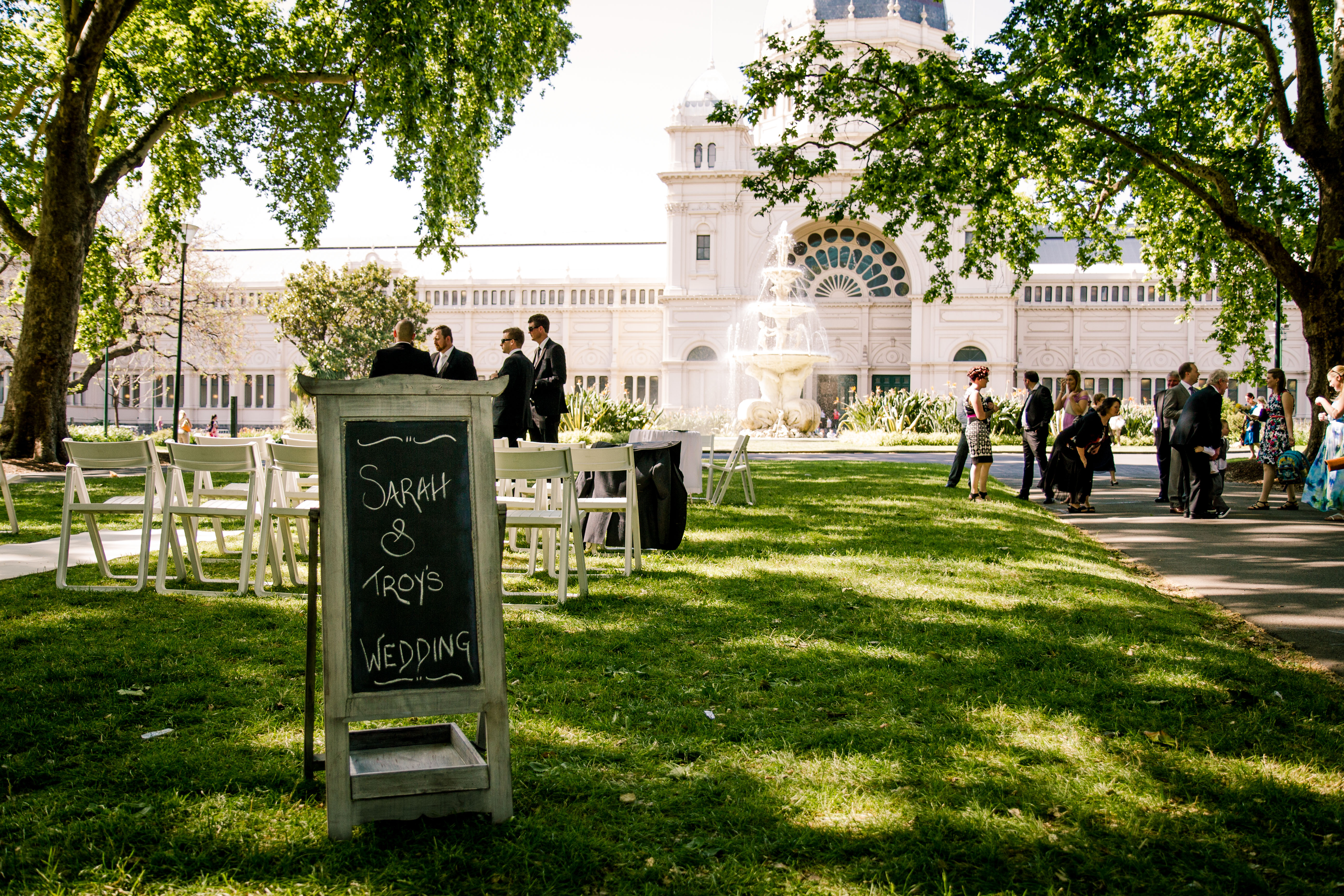
And there was a moment where the bridal party wanted a photo in front of the fountain with late afternoon sun behind them. I thought that with about half an hour of mucking around with the flash I could get a good shot…but I also knew that I didn’t have that sort of time, so I had to just say ‘I’ll take the shot, but I think the sun is going to be too bright behind you.’ They were happy that I took the shot, and in the end the shot was too blown out…but I’m glad I didn’t waste precious time trying to make a shot that my skill level was unlikely to achieve. Because two minutes later I got these shots that I wouldn’t have got otherwise.
The Gear
Going into this, I think I was more concerned about the gear side of things than actually taking the shots! Will I need two cameras? Will I need a full-frame camera? How will I go shooting on a different camera when the pressure’s on? What lenses should I pack? Should I take a prime or zoom? How do I carry it all? AAAGGHHHH!!!!!
In the end I was very lucky and got to borrow a Canon 7D and a 70-200mm f4 lens. I also took my 550D with a 17-55mm f2.8 lens and a 50mm f1.4 lens. I had one camera on a sling and the other camera just on a strap and so carried them everywhere. I also had a tripod, flash and reflector.
So, did I need two camera bodies? Yep. There’s no way I could have changed lenses quick enough to get both this shot on the 70-200mm lens and then this one on the 17-55mm.
Perfect…apart from that creepy photographer in the background.
Did I need a full-frame camera? No, I’m happy with the shots I got on the 550D and 7D. How did I go shooting on a different camera when the pressure was on? Fortunately the navigation on the 550D and 7D are pretty similar, so I didn’t have any issues. But had I been shooting on a 5Dmk3 or different brand of camera, I think it would have ended in tears.
Should I take a prime or zoom? Given that so much of this was just running and gunning I definitely could have left the 50mm prime at home. I toyed with the idea of borrowing an 85mm for the portrait shots, but I’m glad I didn’t as I don’t think I would have had the time to change lenses and it would have just been another thing to carry.
One of the few shots on the 50mm
How did I carry it all? Well…I just carried it all. It was freaking hard work. My shoulders were cactus by the end of the day, and there was one awesome situation where I had a camera set up on a tripod in preparation for the group shot, and then was asked to take some photos 100m away in another part of the park. So I was left getting people to pose for some photos, while desperately checking over my shoulder to make sure no one was running off with the camera and tripod I’d left set up. This was not in any way, shape or form relaxing, and if I was doing it again I would definitely rope someone in to assist me.
Eating and drinking
If you’re someone who likes to eat (and I am) then you should definitely try to get some food into your system before the ceremony begins, as there will be very little chance for you to eat anything other than snacks for the next couple of hours. Fortunately I was pretty much running on adrenaline for 4 hours straight, and it wasn’t until I stopped that I realised just how hungry and tired I was.
I would also recommend taking a water bottle with you if you can. I was shooting in the late afternoon of a warm Summer’s day (about 30 degrees) and knew I would get pretty dehydrated if I didn’t drink a fair bit of water before the ceremony. So I drank plenty of water in the lead up to the ceremony and carried a water bottle with me. While I certainly didn’t get dehydrated, spending the next 2 hours with a full bladder and standing next to a fountain was not ideal.
Conclusion
What I don’t know about photography could fill a library…but fortunately what I do know about myself could fill a small self-help pamphlet. I know that I achieve the most when I push myself out of my comfort zone. So while I was terrified about taking on the job of photographing someone’s wedding, I just told myself that it was like any other photography gig and went for it…although admittedly it is ‘like any other photography gig’ except for the fact that it’s one of the biggest days in most people’s lives…and you only really get one shot at getting the photos…and people are almost definitely going to print the photos and look back at them over the years…in hindsight, I should never have done this.
But I was also really lucky to have a really lovely couple to work with. They said from the outset that they were going to be relaxed and easy going…and they were. I think that if they had been a high-maintenance couple then this would probably have been my last wedding…but as it stands…if the right couple came along…I reckon I’d do it all again.
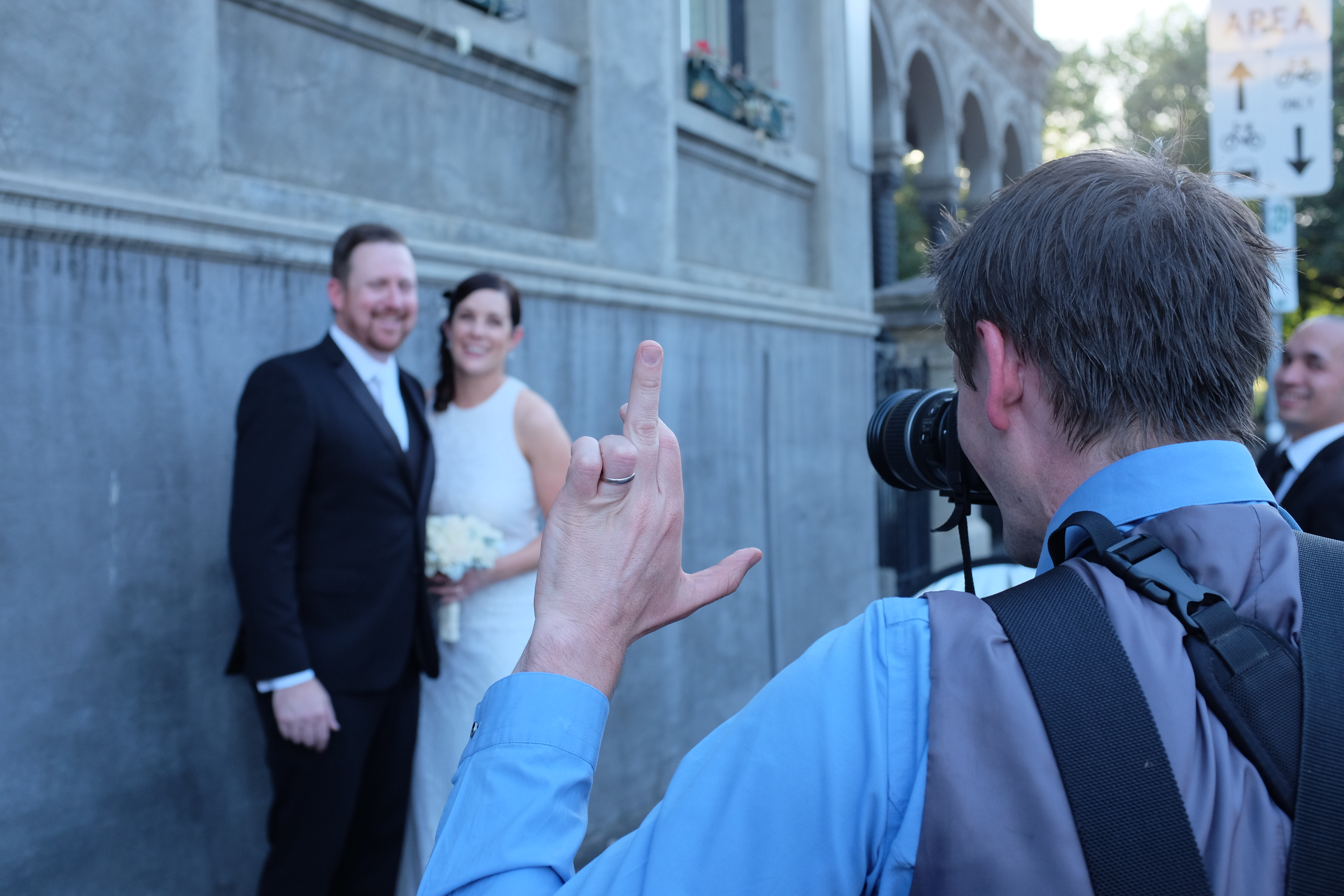
How to deal with pesky onlookers telling you how to do photography.
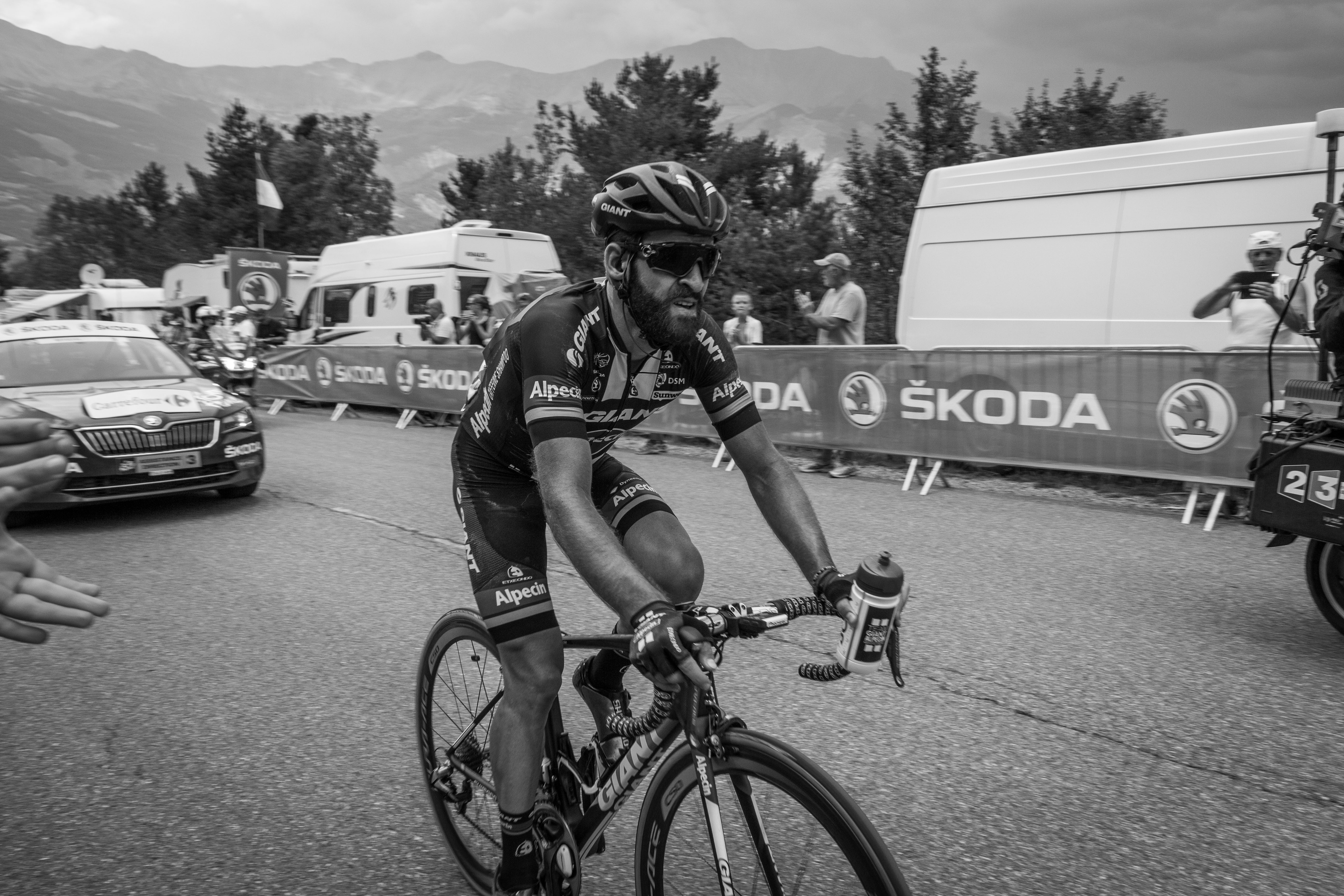
“The tour, it’s like Crack isn’t it?” laughed the pro-photographer with the South African accent, before hopping on the motorbike to follow the peloton “Every year I say it’s my last time…but I keep coming back!”
Well I’ve never actually tried Crack, but thanks to the good folk at Cycling Tips and Exodus Travel I did get to see the tour this year, and while it’s pretty unlikely I’ll be able to afford to get back there any time soon, here are some things I learnt about taking photos at ‘Le Tour’.
Travel light…but not too light
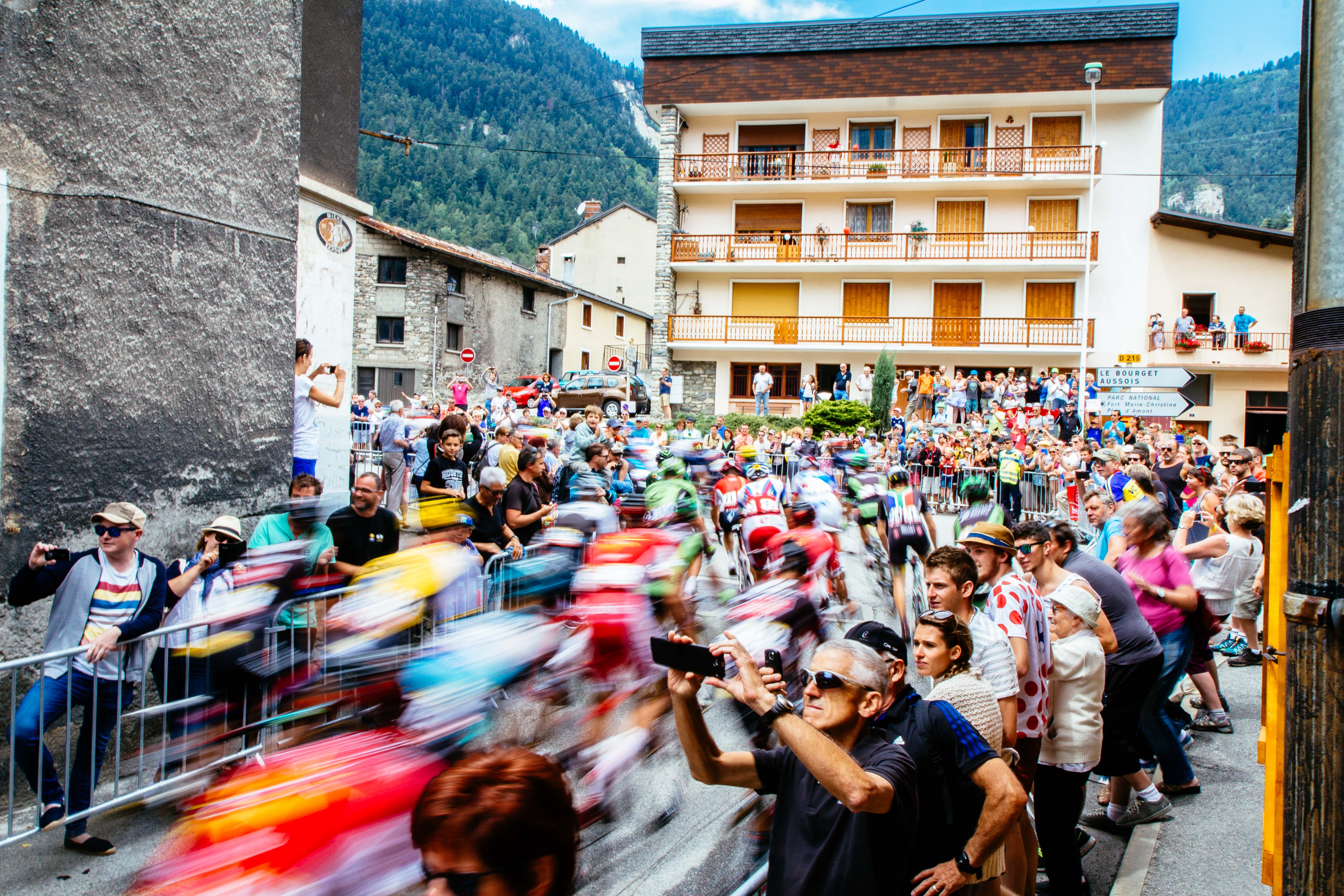
The best way to get to a lot of the climbs and good vantage points to watch the race is to ride or walk. So whatever gear you want to take, you will be lugging with you on your back. On my first two days I carried just a 50mm prime and my Canon 550D. Which was good from a weight perspective…but made shooting a lot of things difficult. First of all, the 50mm being a prime lens means you can’t get a good spot by the roadside and then zoom out to get both the riders and the beautiful Alpine background…no, you need to step back a bit. Which means you are going to either have to shoot through a crowd (less than ideal) or shoot the riders quite tight (good to have, but you don’t want all of your shots to look like that).
Sagan tightening the straps for the descent
So for the remainder of the time I carried the additional weight of the 17-55mm and pretty much shot everything on that. At the end of the day, riders on a road could be anywhere, so you need to be able to get wide enough to tell the story of where they are.
Geschke on his way to a stage win at Pra Loup
I didn’t take a 55-200mm lens on this trip…not because I didn’t want to…but because I don’t have one.
Use a motorbike.
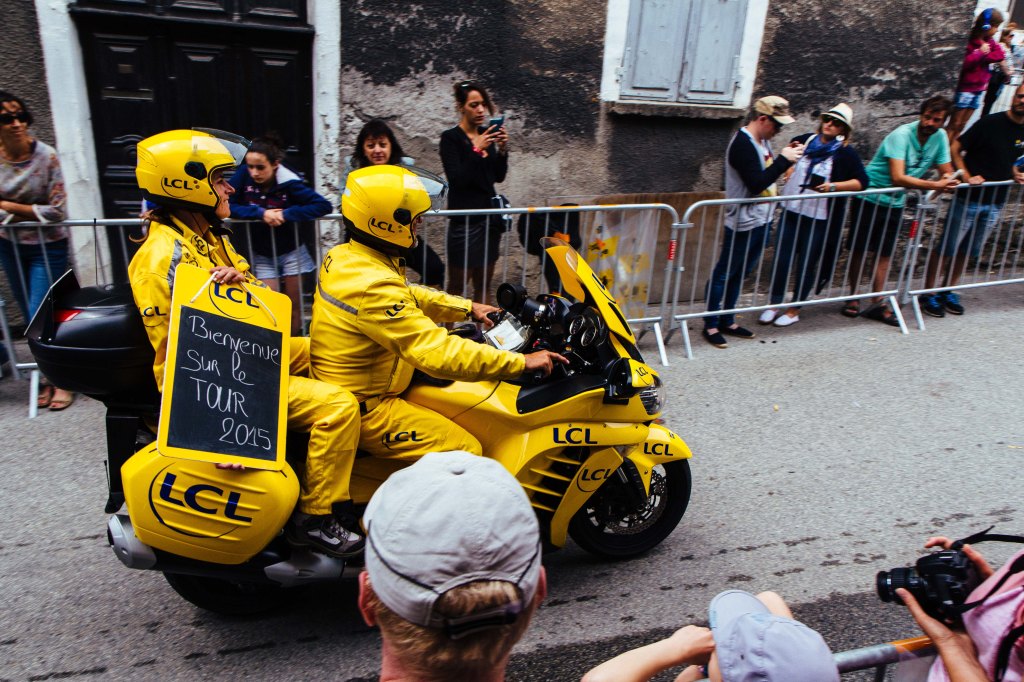
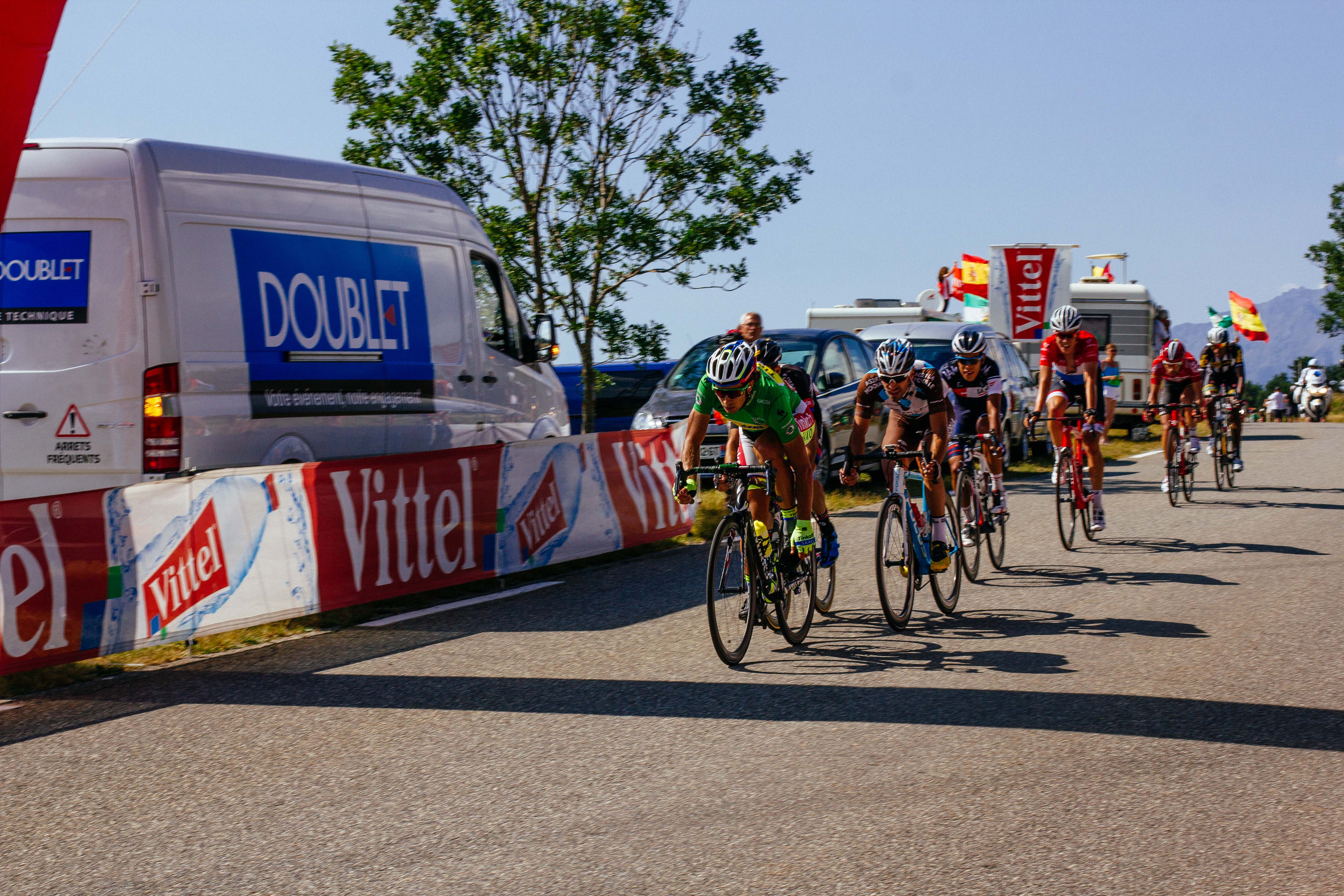
All the pros get to use a motorbike…so why shouldn’t you? Well, because you’re not accredited so you couldn’t get access to the course…plus it costs too much…and let’s not forget helmet hair. But you will find that you can use the motorbikes in the tour to your own advantage by using them to set your shutter speed. Now if I learnt one thing from my time on the tour, it’s that professional cyclists go freaking fast…so you want to make sure that you have all your settings dialled in before they arrive. But if you’re an amateur like me, then you’ll have no idea what shutter speed you should be using. So I just experimented with different speeds and shot the motorbikes as they went past (there are quite a few that come through before the leaders arrive). If the motorbike looks sharp, then you can be quietly confident that the cyclists will be sharp when you shoot them.
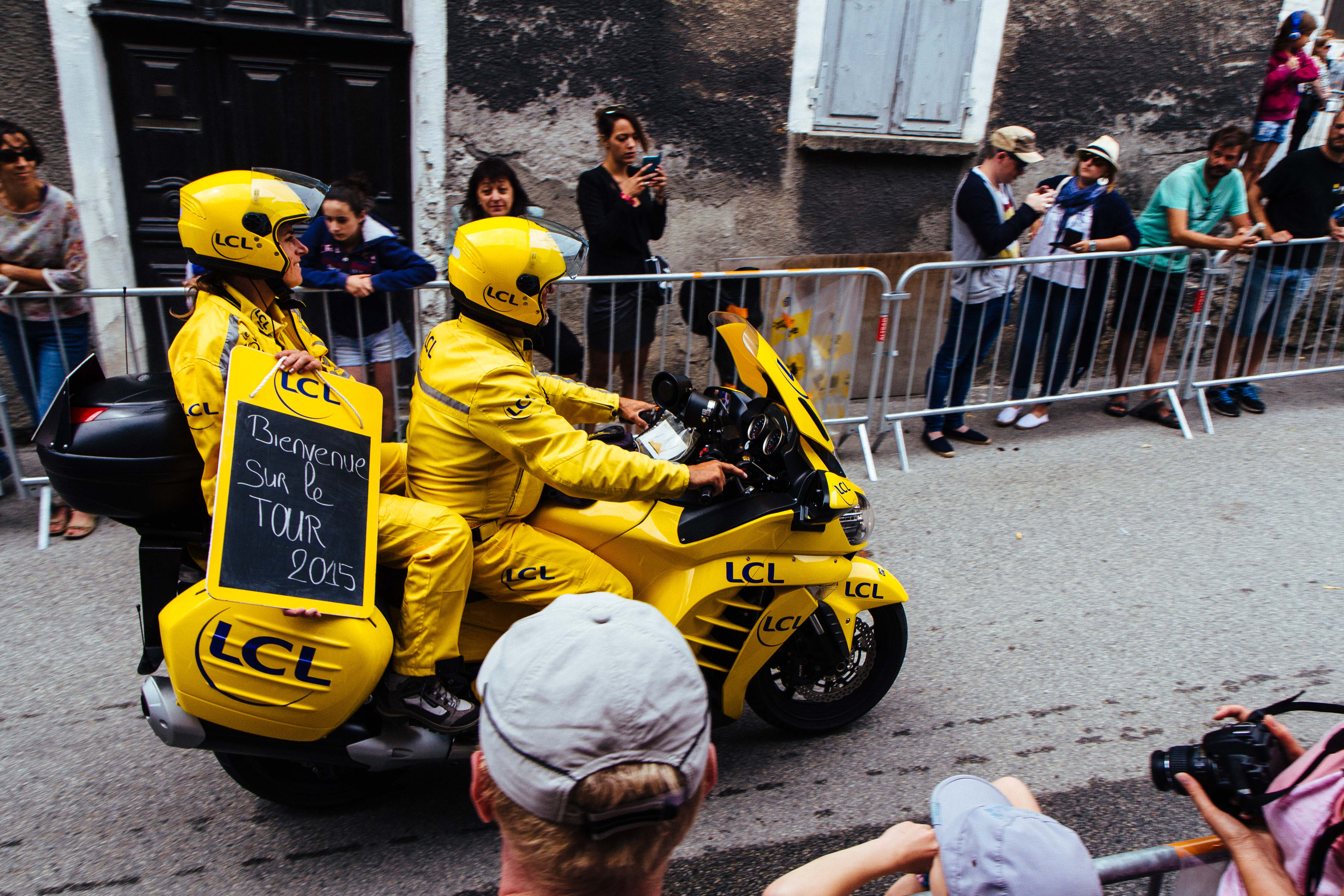
Providing valuable info to fans, riders…and photographers
You’re a photographer or a spectator…you can’t be both
It was embarrassing the number of times I thought there was still another big group of riders to come because I hadn’t seen the yellow jersey yet…only to go through my photos and realise ‘Oh…he came past five minutes ago…here’s a photo of it!’ Or I would be chatting to the guys I was watching the tour with and they would say ‘Did you see the look on Cav’s face on that climb?…he was suffering’ and I’d think, ‘Crap! That must have been while I was taking photos of the Colombian fans!’
These guys were having a good chat the whole way up the climb
You can try to occasionally just leave the camera in the bag and soak up the atmosphere…but deep down you just know that as soon as you don’t have the camera ready, Sagan will go past doing a wheelie…or a Yeti will attack the grupetto as it goes past. It’s just not worth that risk!
Don’t ‘spray and pray’
Nah just kidding, if you’re a professional or a purist, you can crap on about just focussing on taking one shot and really nailing it. But for you and I, when those riders go past, you are going to keep shooting until the cache is full. There’s no shame in that. After all, you’re the poor bastard who’s going to have to go through all of them later.
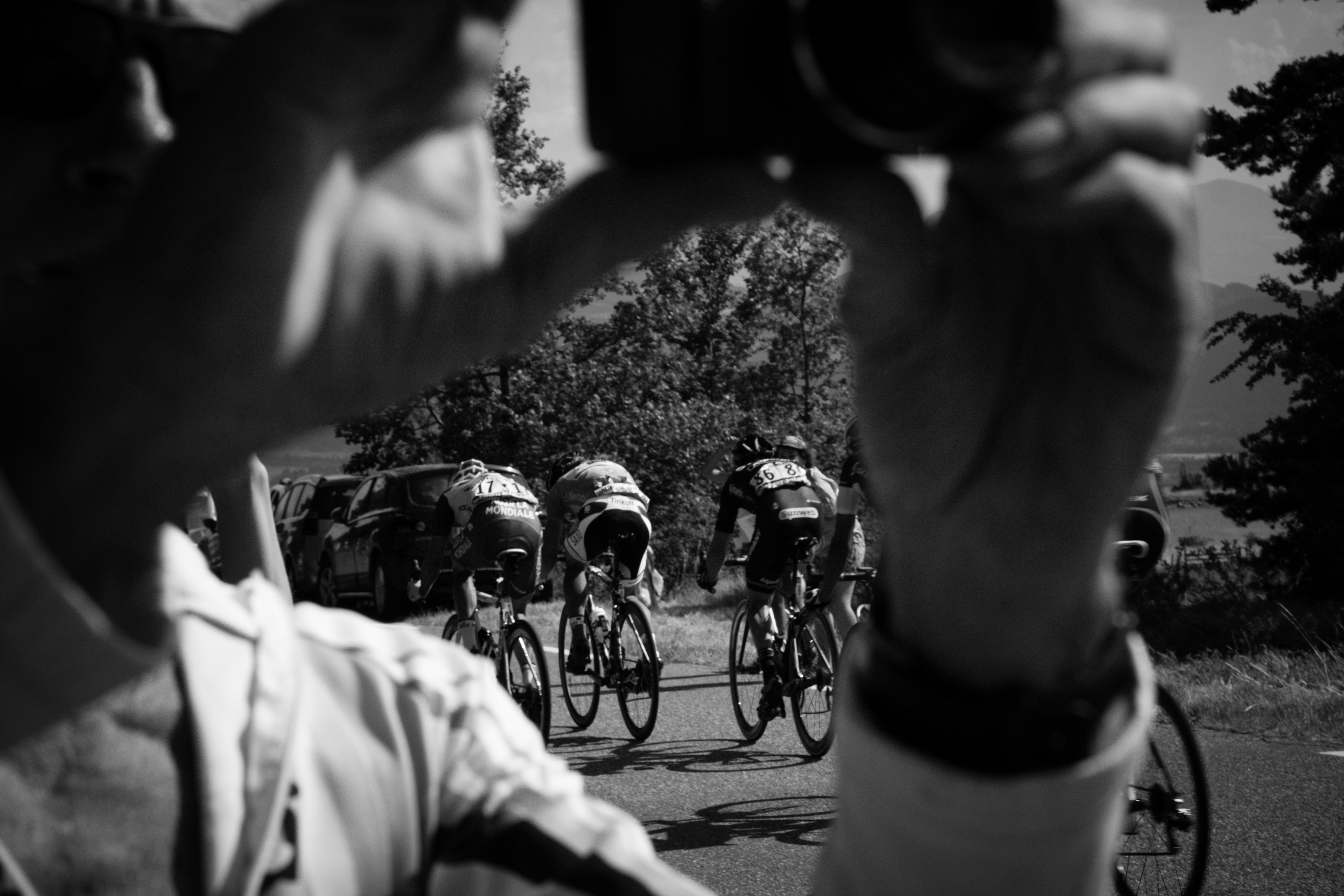
And sometimes as you’re shooting madly, the guy next to you will create a perfect frame through which to view the riders as they disappear into the distance…and you’ll look like a genius.
More good luck than good planning
Don’t shoot the same shot every time.
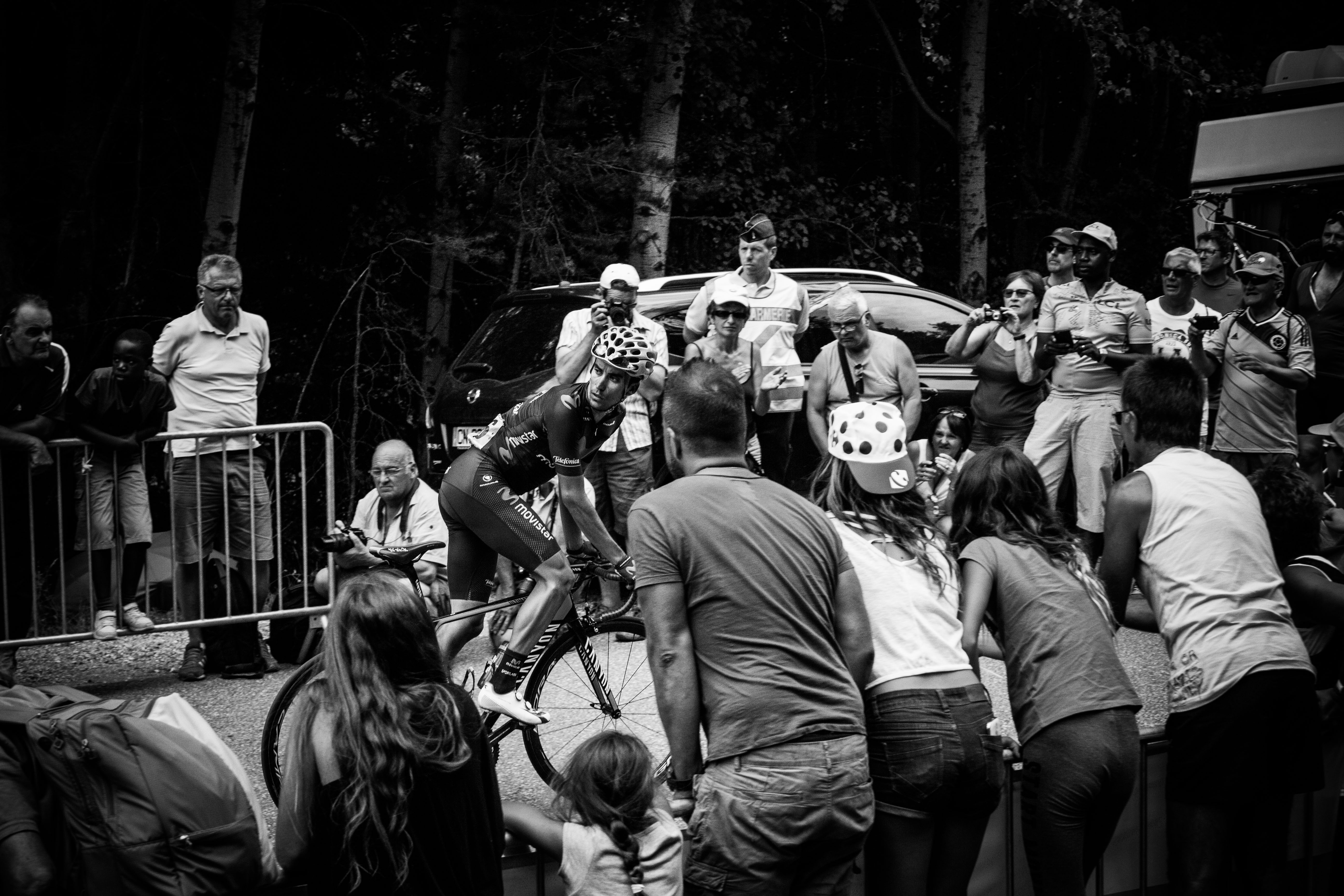
I spent pretty much the whole time shooting and thinking ‘Well I’m just ripping of Kristof Ramon with that one…that one’s pretending to be Veeral…and look, I think I’m both Jered and Ashley Gruber in this one!’ In short, you’re remarkably unlikely to come up with a shot that’s never been done before. But by the same token you don’t want to come back with ‘Here are photos of 50 different riders, shot from the the same angle and with the exact same execution!’ So drag the shutter a little, focus on crowd not the riders, shoot tight, shoot wide, shoot portrait. Do whatever you can to make a shot that someone who doesn’t obsess over cycling will still want to look at.
‘That’s close enough’
The peloton roll out of Modane
Do the boring stuff.
Load your photos every night. Tag them with metadata. Back them up to some sort of storage so that if the worst happens, they are in two (or ideally 3) places at once. This is a once in a lifetime opportunity, so spend the extra half hour to make sure it’s a story you can tell that doesn’t start with ‘I took this amazing series of photos, but then…’
A quick look to see who’s coming
But above all just have fun. You’ll learn a lot just by being there, and if you end up with a pile of crap photos at the end, just hide them and tell people you were too engrossed in the experience of the ‘Le Tour’ to take any photos…they’ll never know any better.
A couple years ago I spent 12 months focussing on being more ‘creative’. I spent more time writing, taking photos and making videos…hell, I even took singing lessons. The net result was that I think I became a happier human being. I had a creative outlet (even if the world probably preferred it when I didn’t), my problem solving improved (although admittedly the ‘problem’ was normally someone asking me not to sing…and my ‘solving’ was agreeing and apologising) and I started to see creative options where I hadn’t seen them before. But for the last year and a half I’ve been training for the Ironman (well admittedly I’ve spent the last 2 months basking in the afterglow of having completed the Ironman) and I’ve been amazed at how focusing on keeping yourself physically fit, can have massive benefits for your creative endeavours.
The basics
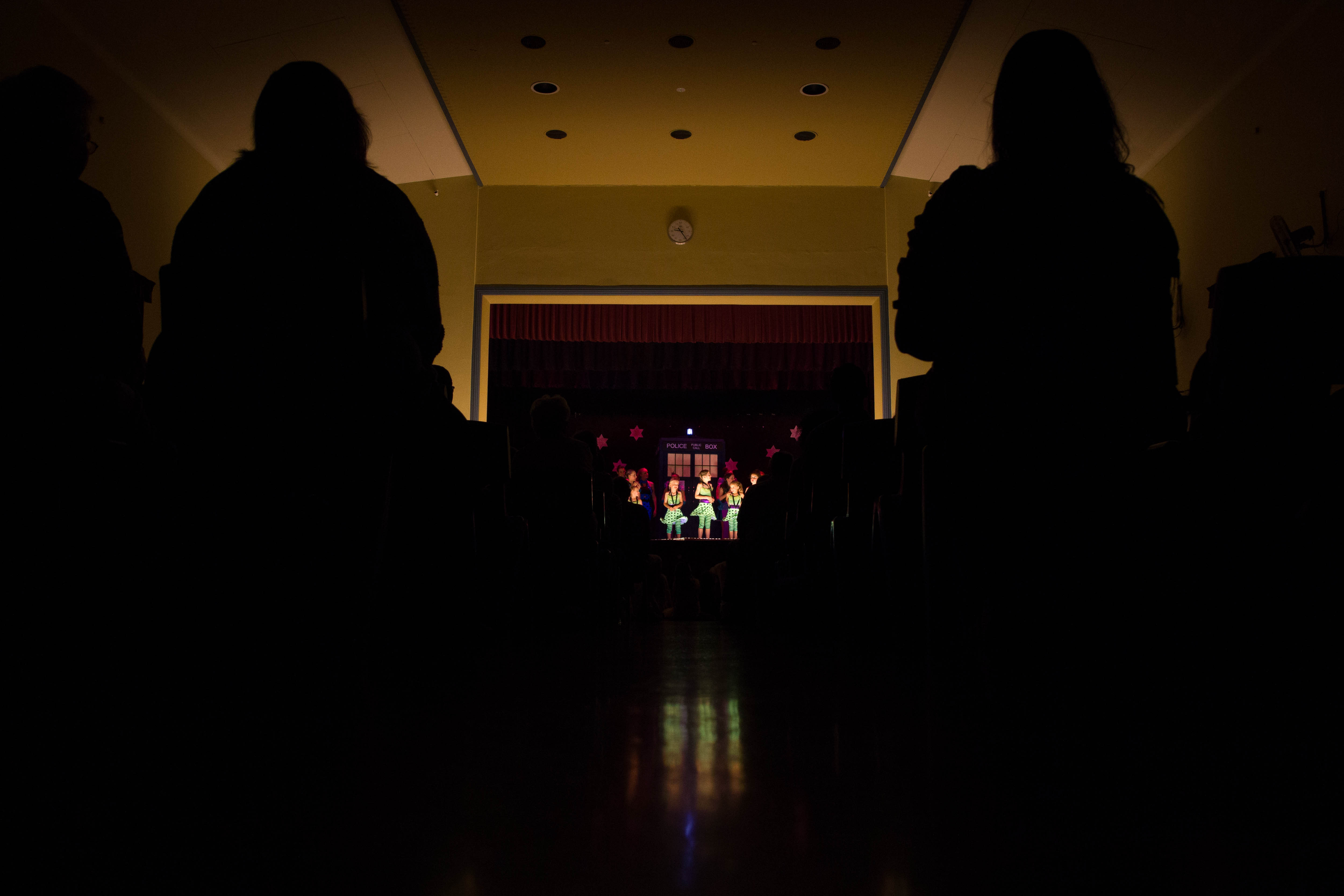
Granted, the actual act of pressing the button on your camera, looking at the screen on the back, sighing, and then dejectedly deleting the photo, is not all that physically taxing (the emotional and psychological onslaught is of course another thing). So you could argue that increased fitness won’t make a big difference to your photography. But a bit of cardio fitness may have meant you walked a bit further to get a better vantage point, a bit of endurance work may have meant that you carried an additional piece of gear in your bag that helped make the shot and a bit of muscle may have allowed you to elbow your way through the scrum and get the best shot of your daughter’s dance recital (Oh sorry other parents, maybe if you’d spent a little more time at the gym you would be the one taking this awesome shot…instead of rolling around on the floor moaning ‘My nose, my nose…I think you broke my nose!”).
Location, location.
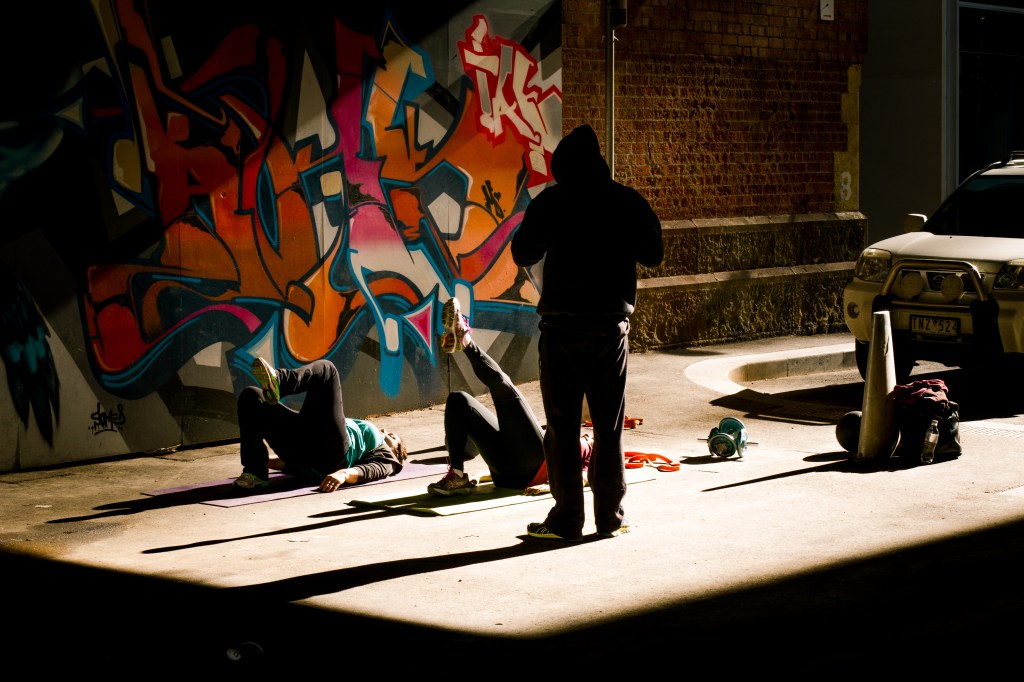
While training for the Ironman (and yes I will continue to drop that into conversation wherever possible) I would often head out on 1.5 – 2hr runs. Now don’t get me wrong, running along main roads and having the local bogans loudly question your sexuality as they drive past is pretty awesome. But eventually you will want to get off the beaten track and run somewhere different, and this will open up a world of new photographic locations. Old buildings, new bridges, creeks, graffitied walls, velodromes, rolling hills- you never know what you will find, but you can bet that it’s not something that many other people have used for a photo.
I stumbled across this one morning while out for a run…then scampered back to get my camera.
The early bird
Do you know what’s awesome for photography? Early morning light, deserted streets, sunrise, frost and that crossover between late night revellers and those who get to work early. Do you know what sucks? Getting up early to take these shots when on any other day you’d still be asleep. But if getting up early is now part of your daily routine (because it’s the only time you can work your fitness regime into your family life or work schedule), then getting up early on another day to take some shots really isn’t that tricky.
Admittedly this photo wasn’t taken superearly…but it was early when we started!
The people you meet
I’m firmly of the opinion that the most important factor in taking a great photo is not your skill level…but being there. A photographer with basic skills who is actually there, is going to take a much better photo than an expert who isn’t. But the problem is, how do you meet people to take photos of? How do you hear about events that would be great to photograph? How do you hear the stories that would translate beautifully to the captured image? In short you have to get out and meet people and do things, and getting involved in a sporting group or club is a great way to do this.
Plus, if you are actually doing an activity, you will have a much better idea of where the best photos are going to be. Everyone is going to be at the finish line, but where will the race be won? Where will the hearts break? Where is the bike most likely to stack? If you are actually doing these activities day to day, you will be able to walk up to any event and have an advantage over the other photographers.
Footjam Nosepick,
Confidence
OK, if you’ve made it this far into this post then you’re probably willing to let me get a little tangential. If you are exercising regularly, you will be happier with yourself physically. When you’re happy with yourself physically, this tends to manifest itself in greater self confidence…and you know what is an incredibly powerful tool when trying to convince strangers to let you take their photo? Self confidence. It makes no sense, but I know that for me personally, knowing that I could run 20kms on any given Sunday, gave me the confidence to approach Luke and ask him to pose for a portrait.
Admittedly he does look a little like he’s regretting agreeing to let me take his photo.
Time to think
If you’ve got kids, or a full-time job, or remarkably persistent cats, you’ll probably find that you don’t have a whole lot of time to think about your photography. But head out for a swim, ride, run or gym session and you suddenly have time and space to think, although for the first couple you will just be thinking ‘Christ I hate running!’ and ‘Why am I doing this?!’ and ‘Who the hell put the Wiggles on my playlist?!!’ But eventually you will be able to do the physical side of things on auto-pilot, while you use your newfound firing synapses and endorphins to come up with some stellar ideas.
The best ideas I’ve had for photos, videos and blogs have been while I’ve been out exercising.
Selfish portrait.
In conclusion, your Honour…
Having swung the pendulum between focusing on creativity and focusing on fitness, I have settled on the idea that I need to have a balance of 60% fitness and 40% creativity…with that additional 20% focus on fitness leading to more than a 20% improvement in my creativity. So go out and try find your balance. Before you buy that next bit of gear, buy a a decent pair of runners instead, before you book a photo-tour, go for a run around your local area and see what you find, and instead of putting your head back on the pillow at 5.30am get outside and break out of your comfort zone…your photography will be the better for it.
It can be very easy to think that the modern photographer’s life is one of instant gratification. After all, Ansell Adams often had to wait weeks before he knew if that shot of a rock had worked as he wanted it to…nowadays we can take a photo of the rock, add a few filters and send it to an uninterested world in a matter of seconds. But much like a young tradie being sent to the shop to get a ‘long weight’, there are still a few times that photographers find themselves waiting, and then realising that they are too embarressed to tell anyone about it.
The time between taking the photo and getting to work with it in Lightroom
Pretty much every photographer has had the experience of looking at a shot on the screen on the back of the camera and thinking ‘Nailed it!’, only to get the photo onto a larger screen and realise that in fact it’s soft (slightly out of focus), or noisy (ISO too high) or shit (shit). So there is always a degree of paranoia about your shots until you can load them into your computer and see what you’re really dealing with. After all softness can be sharpened, noise can be reduced and shitness can have 100% clarity added to it and passed off as ‘HDR’. But you just don’t know what you’re working with until it’s loaded onto your computer…and so the wait between clicking the shutter and clicking on the mouse can seem like an eternity.
Last year I shot my first ever wedding. By the time I got home that night and loaded the photos onto my computer it was late and I was too shattered to do any work on them. But then the next day was chock-a-block with family activities, and the day following that involved a 5 hour bike ride. So I spent over 48hrs freaking out that I had no idea if I actually had any decent shots…it was torture.
So if you live with a photographer and want to be nice to them, give them an hour off other duties and let them load in their photos and have a look at them on a big screen with access to some software that can hide their mistakes…it will make them a lot more pleasant to be around.
Waiting for feedback
I think that people who don’t take photos can underestimate just how much a photographer invests in a shot. As the photographer you’ve chosen to take a photo, you’ve composed it, you’ve chosen your settings, you’ve forged a brief alliance with your subject, you’ve taken the shot, you’ve spent time doing post-production on the shot, sent through the final product, and then…well then you’re in the hands of the recipient, and the longer you wait for a response, the more you become convinced they hate it. It can be soul crushing. It’s a bit like finally plucking up the courage to call someone you have a crush on, but getting their voicemail and having to leave a message and then having to wait them to call you back. Or maybe you should call them…to make sure they got the message…or maybe I should I see if they’re available on Facebook…wait, it says they’re logged in on their mobile…why didn’t they answer my call then?… Oh God they must be trying to think of a nice way to say ‘No’…Oh God I feel like such an idiot!…but why don’t they just let me know? Why do they just leave me hanging? What sort of psycho are they?! Screw this, I’m going to send them a really nasty text message telling them that I can’t believe I ever I had feelings for them, but not to worry, I can take the hint, and I’ll never bother them again!
Meanwhile, in the time it took to go to the bathroom, the subject of your desires has received one voicemail message followed a few minutes later by a bafflingly angry text message.
In short, you are a tad vulnerable when you put a part of yourself into a shot for someone else’s judgment, and paranoia + time = teenage boy.
So if you have the misfortune of living with someone who fancies themselves as a photographer, or someone has taken some photos for you, here are a few things you can do to assuage our fears:
Let us know you got the photos. Even if you haven’t had a chance to look at them yet, just let us know they’ve arrived. Sometimes, due to the vagueries of the internet, photos don’t make it from sender to reciever, and there is nothing worse than waiting for feedback on photos when the other person is still waiting for them to arrive.
Give feedback. Look, I know we’re all time poor, but I’ve had photos that I’ve taken hours working on, uploading to a gallery on Flickr and sending through, only to recieve ‘Great, thanks’ as the feedback. What was great?! Which ones did you like? Why?
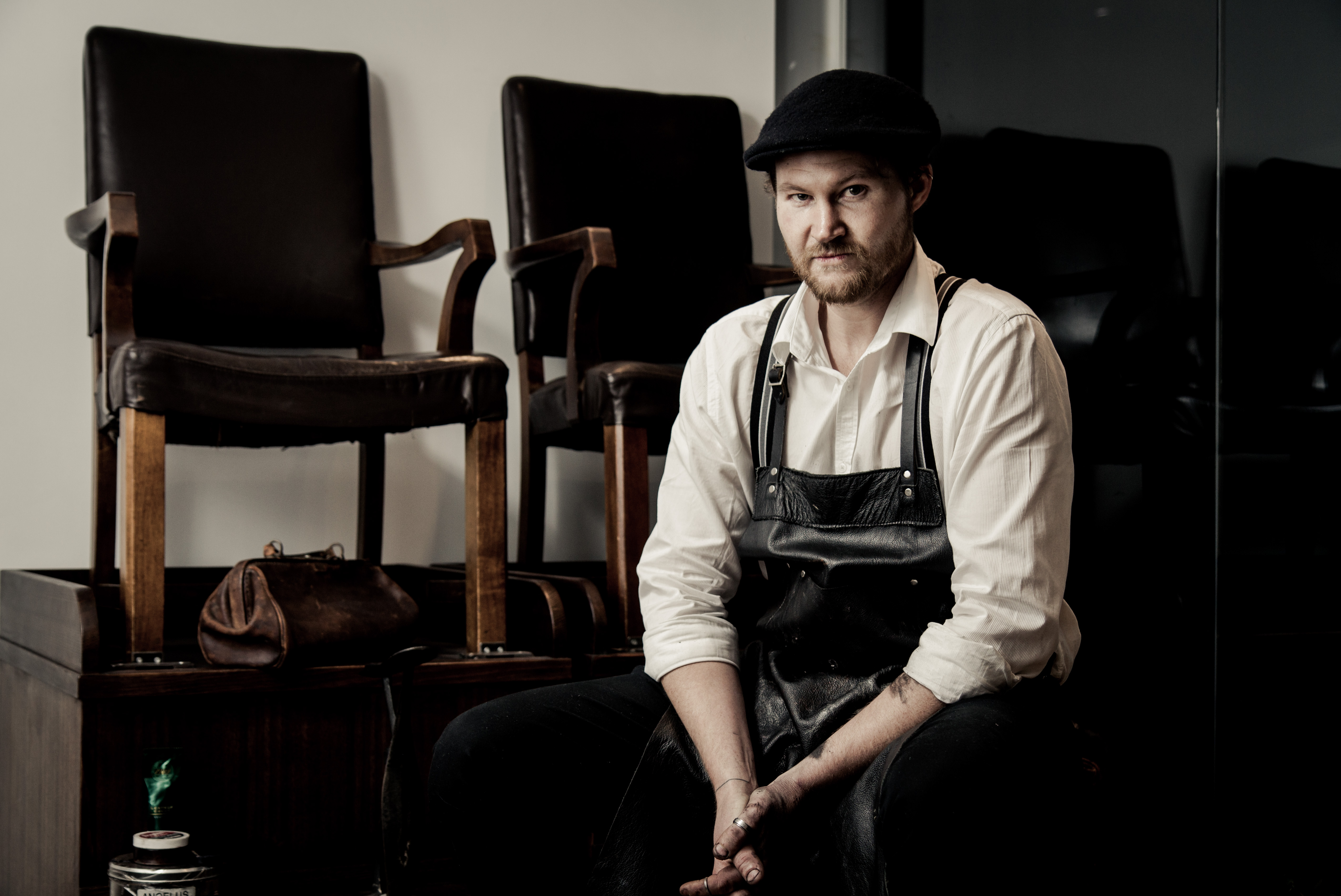
When I did the recent photoshoot with Luke from the Cobblers Last he actually went through and listed the photos he liked and why. It was awesome because going into a shoot you have no idea what people are hoping for, so it’s great to know how close you came to what they were after.
Oh, and if I’ve seen you write ‘Cute pic’ or ‘That’s so great’ to someone’s clearly out of focus photo of their child on Facebook, your feedback has no weight with me.
Tell it like it is We are precious flowers…but sometimes we need to hear what you don’t like. Yeah, it hurts and we will probably spend the next couple of hours in a huff, but we need to know why you didn’t like a photo. I can pretty much guarantee that if there’s a photo you don’t like it’s either a photo the photographer had doubts about themselves, or there is a specific reason why they included it. As a photographer you take a lot of photos…the real skill is culling them down to the ‘good ones’. The more informed we are about what constitutes ‘good’ the better we’ll become as photographers.
Be our muse Yep, standing a spot while the photographer stares blankly at the display on the back of their camera and then adjusts the the off-camera flash for the umpteenth time can be boring as batshit. But consider it an investment in the ultimate prize; a photo of yourself that you actually like!
So there you go. We photographers are in fact incredibly misunderstood and under-appreciated geniuses who thoroughly deserve your respect and admiration. Just please tell us we’re good…please!